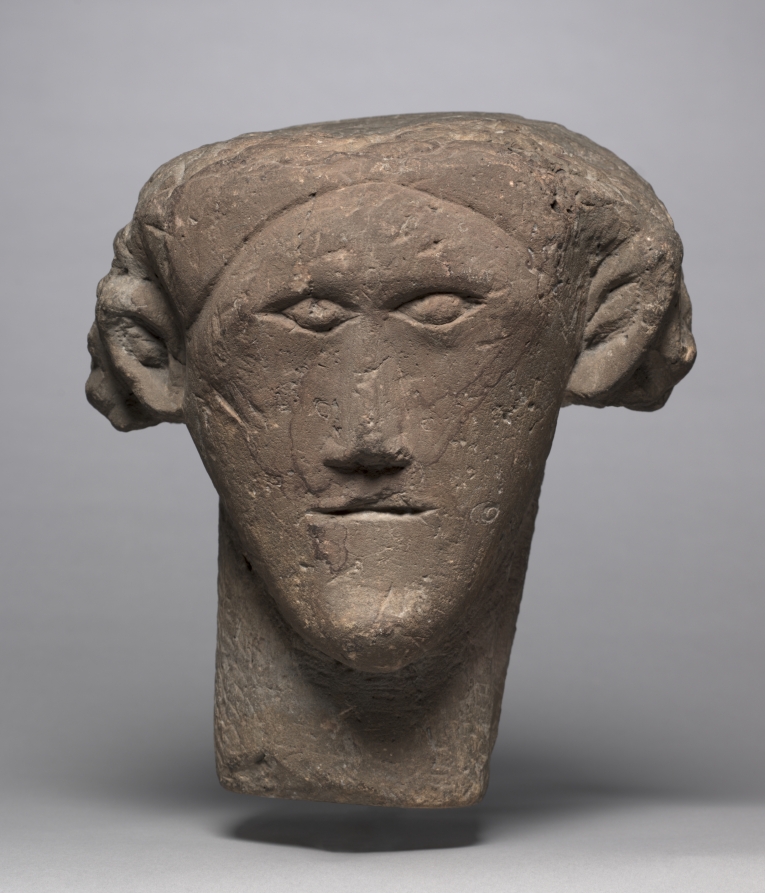
Celtic Head
Northern England (Romano-British), Migration period, 2nd-3rd centuries · 100–300 CE · 클리블랜드 미술관
이 작품, 어땠나요?
작품 이미지와 미술관 정보를 이 기기에 저장해 인터넷 연결 없이 읽어 보세요.
가이드
가이드 조절처음 · 보통
이 가이드는 아직 아무도 듣지 않았습니다. 만드는 데 20초쯤 걸리고, 그다음부터는 누구나 바로 들을 수 있습니다.
미술관의 설명
This stone head has never been attached to a torso. It is known from ancient literary sources that the Celts, who originally occupied most of northern Europe from Hungary to the British Isles, practiced ritualistic veneration of the human head. For the Celts, the human head represented the seat of mankind’s magical energy. Stone heads similar to this one have survived in large numbers, especially in the upland regions of northern England (the Pennines, the Peak District, and Cumbria) where this one was undoubtedly made by British Celts during the Roman occupation. Such stone heads were probably placed in religious shrines or grottos generally associated with springs, well heads, or natural landmarks for ritual veneration.
미술관이 쓴 설명 원문입니다(영어). 라이선스: CC0
이 작품에 대해 묻기
궁금한 것을 내 말로 물어보세요. 미술관이 이 작품에 대해 쓴 글에서 답을 찾고, 거기에 없으면 없다고 말합니다.
작품 정보
- 작가
- Northern England (Romano-British), Migration period, 2nd-3rd centuries
- 제작 시기
- 100–300 CE
- 재료
- sandstone with traces of original red paint
- 크기
- Overall: 30 x 31 x 24 cm (11 13/16 x 12 3/16 x 9 7/16 in.)
- 제작 지역
- Northern England (Romano-British)
- 소장처
- 클리블랜드 미술관, Cleveland · 전시 중 · 106A Migration Period & Coptic
- 소장 경위
- Gift of Dr. and Mrs. Jacob Hirsch
이미지: Cleveland Museum of Art, CC0