Clock
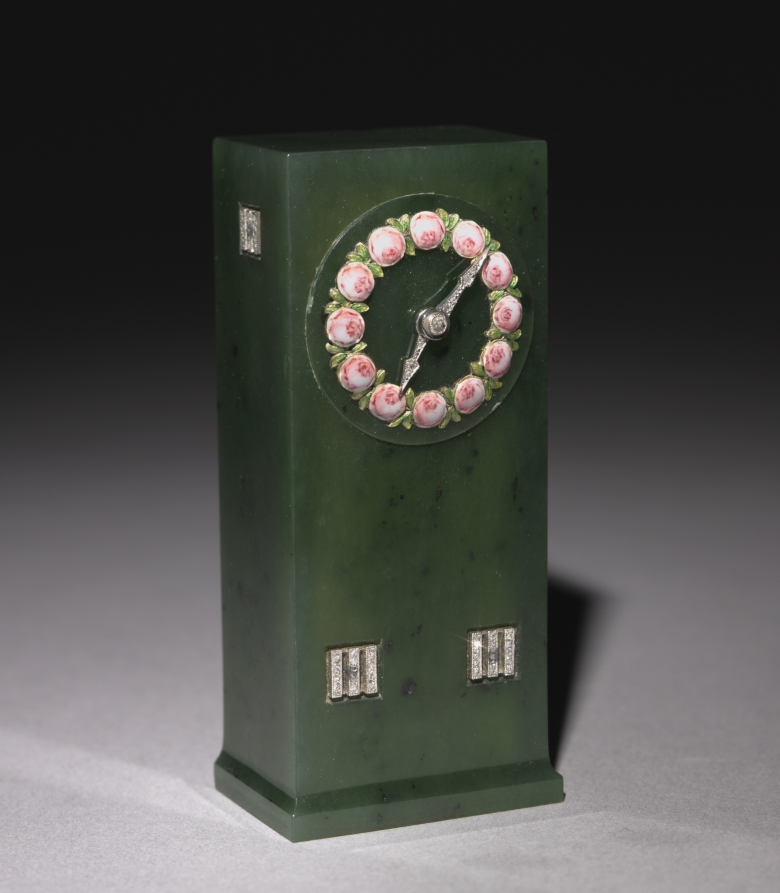
Henrik Wigström · c. 1905–15 · 클리블랜드 미술관
가이드
가이드 조절처음 · 보통
이 가이드는 아직 아무도 듣지 않았습니다. 만드는 데 20초쯤 걸리고, 그다음부터는 누구나 바로 들을 수 있습니다.
미술관의 설명
The use of Russian hardstones in creating precious objects became a hallmark of design from the House of Fabergé. Easily carved, these minerals were sourced largely from the western region surrounding the Ural Mountains. Fabergé's workmasters used colorful stones such as agate, nephrite (jade), lapis lazuli, rock crystal, and rhodonite, seen here in this small desk clock, to create and embellish flower studies, animal figures, and all manner of luxurious accessories. Bright pink rhodonite was among the rarest, and consequently most expensive, specimens used by the House of Fabergé. The bright pink color of this small desk clock is a result of manganese, the principle mineral found in rhodonite.
미술관이 쓴 설명 원문입니다(영어). 라이선스: CC0
이 작품, 어땠나요?
작품 이미지와 미술관 정보를 이 기기에 저장해 인터넷 연결 없이 읽어 보세요.
이 작품에 대해 묻기
궁금한 것을 내 말로 물어보세요. 미술관이 이 작품에 대해 쓴 글에서 답을 찾고, 거기에 없으면 없다고 말합니다.
작품 정보
- 작가
- Henrik Wigström (Russian, 1862–1923), House of Fabergé (Russian, 1842–1918)
- 제작 시기
- c. 1905–15
- 재료
- rhodonite, silver, enamel, diamonds
- 크기
- Overall: 5.3 x 5 x 2.9 cm (2 1/16 x 1 15/16 x 1 1/8 in.)
- 제작 지역
- Russia
- 소장처
- 클리블랜드 미술관, Cleveland · 전시 중 · 211 Fabergé
- 소장 경위
- The India Early Minshall Collection
이미지: Cleveland Museum of Art, CC0