잠시만 기다려 주세요
잠시만 기다려 주세요
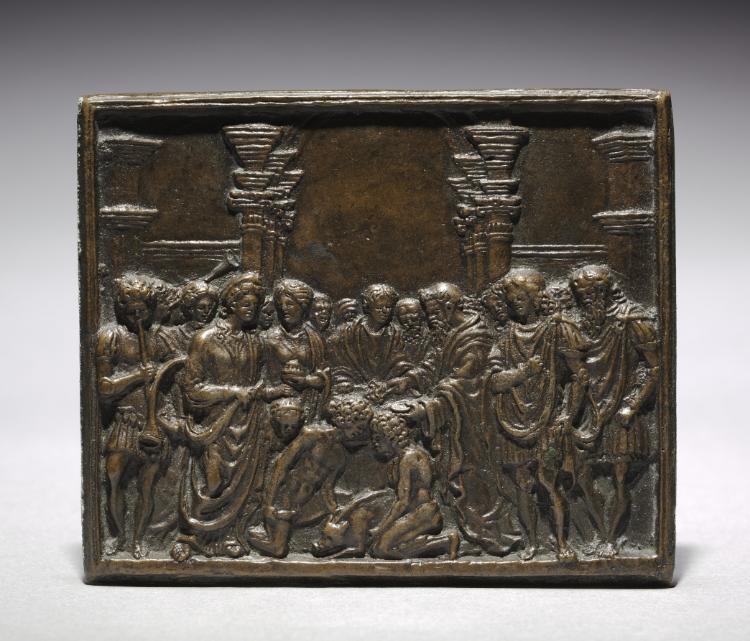
Andrea Riccio · 1800s · 클리블랜드 미술관
작품의 주요 특징과 배경을 연결해 살펴봐요.
가이드를 찾고 있습니다.
Fanciful bronzes such as this one were extremely popular in the late 1500s in the north of Italy, where sculptors such as Andrea Riccio and Severo da Ravenna often featured bizarre imaginary creatures in their sculptures. These artists exerted a long-lasting influence on their peers and followers for the remainder of the 1500s. However, this sculpture was not made in the 1500s. Based on the weight and style of the Doorknocker, it is most likely that it was made in the 1800s to mimic the style of Riccio and his followers. This sculpture is solid; in the 1500s artists created hollow sculptures to reduce the costs of the object and to decrease the chances of flaws in the sculpture. However, in the 1800s when better bronze casting technology evolved and the price of the metal was less costly, artists created solid bronze sculptures based on sixteenth-century designs. In particular, there was a considerable market in England for Renaissance revival doorknockers to be used decoratively on pub doors.
미술관이 쓴 설명 원문입니다(영어). 라이선스: CC0
작품 이미지와 미술관 정보를 이 기기에 저장해 인터넷 연결 없이 읽어 보세요.
궁금한 것을 내 말로 물어보세요. 미술관이 이 작품에 대해 쓴 글에서 답을 찾고, 거기에 없으면 없다고 말합니다.
이미지: Cleveland Museum of Art, CC0