잠시만 기다려 주세요
잠시만 기다려 주세요
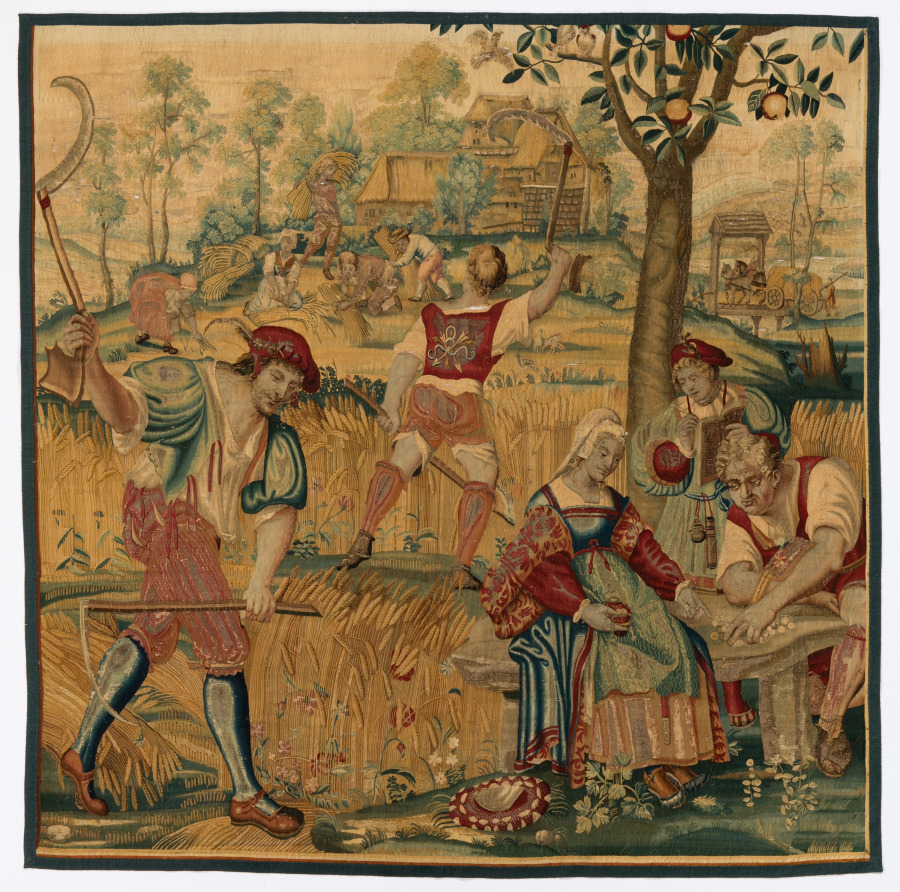
Gobelins Manufactory · designed c. 1535, woven mid- to late 1600s · 클리블랜드 미술관
작품의 주요 특징과 배경을 연결해 살펴봐요.
가이드를 찾고 있습니다.
Each of these tapestries depict rustic activities appropriate to the season: fishing and gardening for spring, harvesting of grain in summer, wine making for autumn, and ice skating for winter. As tapestries fell out of vogue in the 1700s and 1800s many were burned so their metal threads could be harvested to mint new coins. Before coming to the Cleveland Museum of Art, these tapestries hung in the family home of Frank H. Ginn and Cornelia Root Ginn in Gates Mills, Ohio. Their children donated the tapestries to the museum in 1952. At the time of the Four Seasons's production, weavers at the Gobelins Manufactory in Paris were paid on a wage-scale based on the difficulty of the weaving; those who wove heads and flesh tones were paid the most.
미술관이 쓴 설명 원문입니다(영어). 라이선스: CC0
작품 이미지와 미술관 정보를 이 기기에 저장해 인터넷 연결 없이 읽어 보세요.
궁금한 것을 내 말로 물어보세요. 미술관이 이 작품에 대해 쓴 글에서 답을 찾고, 거기에 없으면 없다고 말합니다.
이미지: Cleveland Museum of Art, CC0
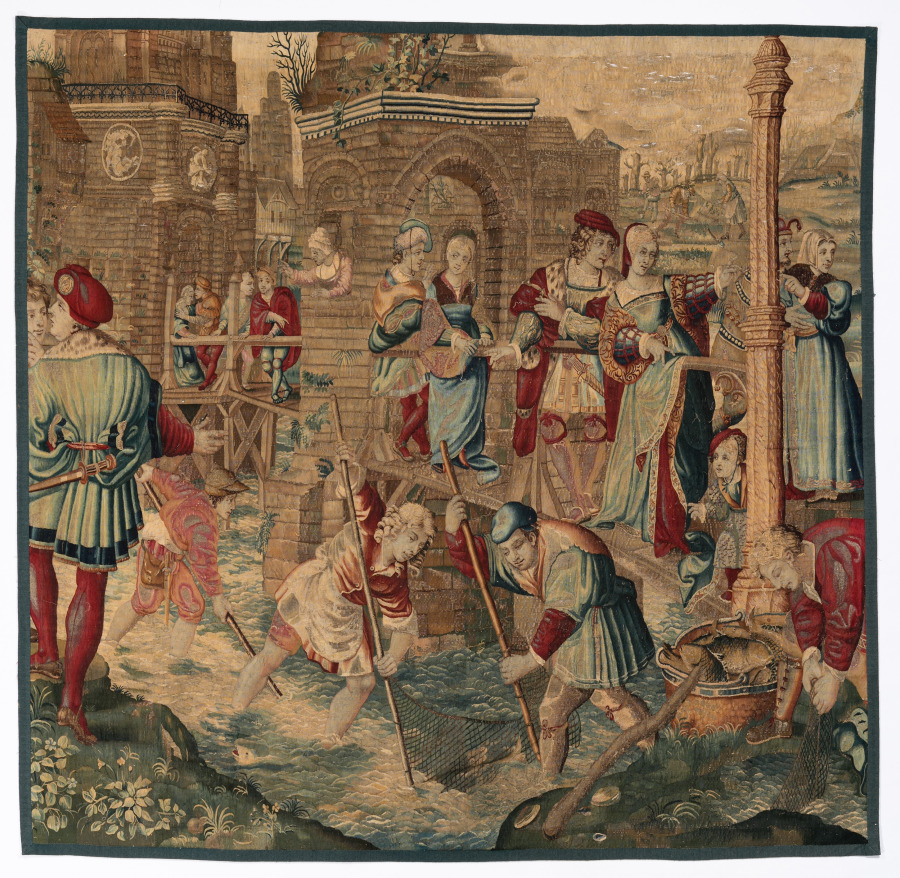 Spring: Fishing SceneGobelins Manufactory · designed c. 1535, woven mid- to late 1600s
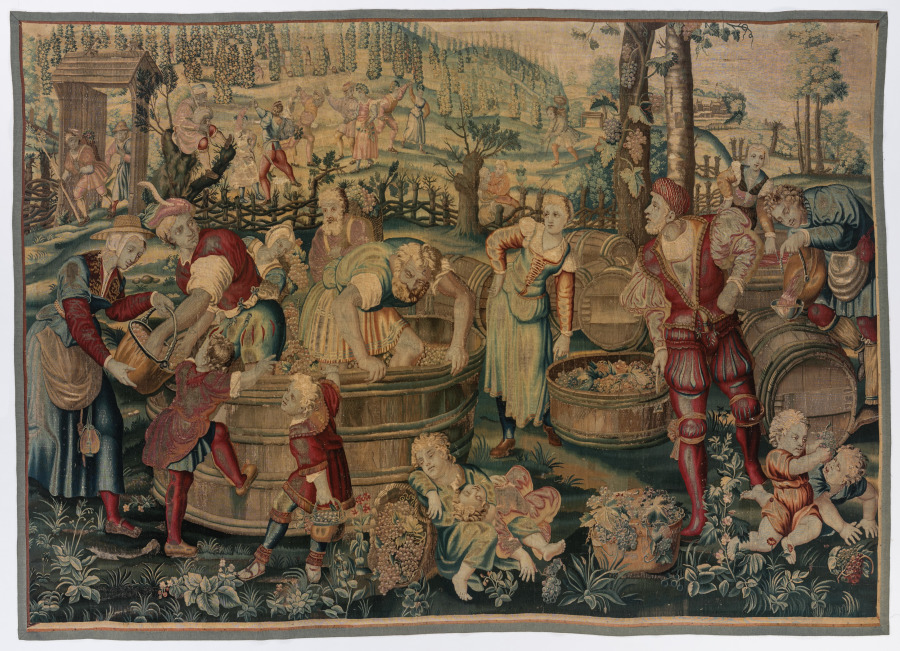 Autumn: Vintage SceneGobelins Manufactory · designed c. 1535, woven mid- to late 1600s
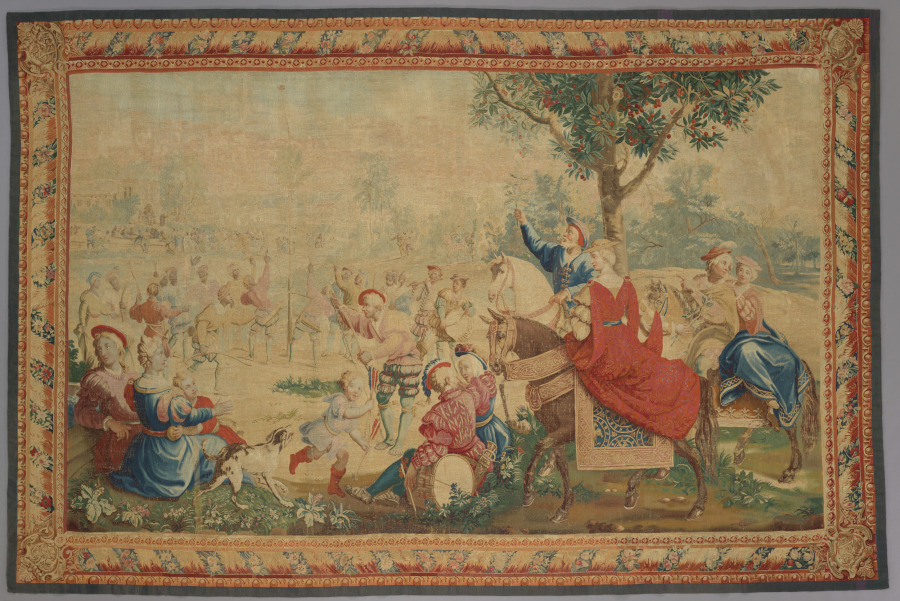 Month of May: Scene of May Day FestivalGobelins Manufactory · 1723–1774
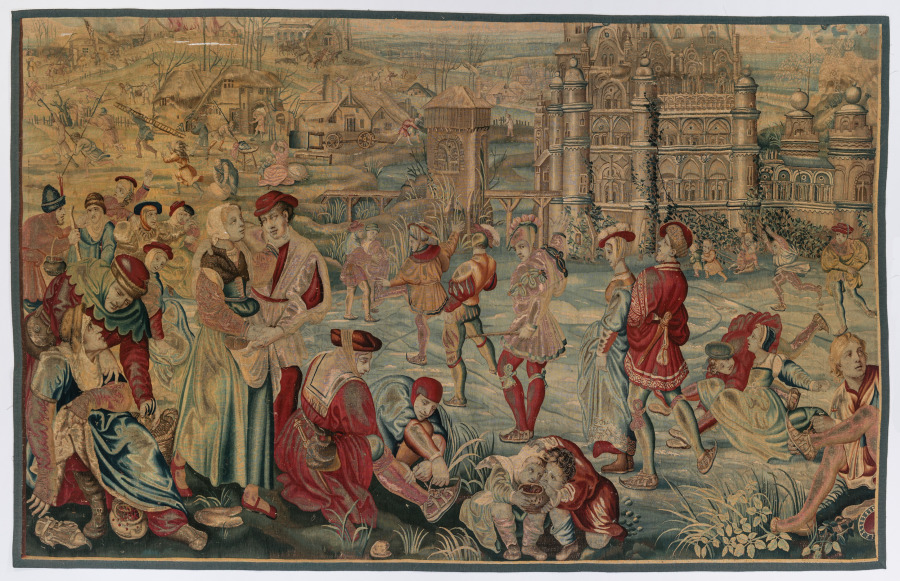 Winter: Skating SceneGobelins Manufactory · designed c. 1535, woven mid- to late 1600s