
잠시만 기다려 주세요
잠시만 기다려 주세요
작품의 주요 특징과 배경을 연결해 살펴봐요.
가이드를 찾고 있습니다.
Fragments of Byzantine pottery preserve decorative motifs that were placed on the base of each pot’s interior. They represent a range of geometric and abstract floral motifs - such as the distinctive letter "K" preserved on this fragment- that were created by cutting through the white slip, or glaze, to reveal the red earthenware beneath. This technique of engraved slipware is known as sgraffitto. Color washes in a range of greens and browns were then placed over the incised decoration. First developed in the eleventh century, this combination of sgraffitto and color washes remained a defining feature of fine Byzantine pottery for several centuries. Later Byzantine pottery such as this circulated throughout the eastern Mediterranean. Over time, it competed with an increasing number of imported ceramics of Italian, Islamic, and even Chinese origin. The technique and decorative motif seen here continued to be used in regions of Greece, Anatolia, and the Balkans during the Ottoman Empire (15th–20th century), thereby outlasting the Byzantine Empire itself, which ended in 1453.
미술관이 쓴 설명 원문입니다(영어). 라이선스: CC BY 4.0
작품 이미지와 미술관 정보를 이 기기에 저장해 인터넷 연결 없이 읽어 보세요.
궁금한 것을 내 말로 물어보세요. 미술관이 이 작품에 대해 쓴 글에서 답을 찾고, 거기에 없으면 없다고 말합니다.
이미지: Art Institute of Chicago, CC0
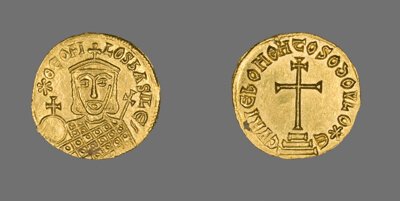 Solidus (Coin) of TheophilusByzantine · 829-831
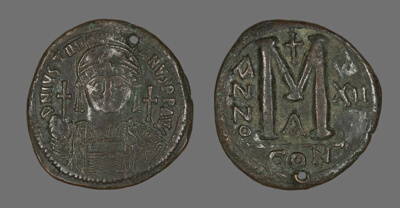 Follis (Coin) Portraying the Emperor Justinian IByzantine · 538-539
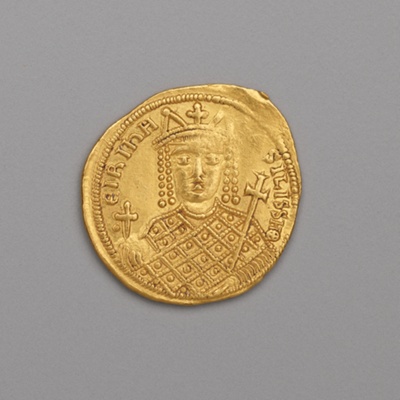 Solidus (Coin) of Empress IreneByzantine · 797-802
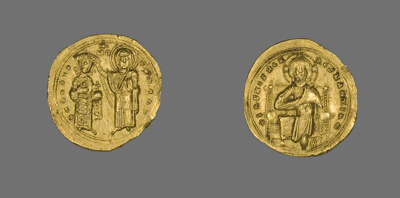 Histamenon (Coin) of Romanus III Argyrus with Christ EnthronedByzantine · 1028-34
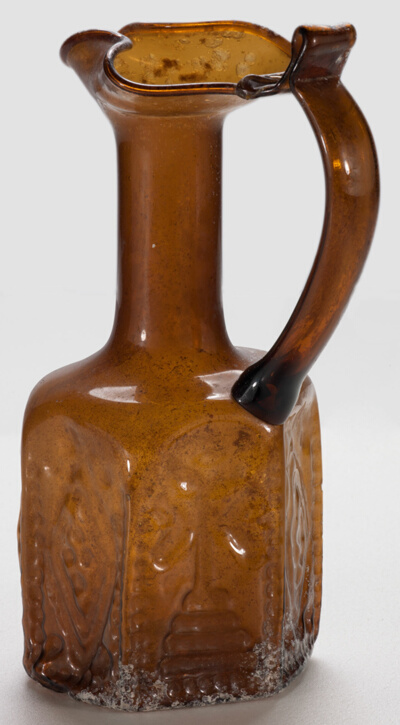 Pilgrimage Jug with Christian SymbolsByzantine · 578–636
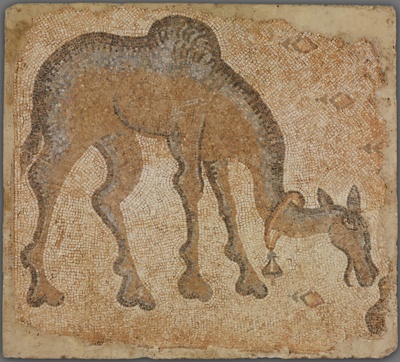 Mosaic Fragment with Grazing CamelByzantine · 5th century
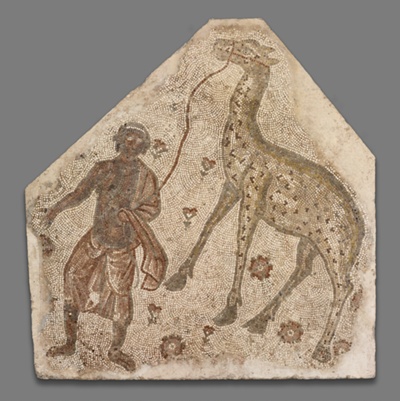 Mosaic Fragment with a Man Leading a GiraffeByzantine · 5th century
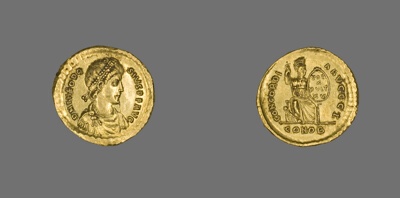 Solidus (Coin) of Emperor Theodosius IByzantine · 383 (25 August)-388 (28 August)