잠시만 기다려 주세요
잠시만 기다려 주세요
가이드를 찾고 있습니다.
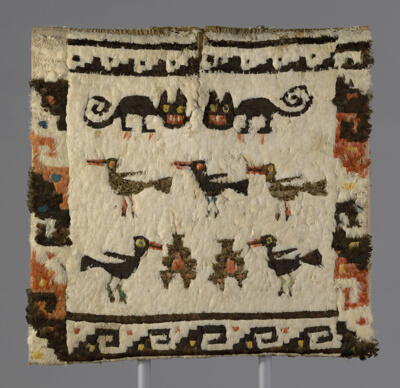
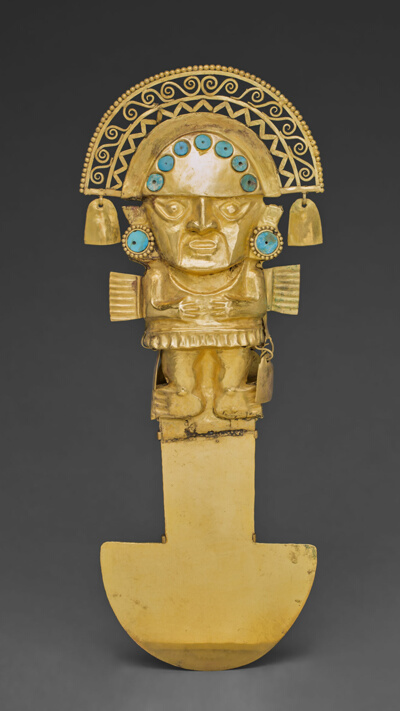
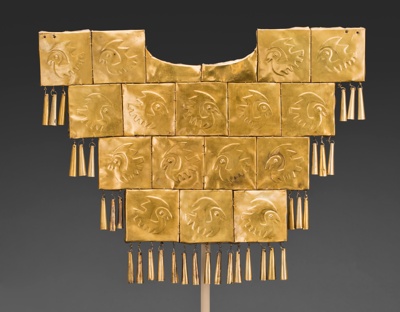
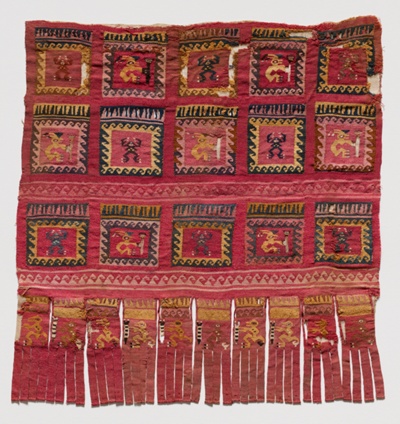
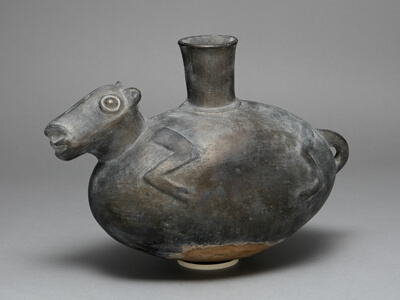
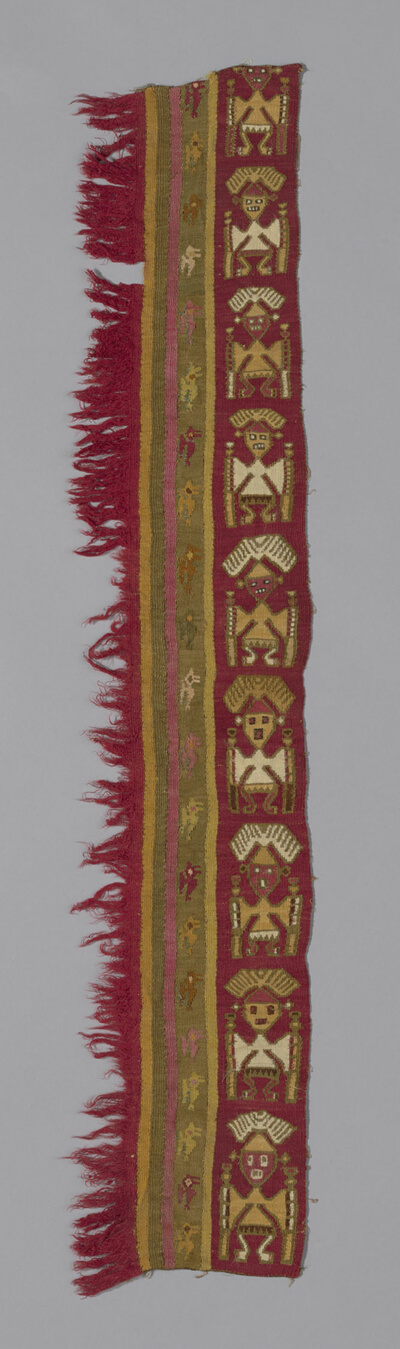
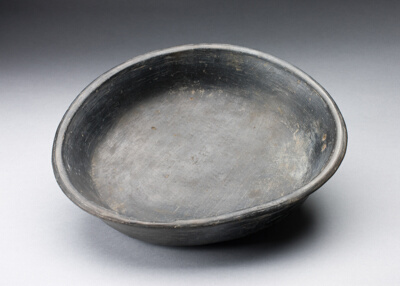
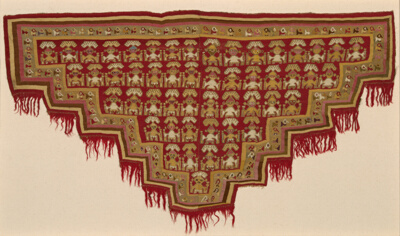
Following the decline of their ancestors, the Moche, the Chimú emerged as one of the most powerful cultures of South America, dominating several rich valleys across the north coast of Peru for more than five centuries, from around A.D. 900 to 1465. Chimú weavers created strikingly graphic designs through the repetition of simple, abstract forms in vivid color combinations—particularly red, white, and yellow—against a solid background. Most of these textiles depict an anthropomorphic male figure wearing a "toothed" crescent headdress and holding a set of staffs—details that suggest supernatural or exalted status. This stark representation of a frontal human figure wearing an arched crown recalls the Chimú-made gold and turquoise ceremonial knife (tumi). The slit-tapestry panel depicts a seated animal-like figure with a long tail, arms reaching forward, and a row of spikes down its back. This being wears a similar crescent headdress, indicating a connection with the human representations on the other works. The use of repeated abstract motifs arrayed in a grid-like pattern and the stepped shape of the loincloths resemble not only the gold repoussé breastplate, but also architectural details of certain Chimú buildings, reflecting the cohesive artistic style that was presented across different media.
미술관이 쓴 설명 원문입니다(영어). 라이선스: CC BY 4.0
작품 이미지와 미술관 정보를 이 기기에 저장해 인터넷 연결 없이 읽어 보세요.
궁금한 것을 내 말로 물어보세요. 미술관이 이 작품에 대해 쓴 글에서 답을 찾고, 거기에 없으면 없다고 말합니다.
이미지: Art Institute of Chicago, CC0