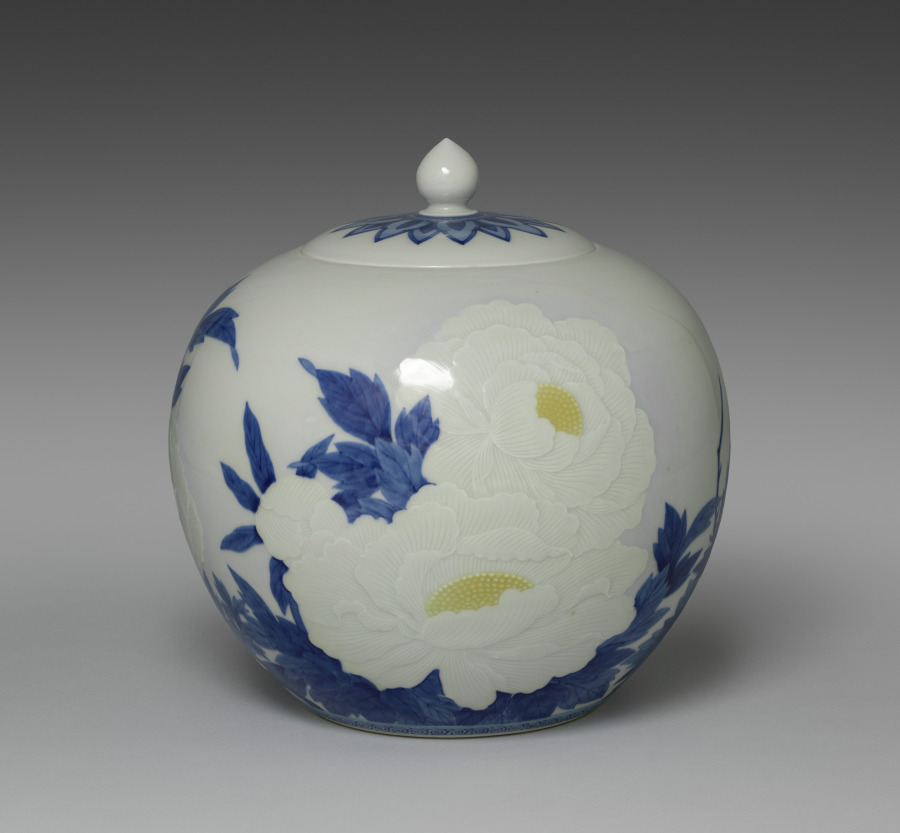
Gu-shaped Vase
Seifu Yohei III · 1912–14 · 클리블랜드 미술관
가이드
가이드 조절처음 · 보통
이 가이드는 아직 아무도 듣지 않았습니다. 만드는 데 20초쯤 걸리고, 그다음부터는 누구나 바로 들을 수 있습니다.
미술관의 설명
Seifū Yohei III mined the repertoire of Chinese vessel types, from ceramics modeled after ancient ritual bronzes to shapes developed in the Yuan (1279–1368) and Ming (1368–1644) dynasties. His designs tended to be formal and restrained, often featuring creamy white glazes suggestive of the hue of Ding ware and green glazes resembling Longquan ware. This gu-shaped vase has a cracked-ice glaze, which was once customarily called Ge (Japanese pronunciation Ka), after the kiln where it purportedly originated during the Southern Song dynasty (1127–1279). The glaze’s double-crackle pattern, featuring both deeper and shallower cracks, is called “gold threads and iron lines.” The effect was enhanced here by coating the vessel with ink or another stain, which was allowed to seep into the cracks before the surface was wiped clean. Gu-shaped vases are relatively slender cylinders that flare at both the mouth and foot with orbs or drumlike forms partway up the vessel.
미술관이 쓴 설명 원문입니다(영어). 라이선스: CC0
이 작품, 어땠나요?
작품 이미지와 미술관 정보를 이 기기에 저장해 인터넷 연결 없이 읽어 보세요.
이 작품에 대해 묻기
궁금한 것을 내 말로 물어보세요. 미술관이 이 작품에 대해 쓴 글에서 답을 찾고, 거기에 없으면 없다고 말합니다.
작품 정보
- 작가
- Seifū Yohei III (Japanese, 1851–1914)
- 제작 시기
- 1912–14
- 재료
- Porcelain with crackled glaze
- 크기
- 27.9 cm (11 in.); Diameter of top: 14.6 cm (5 3/4 in.)
- 제작 지역
- Japan
- 소장처
- 클리블랜드 미술관, Cleveland · 지금은 전시하지 않음
- 소장 경위
- Gift of James and Christine Heusinger
이미지: Cleveland Museum of Art, CC0