
잠시만 기다려 주세요
잠시만 기다려 주세요
Shunshosai Hokuchō · 1829 · 클리블랜드 미술관
작품의 주요 특징과 배경을 연결해 살펴봐요.
가이드를 찾고 있습니다.
Three prints form a continuous scene from a Kabuki play written in 1778 by Namiki Gohei I (1747–1808) and produced at the Kado Theater in Osaka in the summer of 1829. It was the final performance for actor Ichikawa Ebijūrō II (1806–1829; right)—highly regarded for portraying villains—because he got sick and died several months later. This design belongs to a category of Japanese prints called “actor images” (yakusha-e or 役者絵). They were collected by fans of popular Kabuki actors. Kabuki is a kind of entertainment that got its start in the early Edo period, evolving from dance performances with simple storylines to long plays with complex plots, elaborate sets, and full musical accompaniments. Performers wear showy costumes and heavy makeup and strike poses called mie at critical moments in the narrative. Dialogue is spoken in a stylized way that resembles singing.
미술관이 쓴 설명 원문입니다(영어). 라이선스: CC0
작품 이미지와 미술관 정보를 이 기기에 저장해 인터넷 연결 없이 읽어 보세요.
궁금한 것을 내 말로 물어보세요. 미술관이 이 작품에 대해 쓴 글에서 답을 찾고, 거기에 없으면 없다고 말합니다.
이미지: Cleveland Museum of Art, CC0
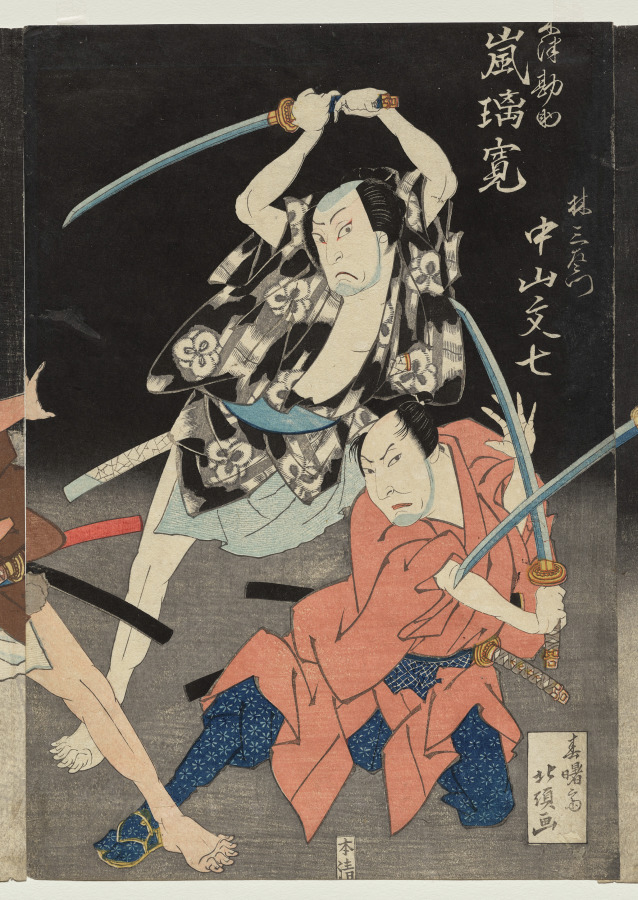 Arashi Rikan II as Kizu Kansuke and Nakayama Bunshichi III as Hayashi Sanzemon from the Kabuki Play "Eight Views of the Kizu River by Boating Song"Shunshosai Hokuchō · 1829
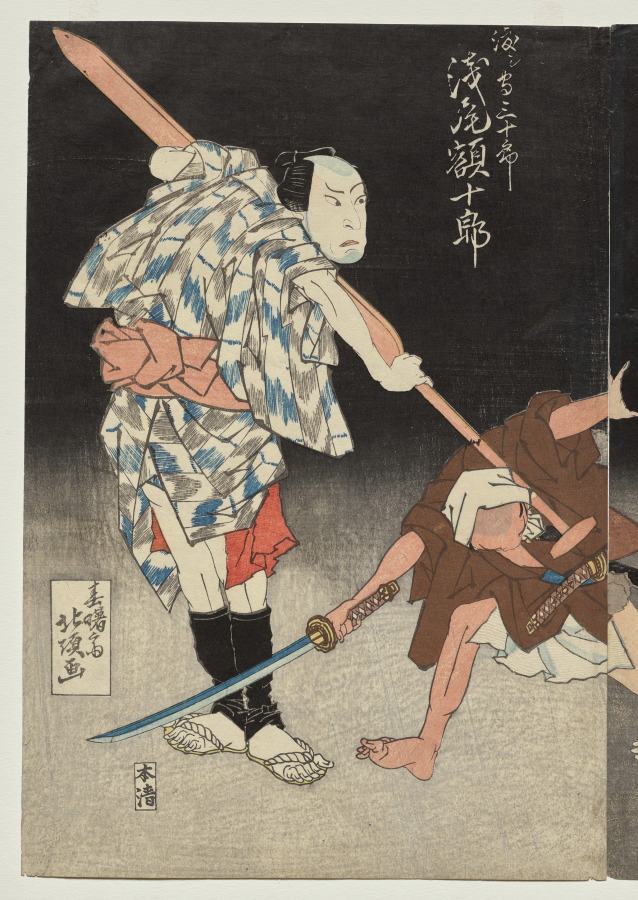 Asao Gakujurō as the Ferryman Sanjūrō from the Kabuki Play "Eight Views of the Kizu River by Boating Song"Shunshosai Hokuchō · 1829
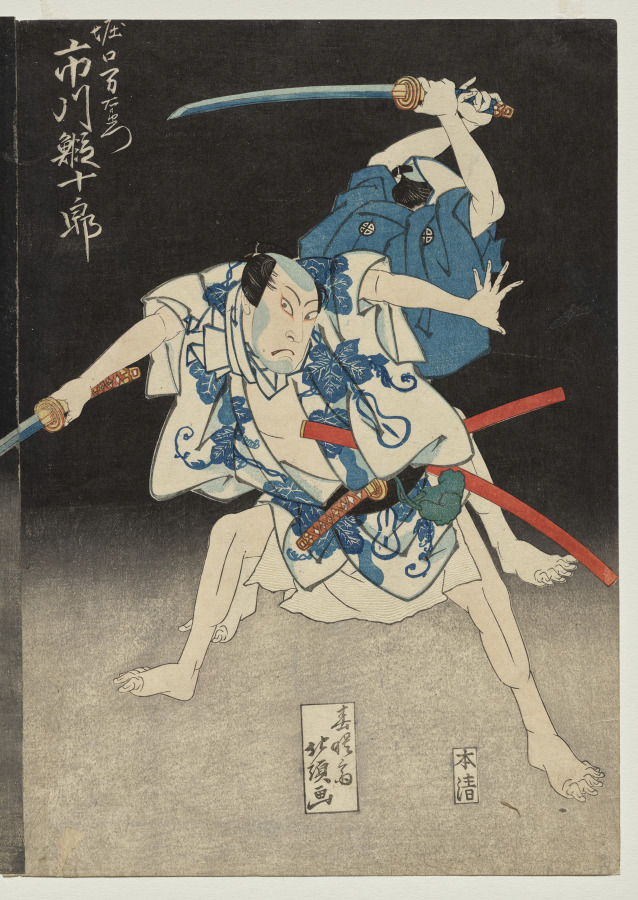 Ichikawa Ebijūrō II as Horiguchi Manzaemon from the Kabuki Play "Eight Views of the Kizu River by Boating Song"Shunshosai Hokuchō · 1829