잠시만 기다려 주세요
잠시만 기다려 주세요
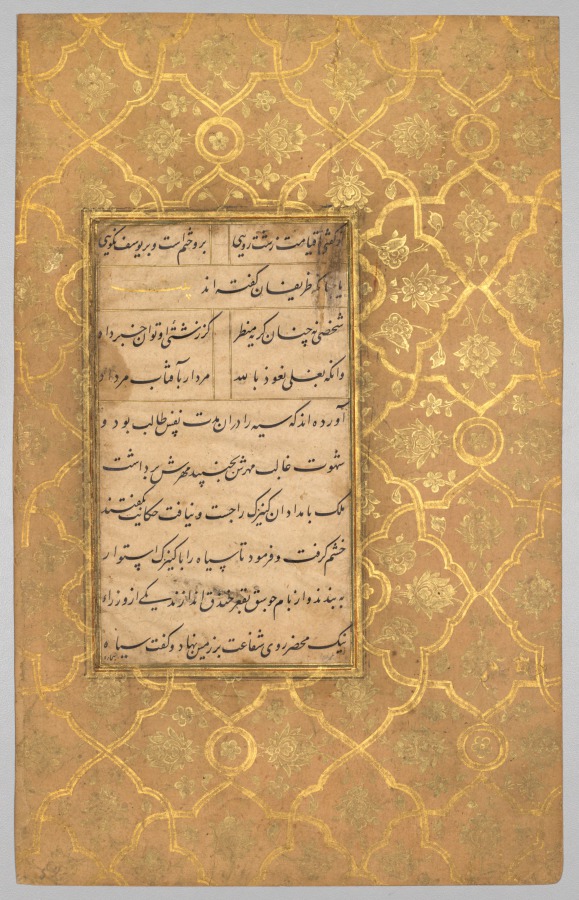
Sultan 'Ali al-Mashadi · calligraphy: c. 1475–1500; border: c. 1550 · 클리블랜드 미술관
작품의 주요 특징과 배경을 연결해 살펴봐요.
가이드를 찾고 있습니다.
The border scene is set in a magical forest bursting with blossoms. At the top, a winged lion chases a winged deer, who is caught in the bottom border. The imagery of a lion biting down on its prey dates from the Achaemenid period in Iran (550–330 BCE) and references the valor of the king. A fox scurries off to the right. The verse is written in the Persian language using nastaliq script. Sultan ‘Ali Mashadi was widely renowned for perfecting the nastaliq script, and his calligraphy was a model for many followers across the Islamic world. The book’s name means “rose garden” in Persian; just as a rose garden is a collection of flowers, the contents are a collection of anecdotes.
미술관이 쓴 설명 원문입니다(영어). 라이선스: CC0
작품 이미지와 미술관 정보를 이 기기에 저장해 인터넷 연결 없이 읽어 보세요.
궁금한 것을 내 말로 물어보세요. 미술관이 이 작품에 대해 쓴 글에서 답을 찾고, 거기에 없으면 없다고 말합니다.
이미지: Cleveland Museum of Art, CC0
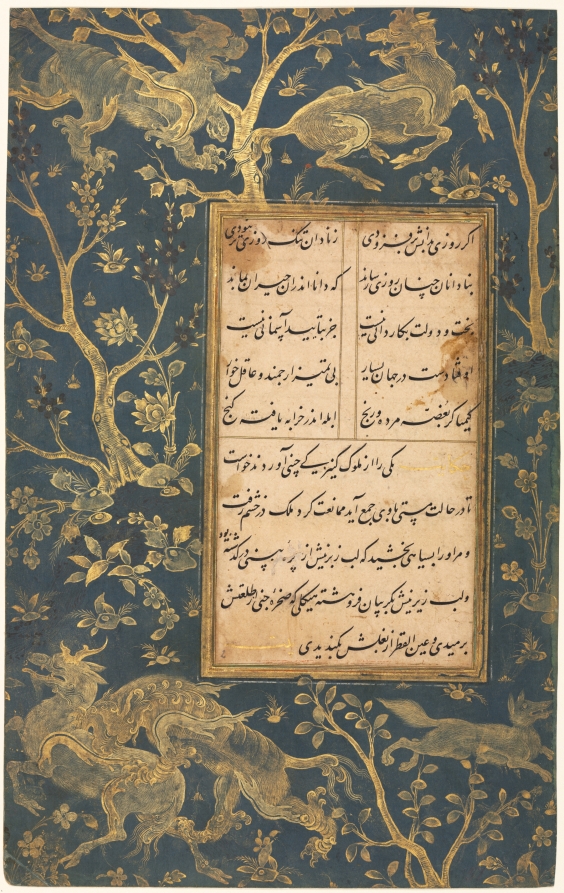 Illuminated folio (recto) from a Gulistan (Rose Garden) of Sa'di (c. 1213–1291)Sultan 'Ali al-Mashadi · calligraphy: c. 1475–1500; border: c. 1550
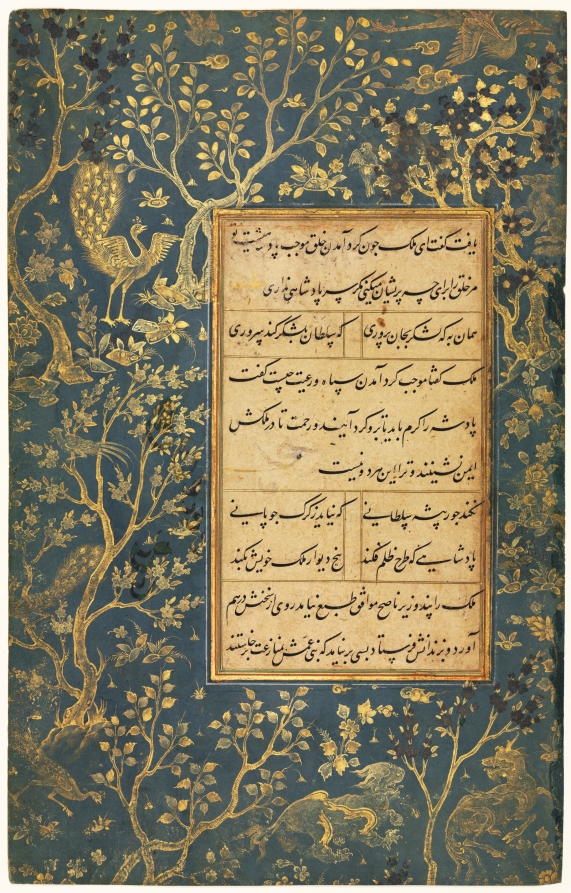 Illuminated Folio (recto) from a Gulistan (Rose Garden) of Sa'di (c. 1213–1291)Sultan 'Ali al-Mashadi · c. 1475–1500; border: c. 1550
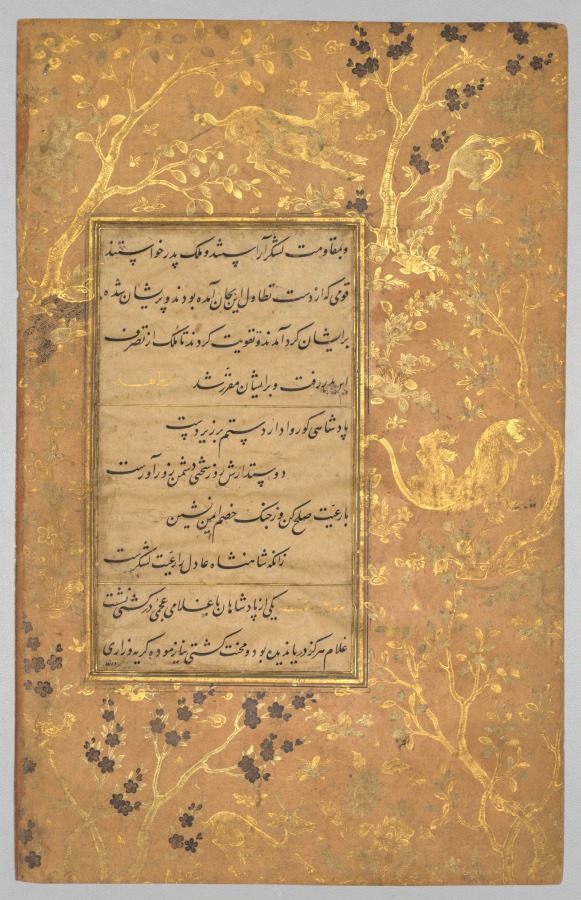 Illuminated folio from a Gulistan (Rose Garden) of Sa'di (c. 1213–1291)Sultan 'Ali al-Mashadi · about 1475–1500; border: about 1550