잠시만 기다려 주세요
잠시만 기다려 주세요
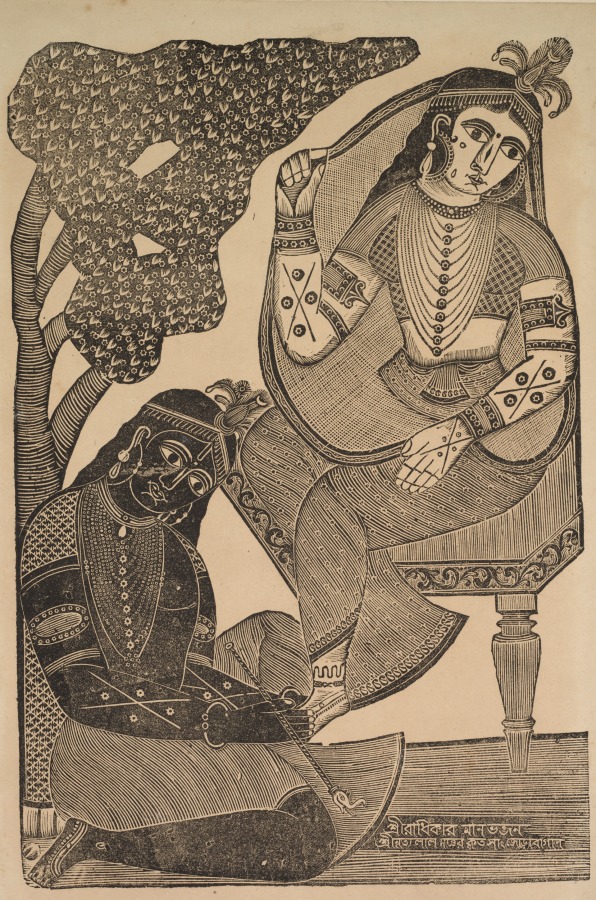
Shri Gobinda Chandra Roy · c. 1890 · 클리블랜드 미술관
작품의 주요 특징과 배경을 연결해 살펴봐요.
가이드를 찾고 있습니다.
As ten-headed Ravana successfully flies away with his quarry, Princess Sita, the demon king is stopped by the great vulture Jatayu, an ally to Sita’s husband Rama. Closely resembling the Bengali paintings of the same subject, a woodcut print was a less expensive alternative to a painting. Almost any resident of the burgeoning city of Calcutta (now Kolkata) could afford to acquire one. Woodcuts such as this were made on paper that Christian missionaries intended for the production of Bibles. However, local artists used it to mass-produce popular Hindu imagery. In the Bengali version of this episode, Jatayu swallows Ravana’s chariot only to vomit it out once he realizes Sita is aboard.
미술관이 쓴 설명 원문입니다(영어). 라이선스: CC0
작품 이미지와 미술관 정보를 이 기기에 저장해 인터넷 연결 없이 읽어 보세요.
궁금한 것을 내 말로 물어보세요. 미술관이 이 작품에 대해 쓴 글에서 답을 찾고, 거기에 없으면 없다고 말합니다.
이미지: Cleveland Museum of Art, CC0
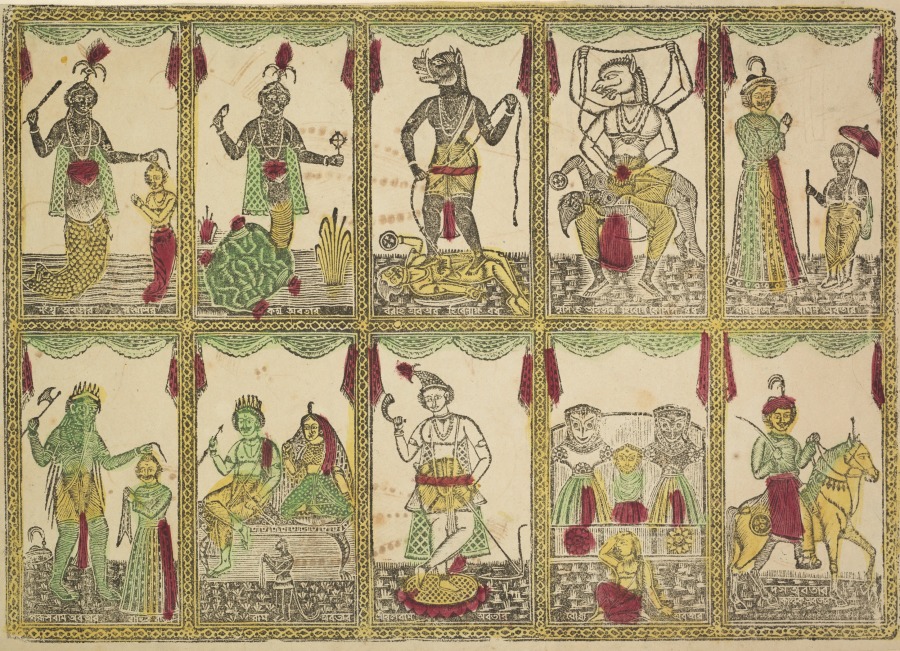 Das Avataras, Ten Incarnations of Vishnu (verso), from a Kalighat albumShri Gobinda Chandra Roy · c. 1890
 Rama and Sita in the royal palace (recto), from a Kalighat albumShri Gobinda Chandra Roy · c. 1890
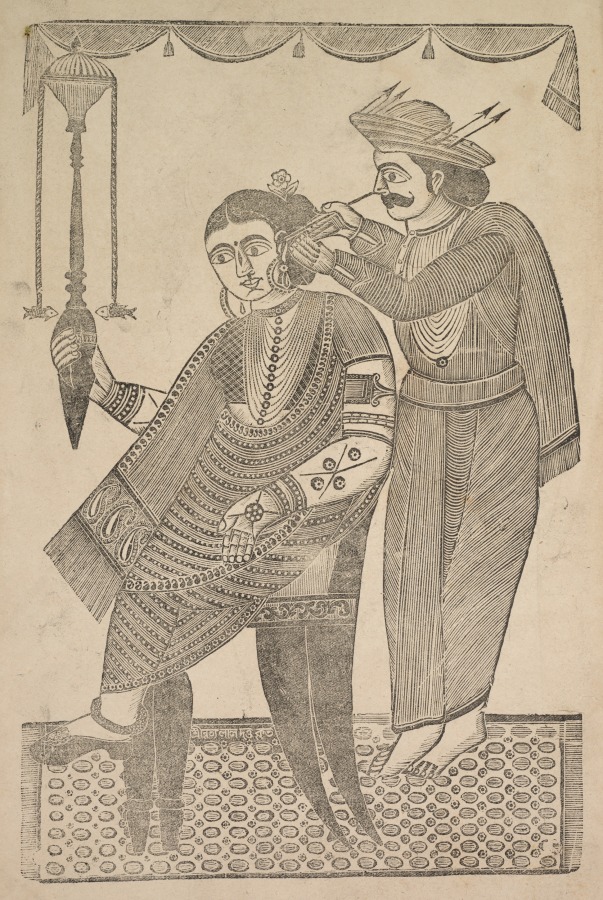 A Barber Cleaning the Ear of a CourtesanShri Gobinda Chandra Roy · c. 1890
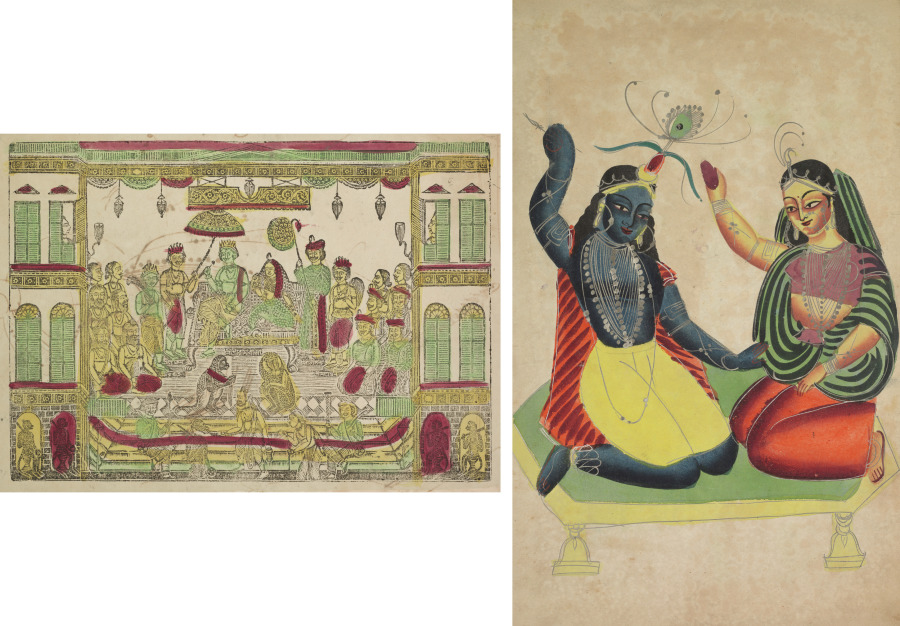 Leaf from a Kalighat album: Rama and Sita in the Royal Palace (recto); Radha and Krishna (verso)