잠시만 기다려 주세요
잠시만 기다려 주세요
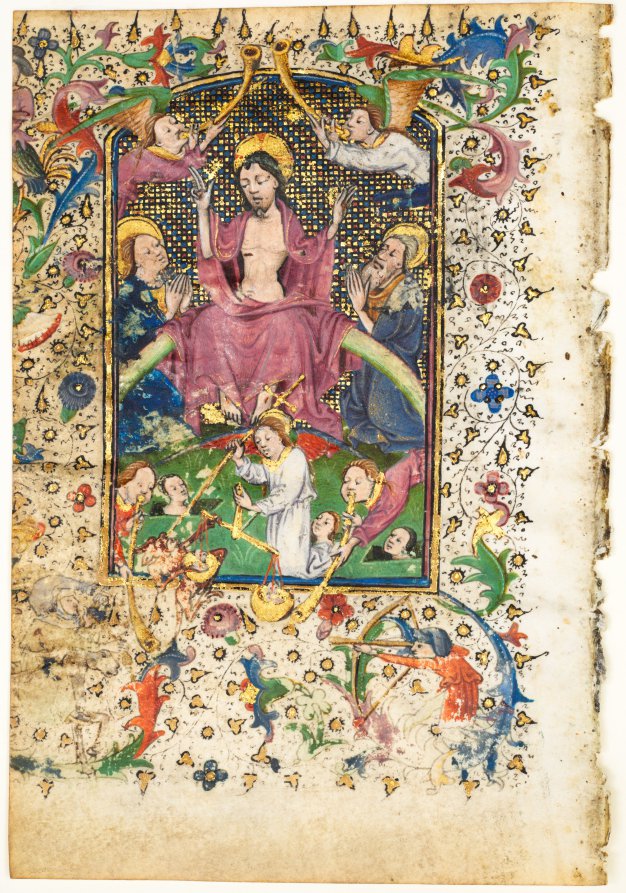
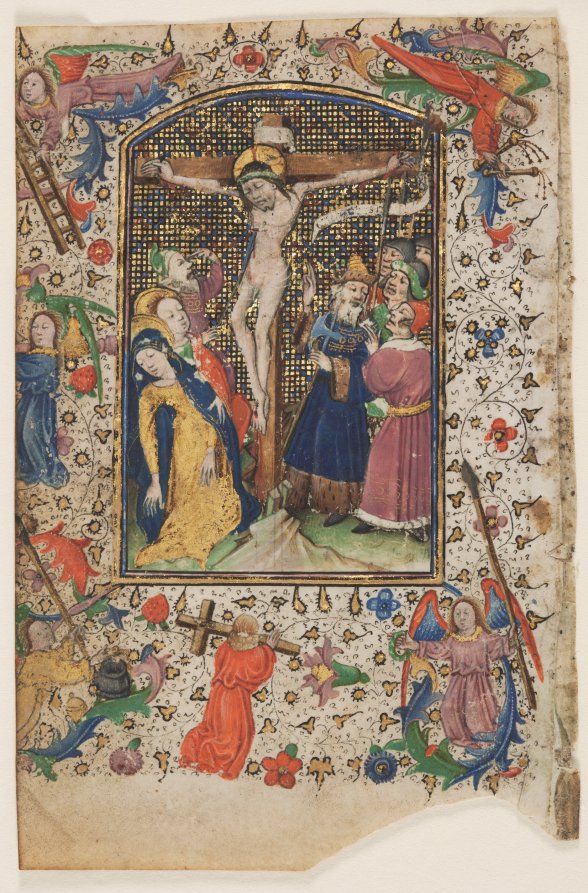
Master of Guillebert de Mets · 1430s · 클리블랜드 미술관
작품의 주요 특징과 배경을 연결해 살펴봐요.
가이드를 찾고 있습니다.
The Master of Guillebert de Mets (probably Jean de Pestivien) is named after the scribe who recorded his name in an illuminated copy of the Decameron (a collection of stories by Giovanni Boccaccio, written 1351–53) made for Duke Philip the Good of Burgundy, and for which the artist contributed several miniatures. The Master of Guillebert de Mets was active from about 1410 to 1445. So far there is no proof that allows us to follow his career or to know precisely where he worked. Some evidence, however, hints that he was of Flemish origin. The artist painted in an easily recognizable style. His figures have prominent heads with clearly delineated eyes and small mouths, slender torsos with thin, spindly legs, and long, finely worked fingers. Many of his miniatures, such as the Crucifixion and Last Judgment here, show that he often favored mosaic backgrounds of delicately worked checkered patterns.
미술관이 쓴 설명 원문입니다(영어). 라이선스: CC0
작품 이미지와 미술관 정보를 이 기기에 저장해 인터넷 연결 없이 읽어 보세요.
궁금한 것을 내 말로 물어보세요. 미술관이 이 작품에 대해 쓴 글에서 답을 찾고, 거기에 없으면 없다고 말합니다.
이미지: Cleveland Museum of Art, CC0