잠시만 기다려 주세요
잠시만 기다려 주세요
Ancient Greek · about 440 BCE · 시카고 미술관
작품의 주요 특징과 배경을 연결해 살펴봐요.
가이드를 찾고 있습니다.
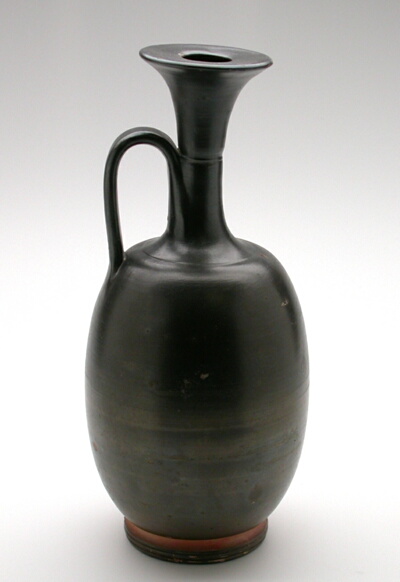
Athenian cemeteries housed a variety of monuments and offerings to the dead. This terracotta vessel, called a lekythos, is one example that held oil. From the middle until the end of the fifth century B.C., they were usually decorated in a distinctive technique known as white ground, so called after the light slip coating on the body and shoulder of the vase. Atop this, figures were usually drawn in outline and then painted in rich colors, many of which have since faded. Since most of these bottles were made for burial with the dead or to be left at their graves, the scenes on their surfaces typically represent tombs, visitors to tombs, and farewell scenes. A woman drawn in outline stands beside an empty chair. Presumably it references the absence of a loved one. A basket sits on the ground behind her. There are no remains of color. Unrelated to the scene but of interest in its own right is the inscription extending before the woman. It states that a youth by the name of Euaion is handsome. The subject of this praise is probably the son of the great Athenian dramatist Aeschylus (525–456 BC). Like his father, Euaion became a tragedian.
미술관이 쓴 설명 원문입니다(영어). 라이선스: CC BY 4.0
작품 이미지와 미술관 정보를 이 기기에 저장해 인터넷 연결 없이 읽어 보세요.
궁금한 것을 내 말로 물어보세요. 미술관이 이 작품에 대해 쓴 글에서 답을 찾고, 거기에 없으면 없다고 말합니다.
이미지: Art Institute of Chicago, CC0