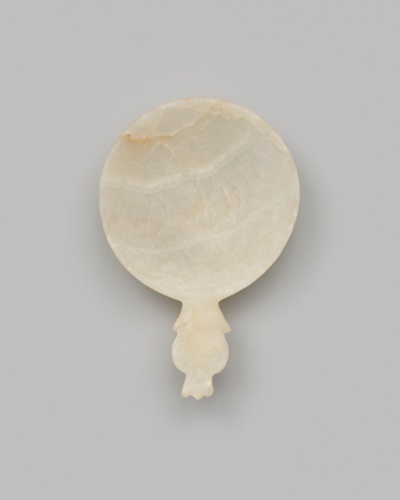
Nehebkau Amulet
Ancient Egyptian · Late Period, Dynasty 26–30 (664–332 BCE) · 시카고 미술관
가이드
가이드 조절처음 · 보통
가이드를 찾고 있습니다.
미술관의 설명
Small-scale Egyptian figurines, known as amulets, were thought to promote health and good luck. Amulets were such an important part of Egyptian religious beliefs that they were worn by both the living and the dead. They could be mounted on rings or strung as bracelets or necklaces and were often placed among a mummy's wrappings to secure the deceased’s rebirth and well-being in the afterlife. Many varieties of amulets survived, including figures of deities, parts of the human (or divine) body, animals, plants, and objects of daily life. Nehebkau, often depicted as a male with a snakehead, was one of the deities who judged the deceased before a council of the gods.
미술관이 쓴 설명 원문입니다(영어). 라이선스: CC BY 4.0
이 작품, 어땠나요?
작품 이미지와 미술관 정보를 이 기기에 저장해 인터넷 연결 없이 읽어 보세요.
이 작품에 대해 묻기
궁금한 것을 내 말로 물어보세요. 미술관이 이 작품에 대해 쓴 글에서 답을 찾고, 거기에 없으면 없다고 말합니다.
작품 정보
- 작가
- Egyptian
- 제작 시기
- Late Period, Dynasty 26–30 (664–332 BCE)
- 재료
- Gold
- 크기
- 2 × 1 × 0.8 cm (3/4 × 3/8 × 5/16 in.)
- 제작 지역
- Egypt
- 소장처
- 시카고 미술관, Chicago · 전시 중 · Gallery 50
- 소장 경위
- Gift of Henry H. Getty and Charles L. Hutchinson
이미지: Art Institute of Chicago, CC0
Ancient Egyptian의 다른 작품
해설Coffin and Mummy of Paankhaenamun파앙케나문의 관과 미라Ancient Egyptian · Third Intermediate Period, Dynasty 22, reign of Osorkon I (about 924–889 BCE)
해설Stela of Amenemhat and Hemet아메넴하트와 헤메트의 석비Ancient Egyptian · Middle Kingdom, early Dynasty 12, about 1956–1877 BCE
Fragment of a Stela of NeferhotepAncient Egyptian · New Kingdom, mid-Dynasty 19, about 1240-1195 BCE