잠시만 기다려 주세요
잠시만 기다려 주세요
Grinling Gibbons · c. 1685 · 시카고 미술관
작품의 주요 특징과 배경을 연결해 살펴봐요.
가이드를 찾고 있습니다.
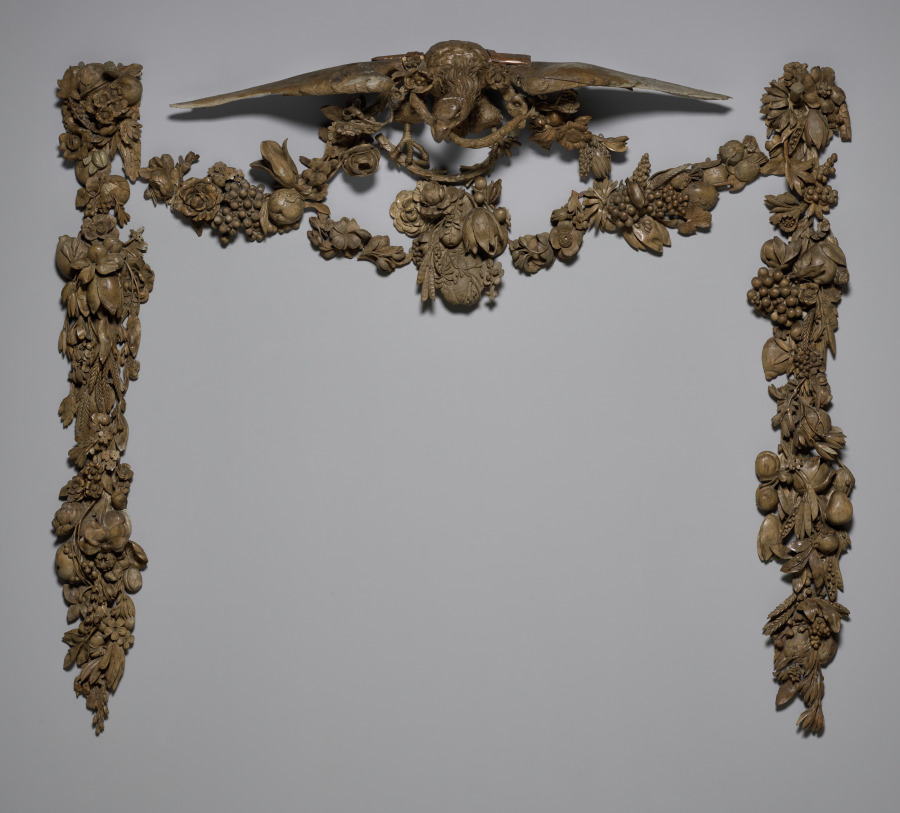
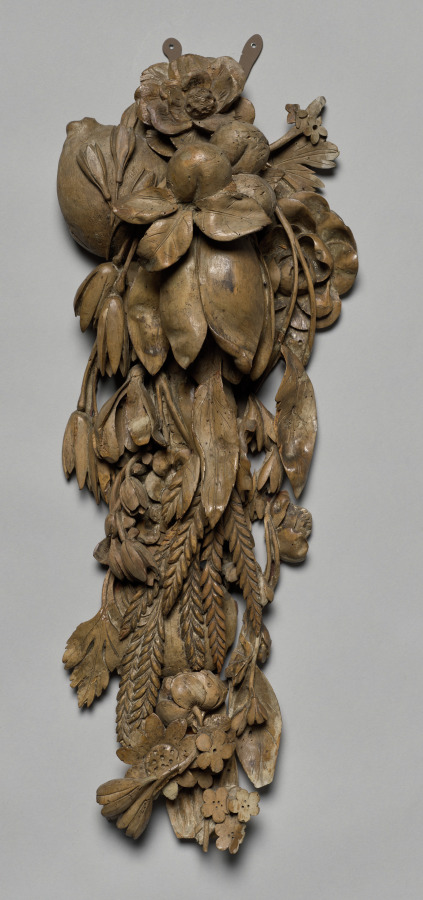
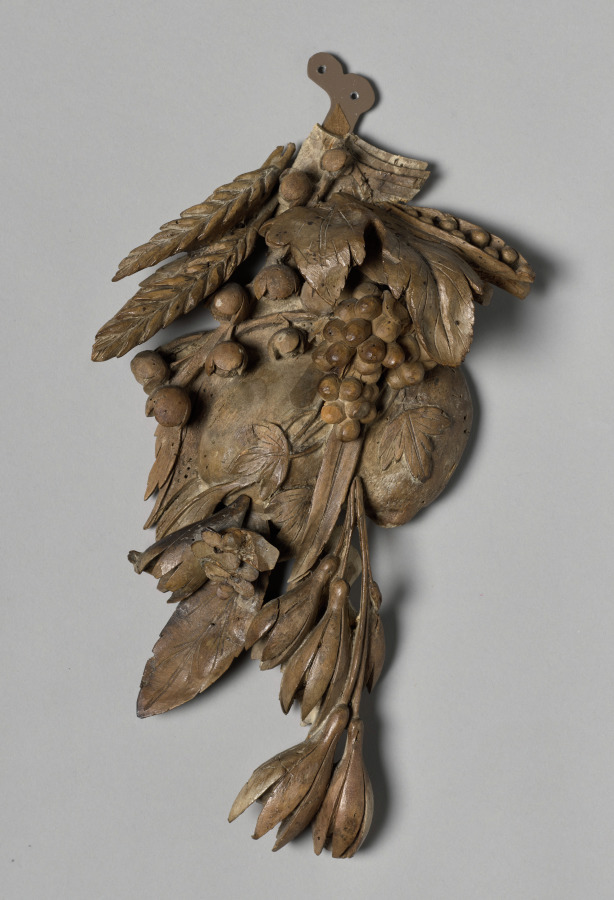
Flowers in the home made a grand statement in 17th century Northern Europe, where year-round cultivation was difficult and expensive. Influenced by potted plants and live garlands, Anglo-Dutch artists decked luxurious interiors with year-round floral displays sculpted in wood. This fashion was led by sculptor Grinling Gibbons, who devised a technique of carving layers of linden wood in highly naturalistic detail to be applied in rhythmic masses of flowers over doorways and picture frames above fireplaces as overmantels. This overmantel is from Cassiobury House, the home of the Earls of Essex, where it ornamented a room of proportions similar to the display gallery. The sheet music crowned by a wreath near the center may refer to the room's original purpose as a cabinet for entertainment; ironically, it notates not a profound composition but instead a simple tune, "Twas Woman Mad Me Love." This page is taken directly from a popular beginner's book on playing the recorder, published in London in 1683. The overmantel has undergone many changes throughout its life, having witnessed numerous renovations and additions to Cassiobury before arriving at the Art Institute in 1926, just prior to the grand home's demolition. After two years of careful conservation, cleaning, and re-carving of some lost elements, it has been reassembled to better reflect its state at the time of its original installation. The carved basket, which was at one point incorporated into the overmantel, was possibly made for another room or displayed above the chimney breast.
미술관이 쓴 설명 원문입니다(영어). 라이선스: CC BY 4.0
작품 이미지와 미술관 정보를 이 기기에 저장해 인터넷 연결 없이 읽어 보세요.
궁금한 것을 내 말로 물어보세요. 미술관이 이 작품에 대해 쓴 글에서 답을 찾고, 거기에 없으면 없다고 말합니다.
이미지: Art Institute of Chicago, CC0