Paris under Snow
Auguste Louis Lepère · 1890 · 클리블랜드 미술관
가이드
가이드 조절처음 · 보통
가이드를 찾고 있습니다.
미술관의 설명
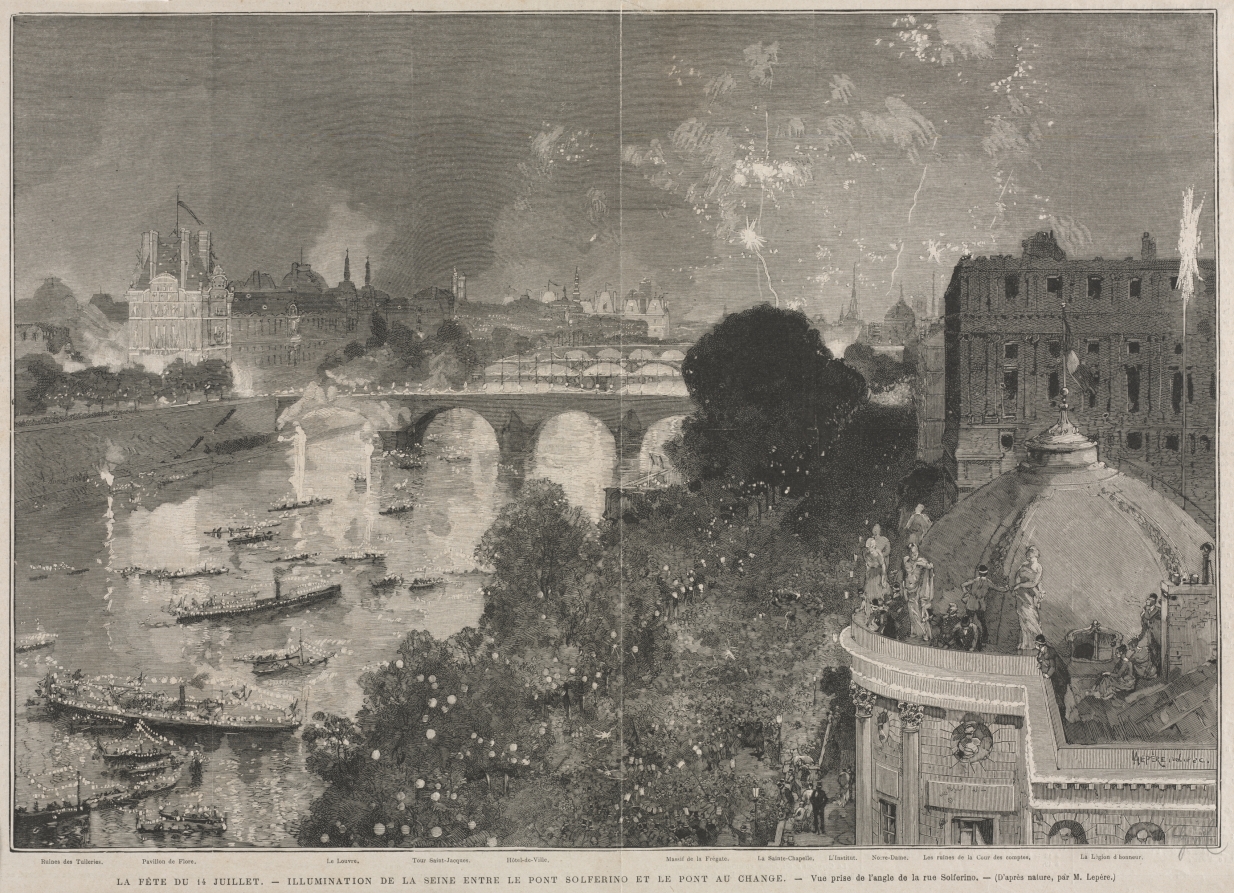
Wood engraving was perfected about 1770 in England by Thomas Bewick (1753–1828). Since the end grain of a hard wood is used, the block can be engraved with a sharp instrument called a burin, making closely set lines possible and producing a great range of textures and tones. The surface of the block is inked and printed so that the engraved lines appear as white areas. The strength of the block meant that numerous impressions could be printed. Wood engraving thus became a principal method for illustrating books and newspapers in the 19th century. Lepère developed an extraordinary mastery of wood engraving, which he used to effectively describe a snowy view of central Paris. The confetti-like snowflakes silhouetted against the dark river, and the overall blurring effect caused by the snowfall in the distance, are a tour de force.
미술관이 쓴 설명 원문입니다(영어). 라이선스: CC0
이 작품, 어땠나요?
작품 이미지와 미술관 정보를 이 기기에 저장해 인터넷 연결 없이 읽어 보세요.
이 작품에 대해 묻기
궁금한 것을 내 말로 물어보세요. 미술관이 이 작품에 대해 쓴 글에서 답을 찾고, 거기에 없으면 없다고 말합니다.
작품 정보
- 작가
- Auguste Louis Lepère (French, 1849–1918)
- 제작 시기
- 1890
- 재료
- wood engraving
- 크기
- Border: 30.2 x 45.4 cm (11 7/8 x 17 7/8 in.)
- 제작 지역
- France
- 소장처
- 클리블랜드 미술관, Cleveland · 지금은 전시하지 않음
- 소장 경위
- Gift of Mrs. Malcolm L. McBride
이미지: Cleveland Museum of Art, CC0