잠시만 기다려 주세요
잠시만 기다려 주세요
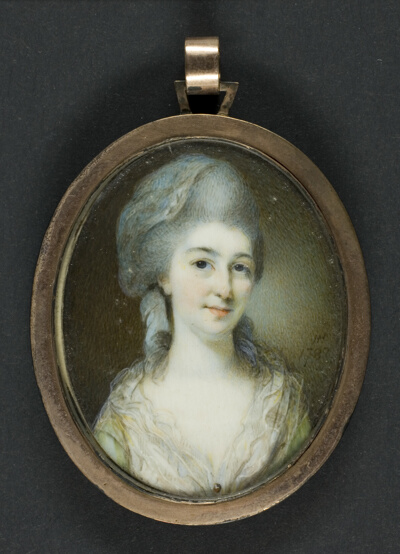
Horace Hone · 1784 · 클리블랜드 미술관
작품의 주요 특징과 배경을 연결해 살펴봐요.
가이드를 찾고 있습니다.
Lady Grace Anna Newenham (née Burton, 1725–1807) was the wife of Sir Edward Newenham (1734–1814), a prominent radical Protestant Irish politician and MP for Dublin, whom she married in 1754 at St. Thomas in Dublin. Lady Newenham herself came from a highly influential family with deep Whig political roots in Dublin. This miniature was painted in 1784, when she was nearly 60 years old and had been married for 30 years. This period found her husband, Edward, deeply in debt, going to great lengths to secure employment for his children, and planning a trip to America. While the former conditions would not encourage an artistic expenditure, the latter might have provided the impetus for this portrait to be commissioned. Lady Newenham wears a gray wrap with a high white collar and a white low-neck dress. Her costume is summarily painted with quick strokes, and the ivory ground is allowed to show through particularly at her breast, enhancing the delicacy of her complexion. She is not, however, overly flattered as she would have been in the hands of a miniature painter like Richard Cosway (1742–1821). Instead, Horace Hone gently described her sagging jaw line as well as the wrinkles and moles on her face. She has the eyes of an older woman, beneath which Hone’s trademark glowing pink cheeks seem almost to suggest cosmetics. The texture of her lightly powdered brown hair that falls to her shoulders is delineated by Hone’s technique of scraping the surface of the watercolor paint with extremely fine lines that reflect light and suggest individual strands of hair. The background is a muddy gray sky with a hint of pale blue. Among the 18 children that Lady Newenham gave birth to over the course of two decades, six died at a young age. Lady Newenham wears a miniature on her breast, possibly depicting one of the children she lost. The back of the miniature contains plaited hair under glass, bordered with an elaborate woven hair “belt,” a typically Irish form of hairwork. Human hair was frequently incorporated into miniatures and was especially appropriate for mourning miniatures because it transformed the object into a kind of reliquary.
미술관이 쓴 설명 원문입니다(영어). 라이선스: CC0
작품 이미지와 미술관 정보를 이 기기에 저장해 인터넷 연결 없이 읽어 보세요.
궁금한 것을 내 말로 물어보세요. 미술관이 이 작품에 대해 쓴 글에서 답을 찾고, 거기에 없으면 없다고 말합니다.
이미지: Cleveland Museum of Art, CC0