잠시만 기다려 주세요
잠시만 기다려 주세요
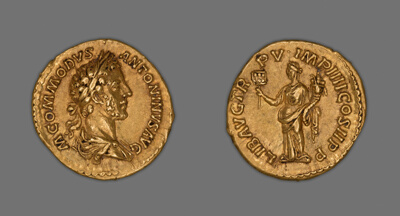
Ancient Roman · 378-383 · 시카고 미술관
작품의 주요 특징과 배경을 연결해 살펴봐요.
가이드를 찾고 있습니다.
The front (obverse) of this coin portrays Emperor Valentinian II, diademed, draped, and cuirassed (wearing a military cloak), facing right. The back (reverse) depicts Roma seated on a throne, holding Victory on globe and spear. Although the fourth century was a time of tremendous political, social, and religious change for the Roman Empire, the imagery presented on the coins tells a different story, one of an unbroken chain of powerful rulers supported by the deities of traditional Roman religion. Diocletian (reigned 284–305), through a series of administrative, military, and monetary reforms, had brought to an end the chaos of the third century. He also divided the rule of the vast empire under four men, a senior and junior ruler in the Western half and the Eastern half. Constantine I (reigned 306–37) reinstituted sole control over the empire; moved the imperial capital to the new city named after him, Constantinople; and not only brought an end to the persecution of Christians, but also built monumental churches in Rome, Constantinople, and Jerusalem. In 380, Theodosius (reigned 379–95) proclaimed Christianity as the official religion of the Empire. His coin in this case, however, stands true to numismatic tradition; a personification of Fortune appears on the back of his coin.
미술관이 쓴 설명 원문입니다(영어). 라이선스: CC BY 4.0
작품 이미지와 미술관 정보를 이 기기에 저장해 인터넷 연결 없이 읽어 보세요.
궁금한 것을 내 말로 물어보세요. 미술관이 이 작품에 대해 쓴 글에서 답을 찾고, 거기에 없으면 없다고 말합니다.
이미지: Art Institute of Chicago, CC0