잠시만 기다려 주세요
잠시만 기다려 주세요
Ancient Greek · 330-300 BCE · 시카고 미술관
작품의 주요 특징과 배경을 연결해 살펴봐요.
가이드를 찾고 있습니다.
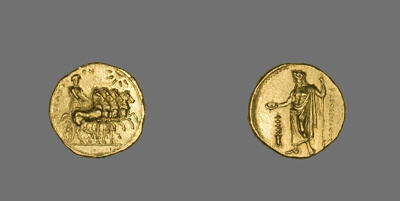
The front (obverse) of this coin depicts the head of the goddess Kore, crowned with grain, and facing to the right. On the back (reverse), an ear of grain is shown. The use of coins as a form of money was invented in western Asia Minor in the early 7th century BCE. At the time this coin was struck, Greece was made up of separate city-states that issued their own currency. Made of gold, silver, bronze, and electrum (a gold-silver alloy), coins were literally worth their weight, but their value varied according to the percentage of their precious metal content. Occasionally a city needed more money than it had in reserves. By reducing the amount of precious metal and substituting a base metal, a coin could be produced of the same weight but no longer of the same value. Some currency was only honored within its own city walls, but trustworthy money encouraged trade. Athens had the biggest economy, and its coin became the standard in the Greek world. The population was largely illiterate, but it could identify the place of origin of a coin by its imagery. Many of these images referred to myths that were associated with the history of the community and thus were well known to the populace from religious ceremonies and theatrical entertainment. The story of a city’s founding, a local hero, the city’s guardian deity, and even the reason for the city’s wealth were subjects for a coin’s insignia. Cities that excelled in a particular field often chose a symbol to illustrate the source of their power and wealth. Metapontum became wealthy through farming rather than trade. By illustrating the ear of grain on its coins, the city-state reminded its trading partners of its agricultural abundance.
미술관이 쓴 설명 원문입니다(영어). 라이선스: CC BY 4.0
작품 이미지와 미술관 정보를 이 기기에 저장해 인터넷 연결 없이 읽어 보세요.
궁금한 것을 내 말로 물어보세요. 미술관이 이 작품에 대해 쓴 글에서 답을 찾고, 거기에 없으면 없다고 말합니다.
이미지: Art Institute of Chicago, CC0