잠시만 기다려 주세요
잠시만 기다려 주세요
Ancient Egyptian · Late Period, Dynasty 26 (664-525 BCE) · 시카고 미술관
가이드를 찾고 있습니다.
How do you define a portrait? While we might think of portraits as capturing an individual’s likeness, for the non-royal Egyptians whose statues appear in this case, it was the addition of a name in hieroglyphs that identified them; their facial features and fashion were determined by contemporary styles. The inscriptions on the front and back of the statue on the upper left distinguish it as a representation of a man named Shebenhor. He sits with his knees drawn up in front of him and his hands on his lap, a compact pose ideally suited for display in crowded temple courtyards, where it would have been less susceptible to breakage than standing or seated versions while also providing a flat surface for visitors to place offerings. Statues like this one acted as proxies for the people they depicted, allowing their souls to benefit from the prayers and rituals performed in the sacred space around them.
미술관이 쓴 설명 원문입니다(영어). 라이선스: CC BY 4.0
작품 이미지와 미술관 정보를 이 기기에 저장해 인터넷 연결 없이 읽어 보세요.
궁금한 것을 내 말로 물어보세요. 미술관이 이 작품에 대해 쓴 글에서 답을 찾고, 거기에 없으면 없다고 말합니다.
이미지: Art Institute of Chicago, CC0
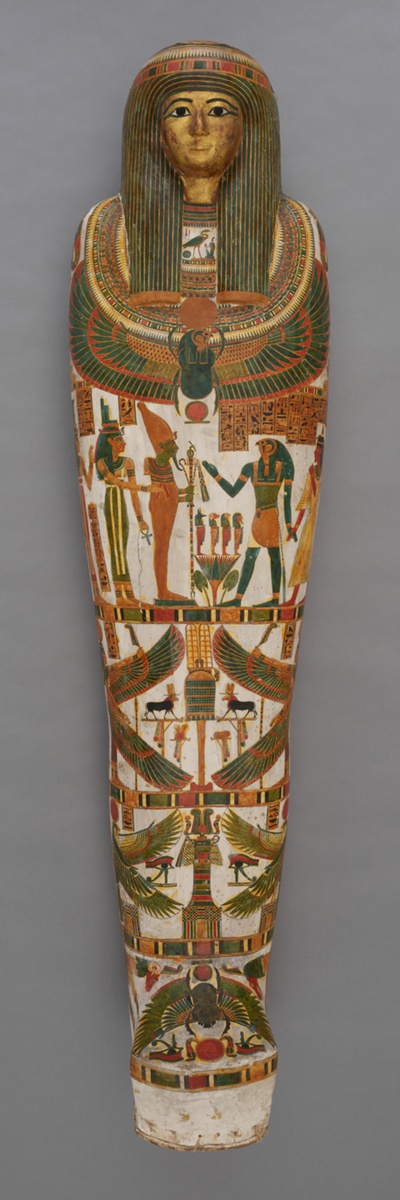 해설Coffin and Mummy of Paankhaenamun파앙케나문의 관과 미라Ancient Egyptian · Third Intermediate Period, Dynasty 22, reign of Osorkon I (about 924–889 BCE)
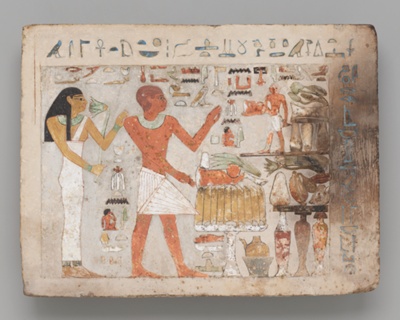 해설Stela of Amenemhat and Hemet아메넴하트와 헤메트의 석비Ancient Egyptian · Middle Kingdom, early Dynasty 12, about 1956–1877 BCE
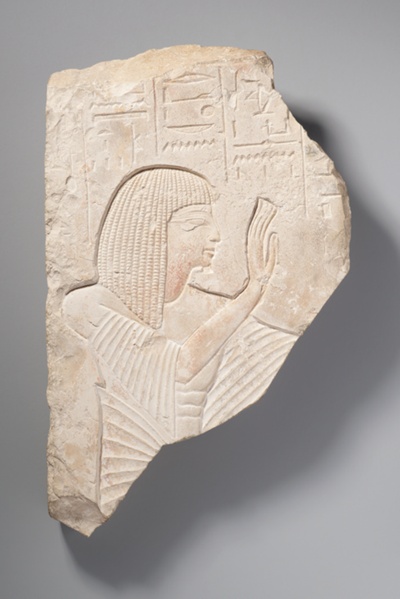 Fragment of a Stela of NeferhotepAncient Egyptian · New Kingdom, mid-Dynasty 19, about 1240-1195 BCE