잠시만 기다려 주세요
잠시만 기다려 주세요
Ancient Greek · 5th century BCE · 시카고 미술관
작품의 주요 특징과 배경을 연결해 살펴봐요.
가이드를 찾고 있습니다.
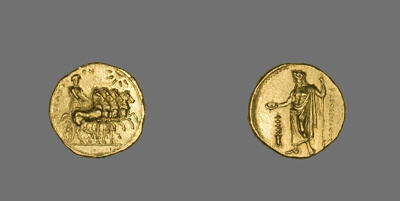
The front (obverse) of this coin depicts a seated charioteer, bearded, riding behind two mules walking right; in the field below is an olive leaf. The back (reverse) of the coin depicts a hare leaping to the right. When Anaxilas, son of Cretines, seized power at Rhegium (modern Reggio Calabria in southern Italy) in 494 BCE, along with parts of Sicily soon after, he adopted the image of a leaping hare on his coinage as early as 480 BCE. Aristotle (quoted by Pollux, Onomasticon 5.75) reported that Anaxilas introduced hares to Sicily for the sport of hunting and also that he was victorious in the Olympic games. The image of his mule-chariot (biga) on the front of the coin commemorates this victory. The olive leaf in the field below the chariot symbolizes the olive crown awarded to victors at the Olympic Games. The hare may also symbolize the speed of Anaxilas' chariot.
미술관이 쓴 설명 원문입니다(영어). 라이선스: CC BY 4.0
작품 이미지와 미술관 정보를 이 기기에 저장해 인터넷 연결 없이 읽어 보세요.
궁금한 것을 내 말로 물어보세요. 미술관이 이 작품에 대해 쓴 글에서 답을 찾고, 거기에 없으면 없다고 말합니다.
이미지: Art Institute of Chicago, CC0