잠시만 기다려 주세요
잠시만 기다려 주세요
Abdallah ibn al-Fadl · c. 1224 · 클리블랜드 미술관
작품의 주요 특징과 배경을 연결해 살펴봐요.
가이드를 찾고 있습니다.
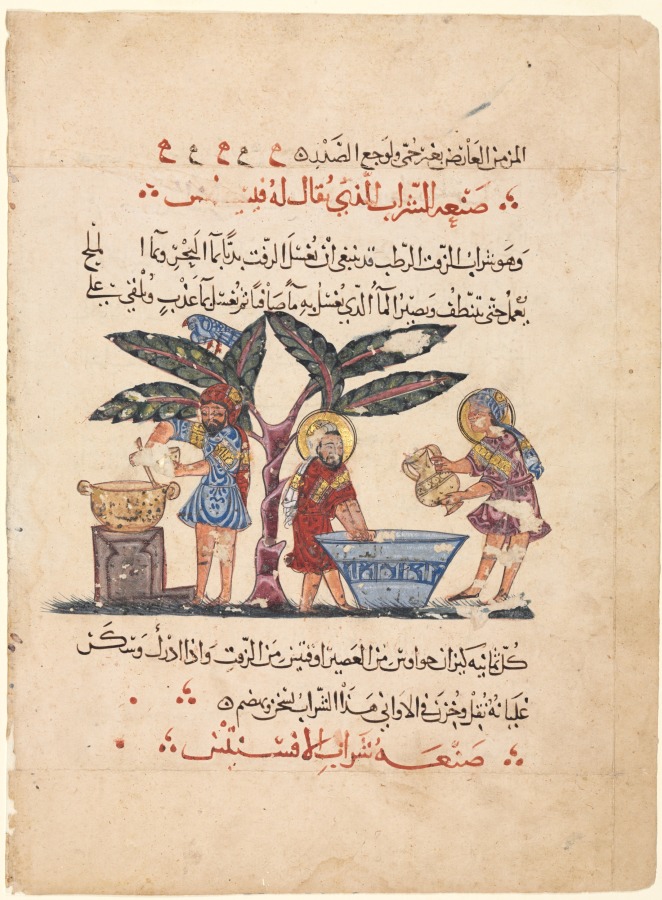
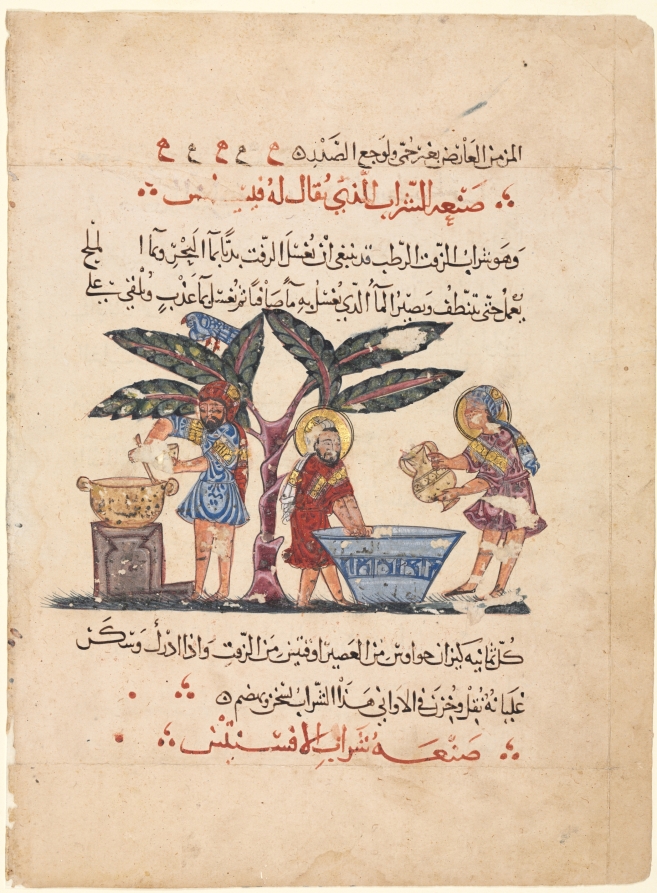
This page is from an herbal, an illustrated book on the properties of plants. Herbals were among the first manuscripts of the Islamic world to include painted figural imagery. The lines in red are titles signaling how to make a particular kind of medicine. Initially written in Greek by a physician working for the Roman imperial army in what is present-day Turkey during the 1st century AD, the text was translated into Arabic during the 800s for a caliph who sponsored many translations of Greek scientific and philosophical treatises. This copy entered the royal Topkapi Palace library in Istanbul, from where 33 of its illustrated pages were dispersed to various collections. The first recipe on the text page describes the production of a syrup used for coughs, chronic diarrhea, and the treatment of syphilis in women. It states that the herb wormwood should be added to give it a more pleasant smell. The second recipe is for a syrup made from pine nuts, and the third is used to relieve chest pains and coughing without fever. The painting on the reverse depicts a physician in red and his two assistants preparing a medicinal syrup thought to be good for digestion. In accordance with the instructions on the page, tar in the consistency of dough is to be washed in salt water, then plain water. The artist has shown the washing taking place in a great basin. The syrup is then boiled, as seen on the left, and ladled into a bowl for storage.
미술관이 쓴 설명 원문입니다(영어). 라이선스: CC0
작품 이미지와 미술관 정보를 이 기기에 저장해 인터넷 연결 없이 읽어 보세요.
궁금한 것을 내 말로 물어보세요. 미술관이 이 작품에 대해 쓴 글에서 답을 찾고, 거기에 없으면 없다고 말합니다.
이미지: Cleveland Museum of Art, CC0