잠시만 기다려 주세요
잠시만 기다려 주세요
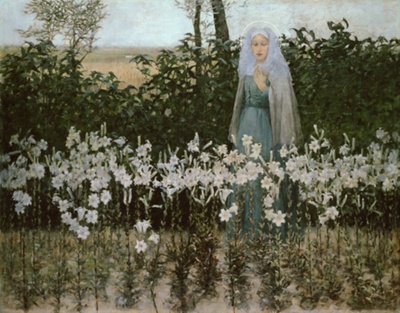
George Hitchcock · 1892 · 클리블랜드 미술관
작품의 주요 특징과 배경을 연결해 살펴봐요.
가이드를 찾고 있습니다.
George Hitchcock decided to study art in Paris after practicing law for five years. He eventually settled in Holland and painted this Dutch peasant mother holding her baby and posing formally in a garden. Hitchcock was a visionary painter fascinated by the power of faith. But, like with many of his paintings, both the title and the scene here remain ambiguous, being neither clearly religious nor clearly secular. Early critics praised the work for its technical sophistication and representation of maternal tenderness, but they questioned its religious merit. Other reviewers, however, recognized religious symbolism throughout the painting. The mother's lacy headdress can represent a halo. The apple tree suggests the lost Eden, recovered through the birth of the child. The young bullock hints to the future sacrifice of Christ, and the prominent red tulip at the feet of the figures symbolizes the cup of sorrow. This painting's religious ambiguity exemplifies the 19th-century struggle to bring faith to terms with technical, philosophical, and scientific advances, namely Darwinism. Left to search for meaning in life and a spiritual identity, many artists, like Hitchcock, looked to women and nature for a link to the divine.
미술관이 쓴 설명 원문입니다(영어). 라이선스: CC0
작품 이미지와 미술관 정보를 이 기기에 저장해 인터넷 연결 없이 읽어 보세요.
궁금한 것을 내 말로 물어보세요. 미술관이 이 작품에 대해 쓴 글에서 답을 찾고, 거기에 없으면 없다고 말합니다.
이미지: Cleveland Museum of Art, CC0