잠시만 기다려 주세요
잠시만 기다려 주세요
Jean-Baptiste Marie Hüet · 1790 · 클리블랜드 미술관
가이드를 찾고 있습니다.
Inspired by printed cottons from India, European manufacturers began printing textiles from copper plates in the 1750s. Originating in Ireland, the technique quickly spread to France where it flourished. Here, Jean-Baptiste Marie Huet I depicted female personifications of the four continents alongside their native flora and fauna. Although the artist based the plants and animals on real specimens observed at the Royal Botanical Gardens, he derived the personifications from racist stereotypes that imagined Europe as culturally superior: while Europe sits enthroned with symbols of the arts and knowledge at her feet, Africa wears an elephant headdress, America hunts an alligator, and Asia prays to a false god. Marie-Antoinette visited the textile factory where this design was made.
미술관이 쓴 설명 원문입니다(영어). 라이선스: CC0
작품 이미지와 미술관 정보를 이 기기에 저장해 인터넷 연결 없이 읽어 보세요.
궁금한 것을 내 말로 물어보세요. 미술관이 이 작품에 대해 쓴 글에서 답을 찾고, 거기에 없으면 없다고 말합니다.
이미지: Cleveland Museum of Art, CC0
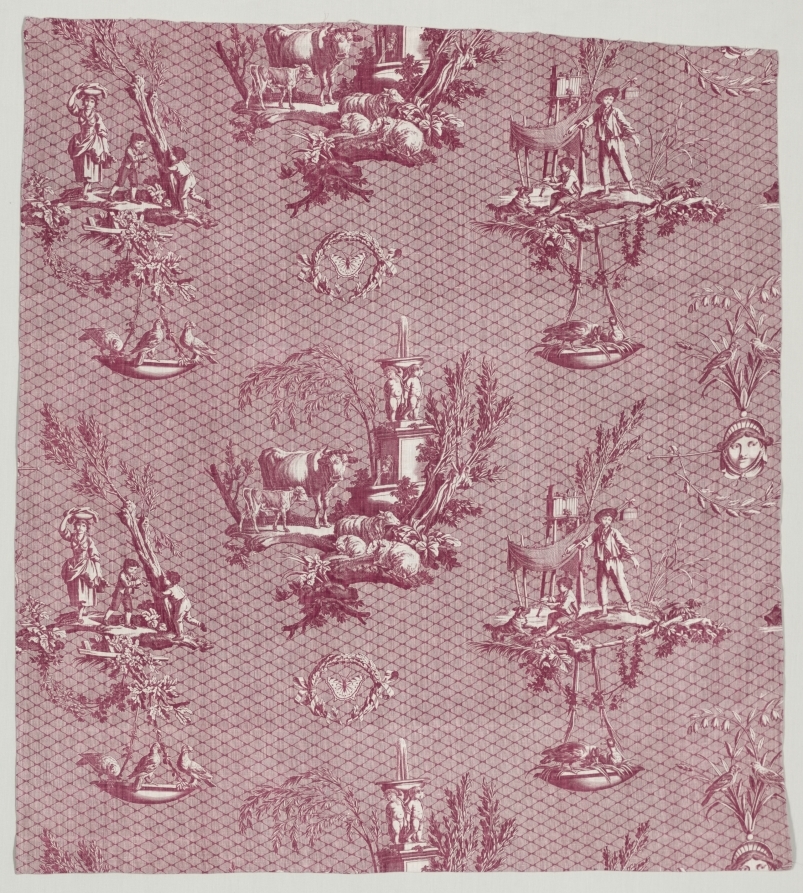
 Fragments of Copperplate Printed CottonJean-Baptiste Marie Hüet · c. 1789
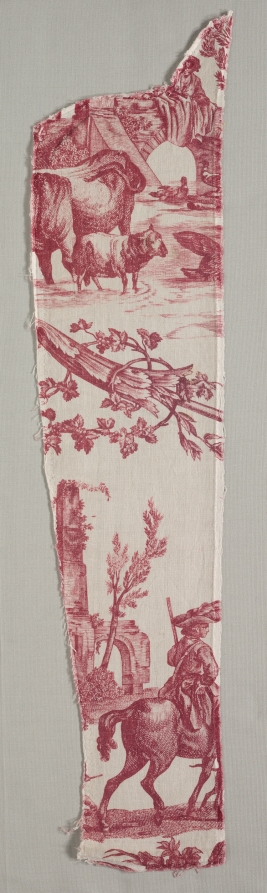
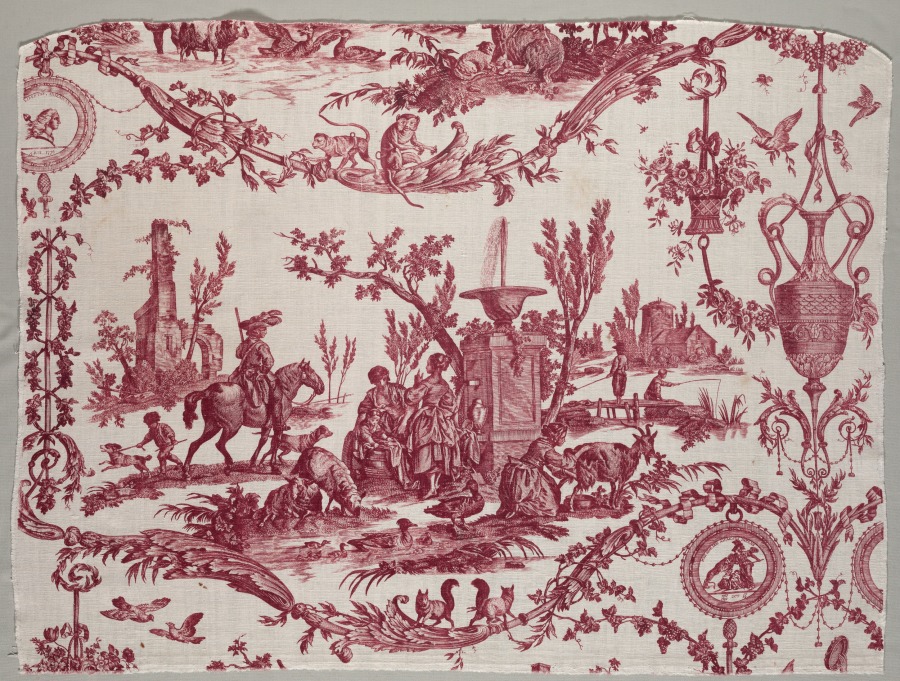
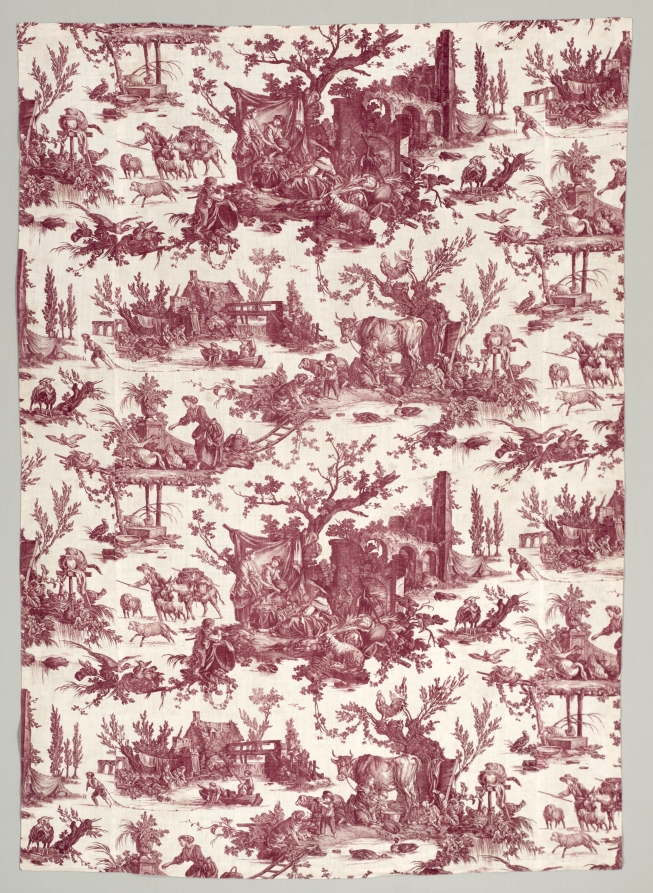 Strip of Copperplate Printed Cotton with "Les plaisirs de la ferme" DesignJean-Baptiste Marie Hüet · 1785–1790
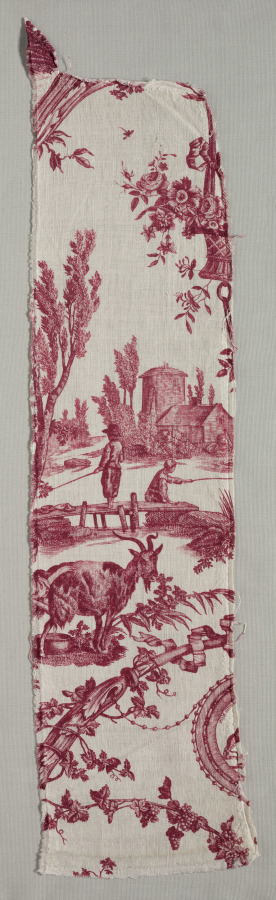 Fragments of Copperplate Printed CottonJean-Baptiste Marie Hüet · c. 1789
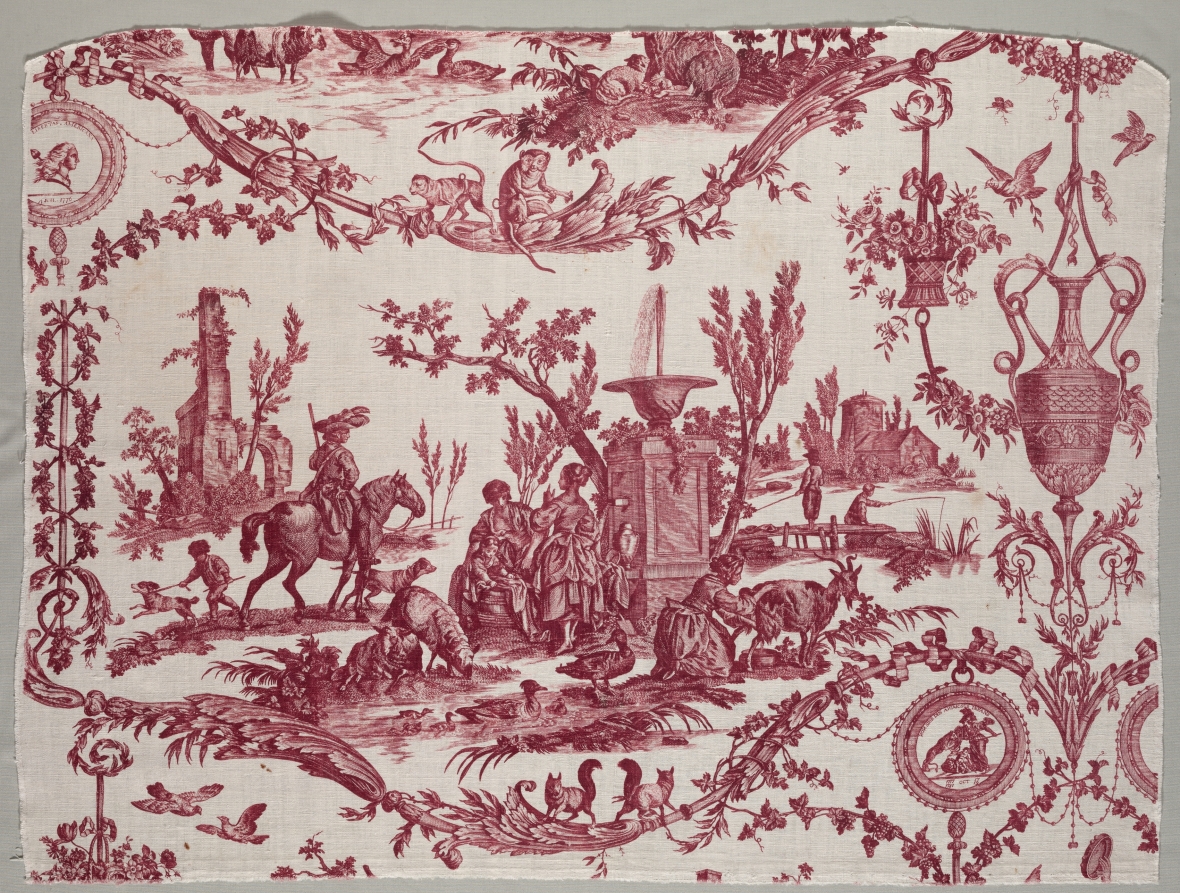 Fragments of Copperplate Printed CottonJean-Baptiste Marie Hüet · c. 1789