Trial Piece with Hieroglyphs
Ancient Egyptian · Early Ptolemaic Period, about 300 BCE · 시카고 미술관
가이드
가이드 조절처음 · 보통
가이드를 찾고 있습니다.
미술관의 설명
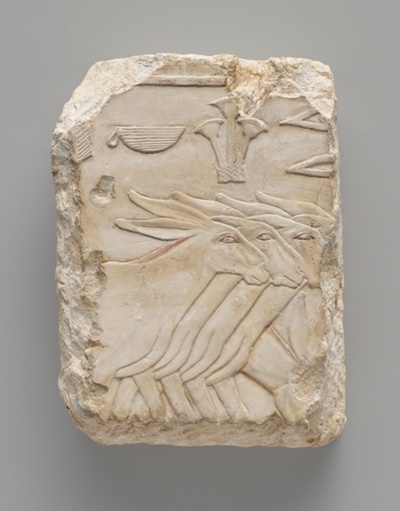
Artists used stone remnants left over from larger works to practice carving hieroglyphic signs and decorative elements. Here, the profiles of a man and a feline deity may be studies for larger works. Two hieroglyphs also appear on the thin slab. First used around 3000 BCE, ancient Egyptian hieroglyphs used images to convey sounds and meaning in writing. The undulating horned viper at the bottom of this piece represents the sound f, while the large owl in the center has the phonetic value m.
미술관이 쓴 설명 원문입니다(영어). 라이선스: CC BY 4.0
이 작품, 어땠나요?
작품 이미지와 미술관 정보를 이 기기에 저장해 인터넷 연결 없이 읽어 보세요.
이 작품에 대해 묻기
궁금한 것을 내 말로 물어보세요. 미술관이 이 작품에 대해 쓴 글에서 답을 찾고, 거기에 없으면 없다고 말합니다.
작품 정보
- 작가
- Egyptian
- 제작 시기
- Early Ptolemaic Period, about 300 BCE
- 재료
- Granite
- 크기
- 23.4 × 14 × 2.5 cm (9 3/8 × 5 1/2 × 1 in.)
- 제작 지역
- Egypt
- 소장처
- 시카고 미술관, Chicago · 전시 중 · Gallery 50
- 소장 경위
- Museum Purchase Fund
이미지: Art Institute of Chicago, CC0
Ancient Egyptian의 다른 작품
해설Coffin and Mummy of Paankhaenamun파앙케나문의 관과 미라Ancient Egyptian · Third Intermediate Period, Dynasty 22, reign of Osorkon I (about 924–889 BCE)
해설Stela of Amenemhat and Hemet아메넴하트와 헤메트의 석비Ancient Egyptian · Middle Kingdom, early Dynasty 12, about 1956–1877 BCE
Fragment of a Stela of NeferhotepAncient Egyptian · New Kingdom, mid-Dynasty 19, about 1240-1195 BCE