잠시만 기다려 주세요
잠시만 기다려 주세요
가이드를 찾고 있습니다.
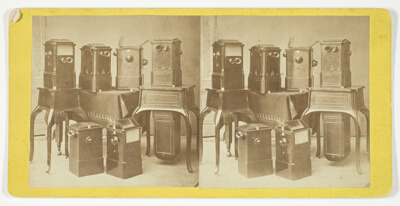
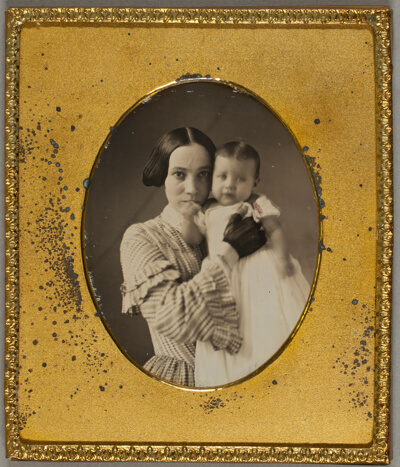
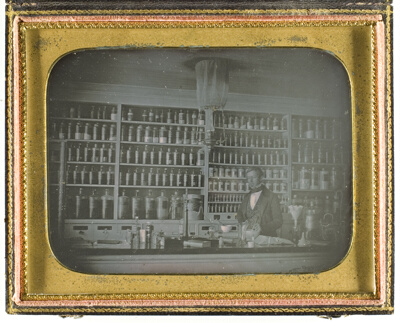
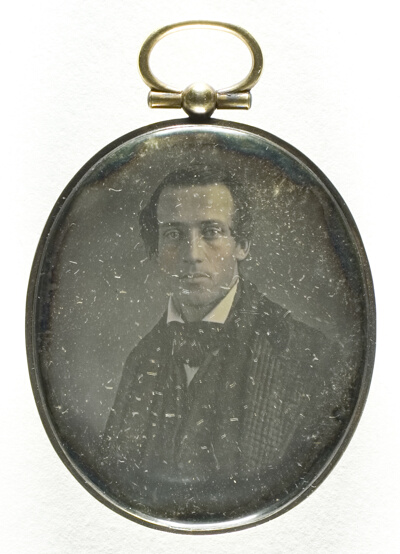
The daguerreotype was invented in France in 1839 but gained its longest-lived popularity in America, where it was prized for its faithful detail and affordability. In the 1850s especially, millions of daguerreotypes were made by "operators" who rapidly learned the technique—involving copper plates coated in silver, each producing a unique image—to fulfill burgeoning demand for portraits. The seated elderly couple shown here holds a note identifying their ages and the occasion for the image, their 50th wedding anniversary: "70 years, 2 months, 20 days. / 68 years, 3 months, 21 days. / THANKS BE TO GOD: / Oct. 11th, 1802 Marriage Jubilee, Oct. 11th, 1852." Lateral reversal through the camera lens caused all writing in daguerreotypes to appear backwards, while the fineness of the metal plate gave jewel-like precision and great tonal range to the images. These qualities prompted viewers to nickname the daguerreotype "mirror with a memory."
미술관이 쓴 설명 원문입니다(영어). 라이선스: CC BY 4.0
작품 이미지와 미술관 정보를 이 기기에 저장해 인터넷 연결 없이 읽어 보세요.
궁금한 것을 내 말로 물어보세요. 미술관이 이 작품에 대해 쓴 글에서 답을 찾고, 거기에 없으면 없다고 말합니다.
이미지: Art Institute of Chicago, CC0