잠시만 기다려 주세요
잠시만 기다려 주세요
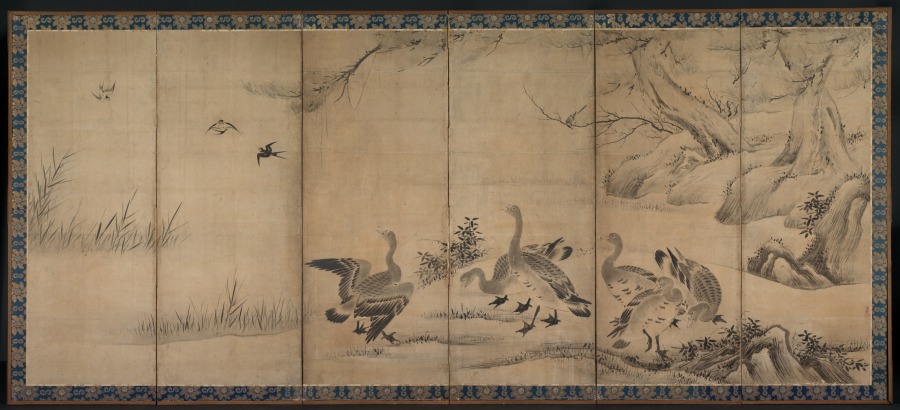
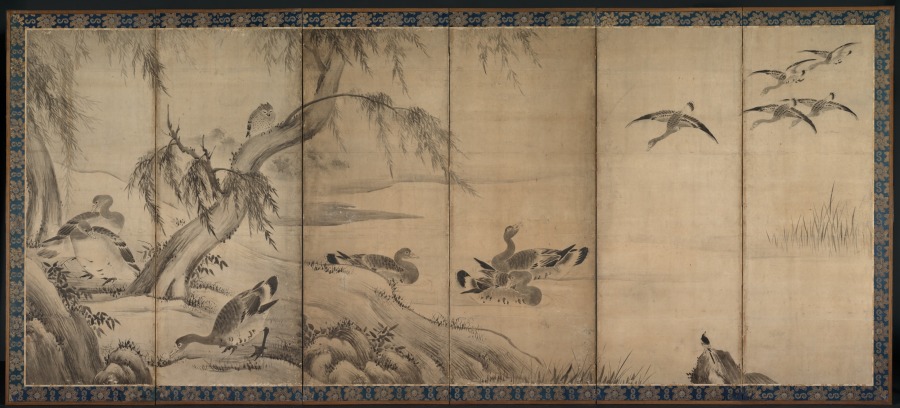
Kano Sanraku · late 1500s-early 1600s · 클리블랜드 미술관
작품의 주요 특징과 배경을 연결해 살펴봐요.
가이드를 찾고 있습니다.
Depictions of geese usually appear as ink paintings in Japan during the 1200s. They later show up in the colorful landscapes of illustrated handscrolls. Such early ink renditions of the birds have long been associated with classical Chinese Zen painting and poetry, which was avidly admired and collected in medieval Japan. In these screens the artist portrayed the waterfowl in a pastoral setting without reference to classical or religious themes. Such ordinary subjects were imbued with special meaning in 14th- and 15th-century Japan through associations with continental culture, Zen thought and poetry, and famous Chinese monk-painters whose painting techniques had become revered as visual emblems of Zen principles. The screens here reflect the continuation of that painting tradition in the late 1500s or early 1600s by the head of the most important studio in Kyoto. Sanraku also executed a number of colorful folding screen compositions, but here he pays homage to the style of early Zen painting.
미술관이 쓴 설명 원문입니다(영어). 라이선스: CC0
작품 이미지와 미술관 정보를 이 기기에 저장해 인터넷 연결 없이 읽어 보세요.
궁금한 것을 내 말로 물어보세요. 미술관이 이 작품에 대해 쓴 글에서 답을 찾고, 거기에 없으면 없다고 말합니다.
이미지: Cleveland Museum of Art, CC0