Just a moment
Just a moment
Peter Paul Rubens · c. 1615 · Cleveland Museum of Art
A closer look, connecting key details with the work’s background.
Looking for this guide.
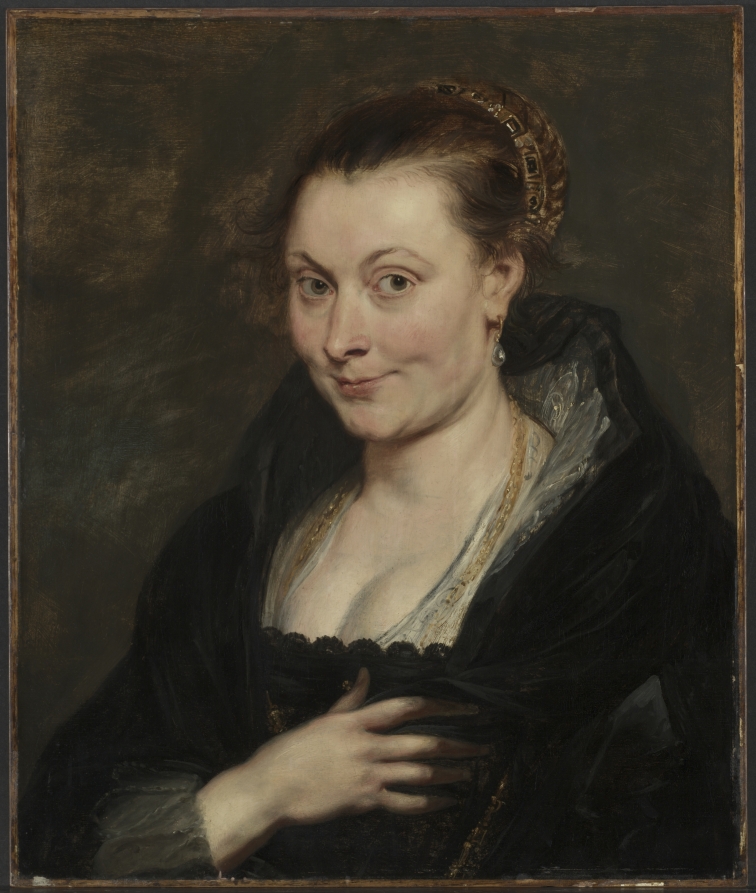
Diana, the Roman goddess of the hunt, wears a crescent on her forehead, also identifying her as the moon goddess. Diana lived apart from men, accompanied by a group of nymphs; she often represented unattainable beauty or chastity. With a nymph at left fending off a lustful satyr, Rubens refers to a struggle between vice and virtue, combining a sensual display of female bodies with a moral undertone. To bring the viewer more fully into the narrative, Rubens pulls the full-bodied figures to the front of the picture plane, and Diana steps forward, activating the space between viewer and subject. The nymph at the right has the features of Isabella Brant, the artist’s wife, and can be compared with Rubens’s portrait of her, also in the museum's collection. The moon and stars on the white and black dog’s collar indicate that both hounds are companions of Diana, accompanying the goddess on her hunts.
The museum’s own description, in English. Licence: CC0
Save this work’s image and museum information on this device to read without a connection.
Ask in your own words. The answer comes from what the museum has written about the work, and says so when that does not hold it.
Image: Cleveland Museum of Art, CC0