
Just a moment
Just a moment
Louis Haghe · 1846 · Cleveland Museum of Art
A closer look, connecting key details with the work’s background.
Looking for this guide.
Throughout the 1800s and into the 1900s, prints, paintings, and photographs, like Louis Haghe’s Egypt and Nubia series, brought back by artists who voyaged to Egypt, inspired American and European artists, architects, and designers to emulate ancient Egyptian motifs and styles. Egyptomania blossomed through the 1800s and can be seen in architecture around cities like Washington, DC, and in the interiors of aristocratic homes, as well as in funerary monuments, such as in Lake View Cemetery in Cleveland, Ohio. Looking back at these creations provides an interesting historical groundwork for debating who has the right to interpret Egyptian motifs and styles. Louis Haghe was appointed Lithographer to the Queen in 1838.
The museum’s own description, in English. Licence: CC0
Save this work’s image and museum information on this device to read without a connection.
Ask in your own words. The answer comes from what the museum has written about the work, and says so when that does not hold it.
Image: Cleveland Museum of Art, CC0
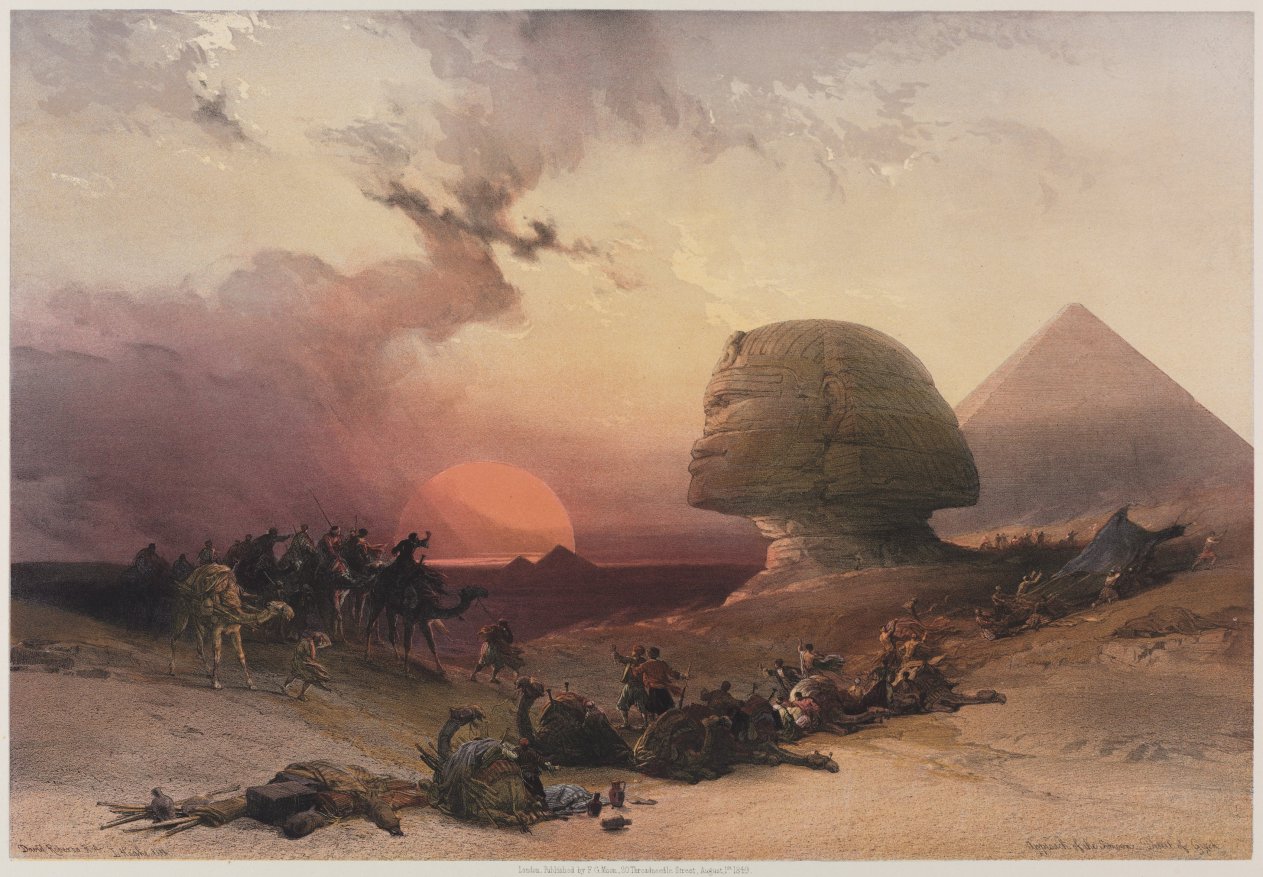 Egypt and Nubia, Volume III: Approach of the Simoon-Desert at GizehLouis Haghe · 1849
 Egypt and Nubia, Volume II: Entrance to the Tombs of the Kings of Thebes, Bab-El-MaloukLouis Haghe · 1848
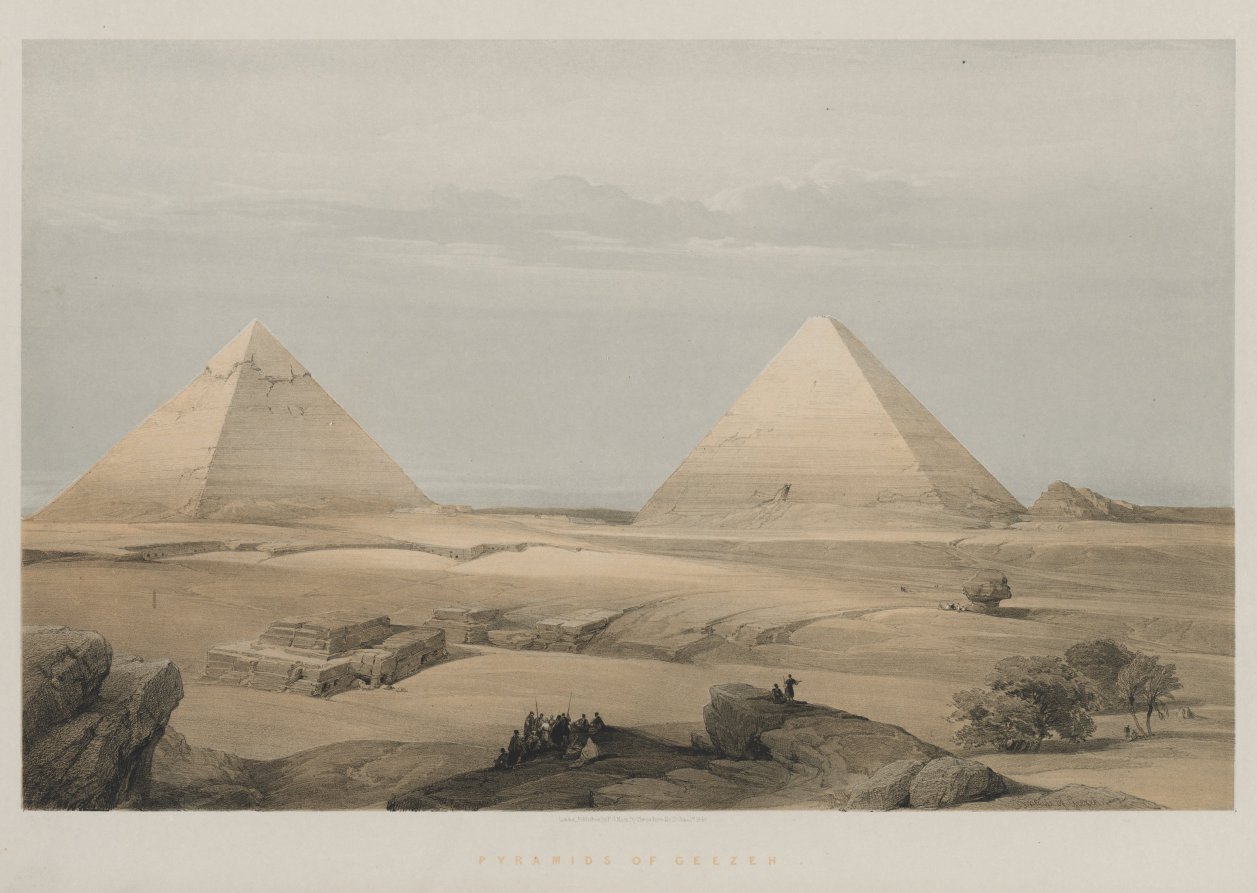 Egypt and Nubia, Volume II: Pyramids of GeezehLouis Haghe · 1848
 Egypt and Nubia, Volume II: Statues of Memnon at Thebes, during the InundationLouis Haghe · 1848
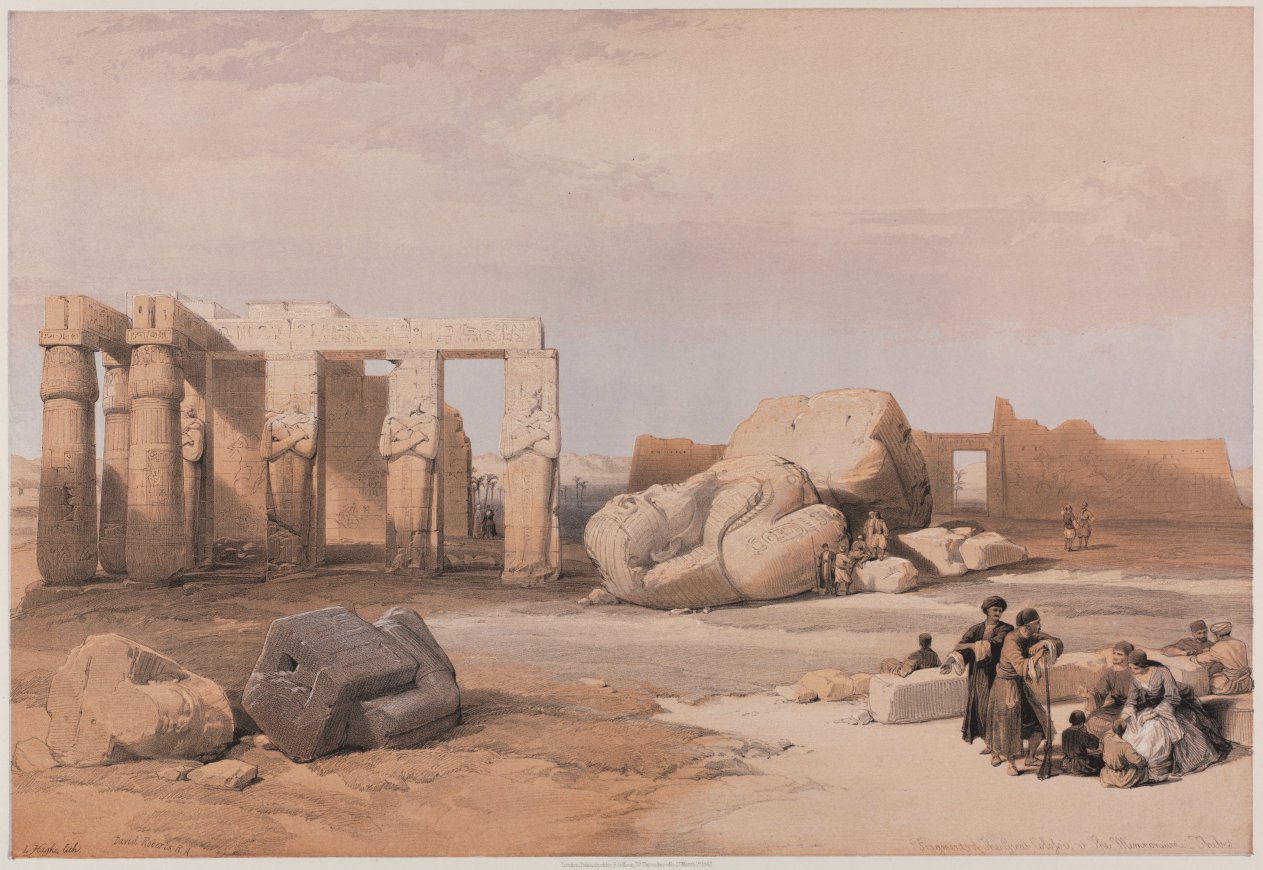 Egypt and Nubia, Volume II: Fragments of the Great Colossi at the Memnonium, ThebesLouis Haghe · 1847
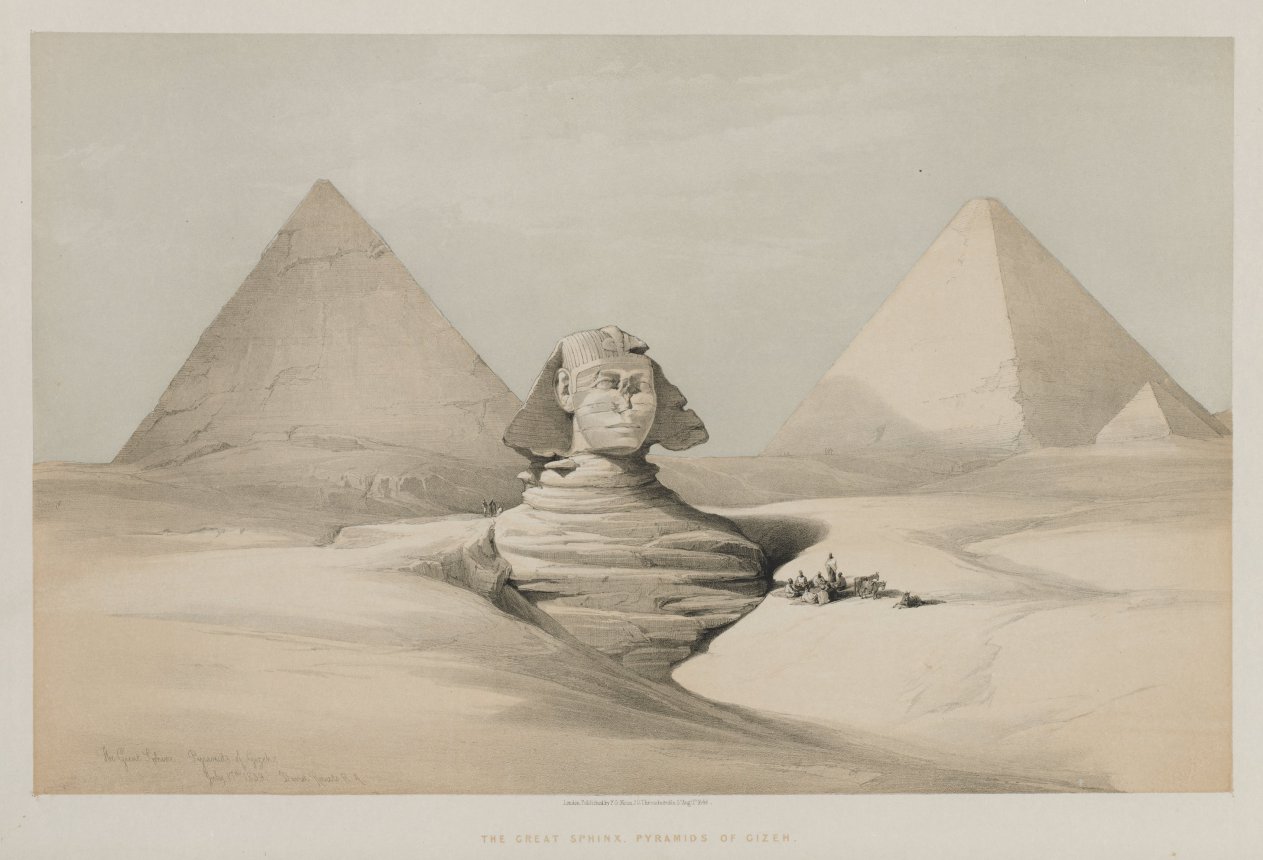 Egypt and Nubia, Volume I: The Great Sphinx, Pyramids of GezeehLouis Haghe · 1846
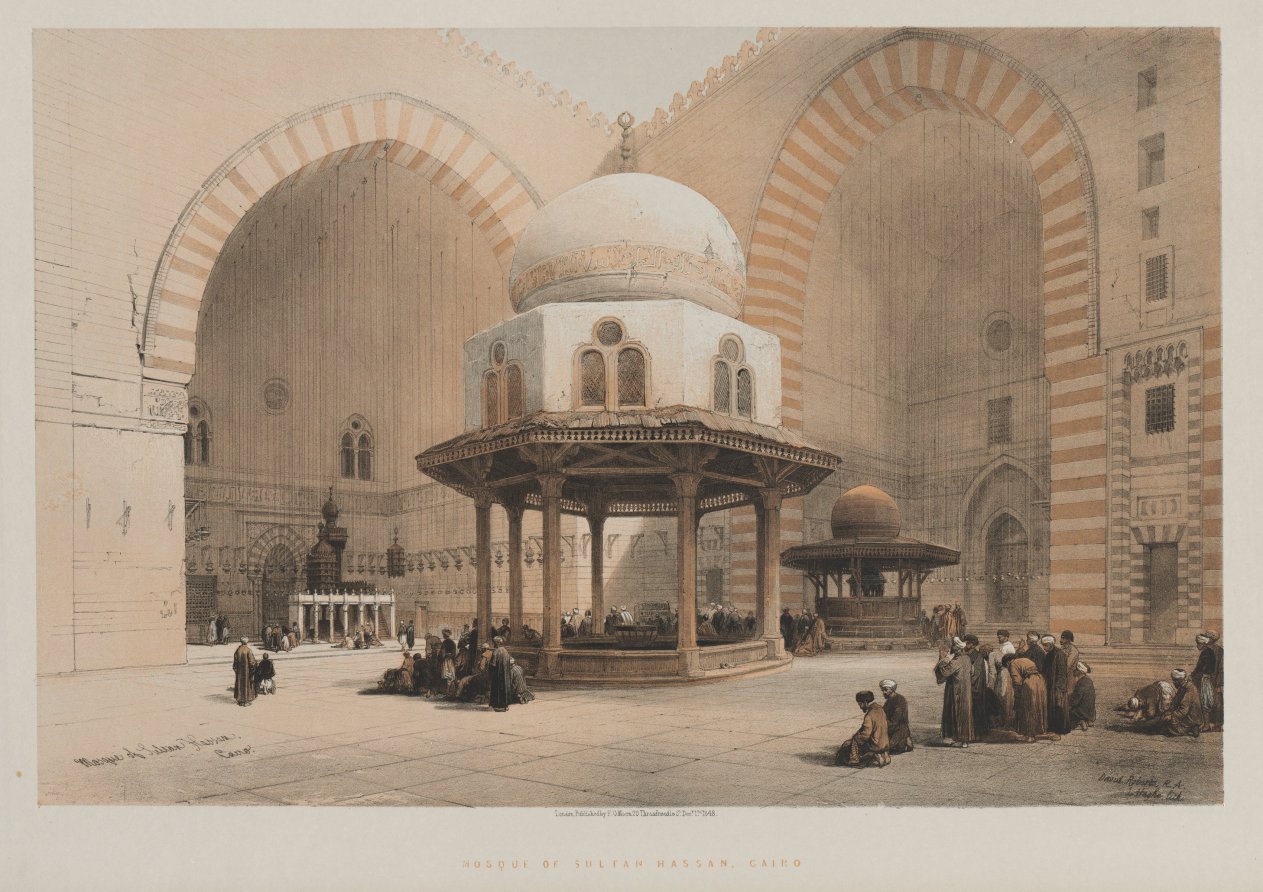 Egypt & Nubia, Volume III, No. 8: Mosque of Sultan Hassan, CairoLouis Haghe · 1842–49
 Egypt and Nubia, Volume III, No. 26, Cairo, Looking WestLouis Haghe · 1848