Single Stem Vase
Seifū Yohei IV · 1914–46 · Cleveland Museum of Art
What did you think?
Guide
Adjust the guideNew to it · Medium
Nobody has listened to this guide yet. Making it takes about twenty seconds, and after that anyone can hear it straight away.
From the museum
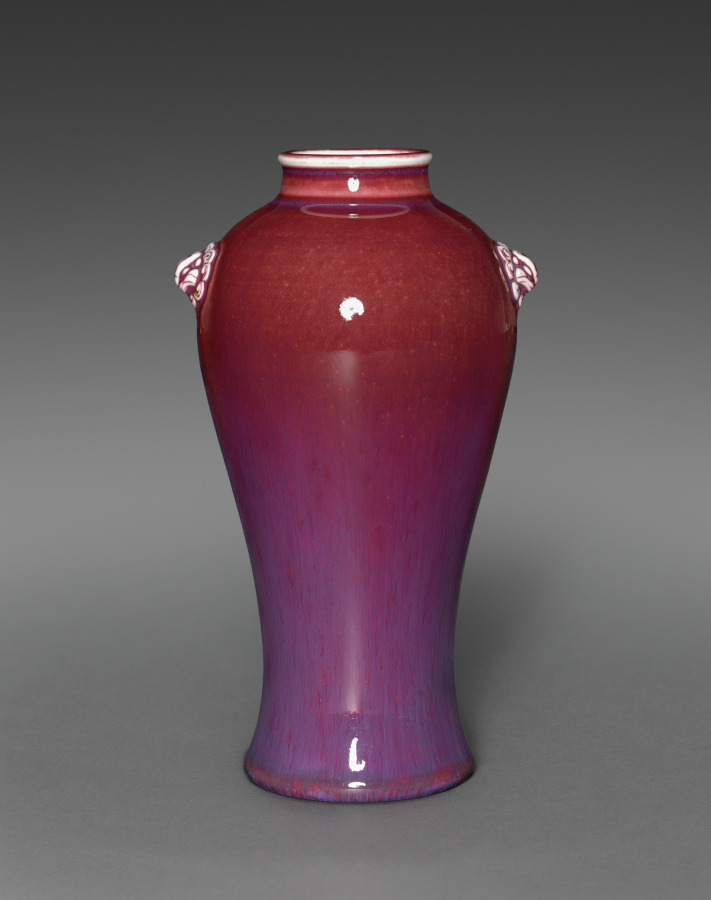
This vase is copper red in color at the top and becomes purple closer to the bottom, not unlike a Chinese transformation or flambé glaze with mottling and dripping of the glaze. The lip of the vase and much of the lion-head designs remain white. On the box lid, the color of the glaze is called shinsha, which is often glossed as copper red or oxblood, or sometimes cinnabar. Here, it is meant to refer to a Qing-dynasty glazing technique developed in an effort to reproduce a red glaze used during the reign of the Xuande emperor (1426–35) of the Ming dynasty. This vase has lion heads for “ears."
The museum’s own description, in English. Licence: CC0
Ask about this work
Ask in your own words. The answer comes from what the museum has written about the work, and says so when that does not hold it.
Details
- Maker
- Seifū Yohei IV (Japanese, 1872–1951)
- Date
- 1914–46
- Medium
- Porcelain with molded design and copper-red glaze
- Dimensions
- height: 17.1 cm (6 3/4 in.); Diameter: 9.5 cm (3 3/4 in.)
- Place of origin
- Japan
- Held by
- Cleveland Museum of Art, Cleveland · Not on view
- Credit line
- Gift of James and Christine Heusinger
Image: Cleveland Museum of Art, CC0