Tunic
Paracas · 200 BCE-1 BCE · Art Institute of Chicago
Guide
Adjust the guideNew to it · Medium
Looking for this guide.
From the museum
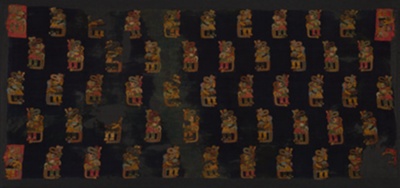
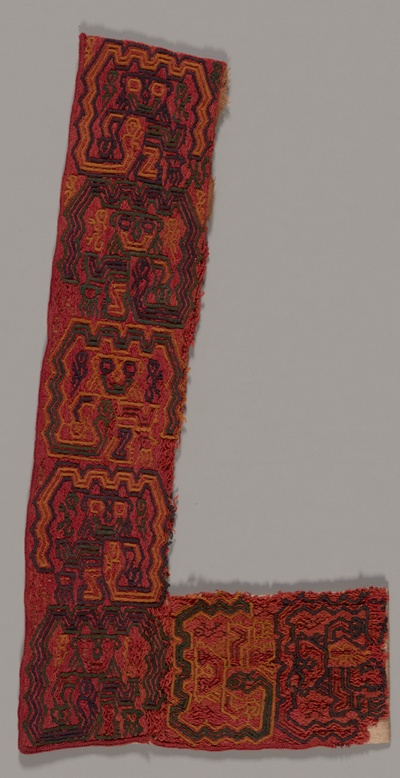
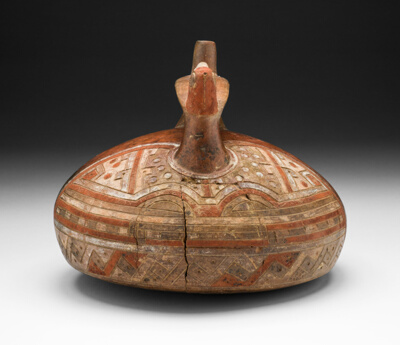
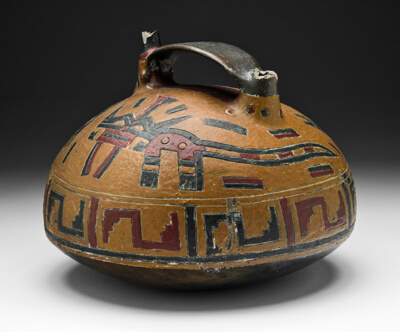
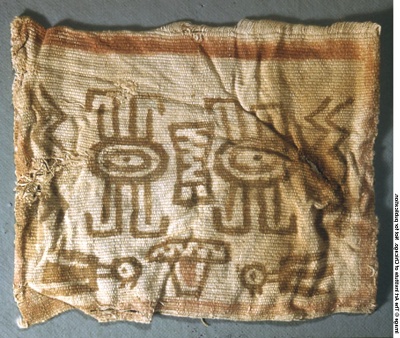
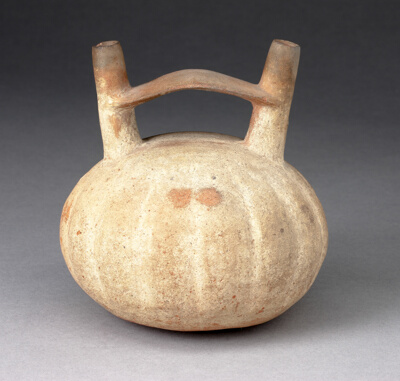
This tunic is identifiable through the slit at the center to accommodate the wearer’s head and neck. The geometric design of interlaced stepped diagonal lines suggests the twisting together of threads to make yarn, a fitting motif for a textile. Similar motifs appear on ceramic vessels made by the Paracas; the use of the same twisted-thread design across different media demonstrates a consistent visual language and attests to the primacy of textiles as a means of aesthetic expression for the Paracas.
The museum’s own description, in English. Licence: CC BY 4.0
What did you think?
Save this work’s image and museum information on this device to read without a connection.
Ask about this work
Ask in your own words. The answer comes from what the museum has written about the work, and says so when that does not hold it.
Details
- Maker
- Paracas, South coast, Peru
- Date
- 200 BCE-1 BCE
- Medium
- Wool (camelid), simple looping; applied wool (camelid) braided neck edging; and unspun wool fringe
- Dimensions
- 76.8 × 74.4 cm (30 1/4 × 29 1/4 in.)
- Place of origin
- Peru
- Held by
- Art Institute of Chicago, Chicago · Not on view
- Credit line
- Simeon B. Williams Fund
Image: Art Institute of Chicago, CC0