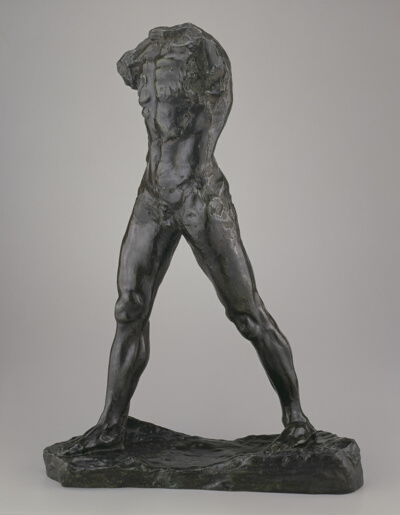
Eve after the Fall
Auguste Rodin · Modeled 1883, carved c. 1886 · Instituto de Arte de Chicago
Guía
Ajustar la guíaPrincipiante · Media
Nadie ha escuchado todavía esta guía. Prepararla lleva unos veinte segundos y, después, cualquiera podrá escucharla al momento.
Texto del museo
Auguste Rodin’s sculpture Eve owes its genesis to The Gates of Hell, the artist’s major commission from the French government in 1880. The associations posed by the sculptural portals of that project led Rodin back to the art of Lorenzo Ghiberti and Michelangelo, particularly their depiction of biblical stories from the book of Genesis. A number of elements from the Gates—such as The Thinker, Adam, and Eve—gradually evolved into independent works. In particular, Eve recalls the most sculptural of Renaissance paintings: Michelangelo’s panels from the Sistine Chapel Ceiling and Masaccio’s Expulsion from the Garden of Eden. Its naturalism shocked critics when it was first exhibited, since Eve seemed to them more like a flesh-and-blood woman than an idealized creation.
Descripción original del museo, en inglés. Licencia: CC BY 4.0
¿Qué te ha parecido?
Guarda la imagen y la información del museo en este dispositivo para leerlas sin conexión.
Pregunta sobre esta obra
Pregunta con tus propias palabras. La respuesta sale de lo que el museo ha escrito sobre la obra, y lo dice cuando ahí no está.
Detalles
- Autor
- Auguste Rodin (French, 1840–1917)
- Fecha
- Modeled 1883, carved c. 1886
- Técnica
- Marble
- Dimensiones
- 76.2 × 27.4 × 21 cm (30 × 11 × 8 1/4 in.)
- Lugar de origen
- France
- Colección
- Instituto de Arte de Chicago, Chicago · En sala · Gallery 243
- Procedencia
- Mr. and Mrs. Martin A. Ryerson Collection
Imagen: Art Institute of Chicago, CC0