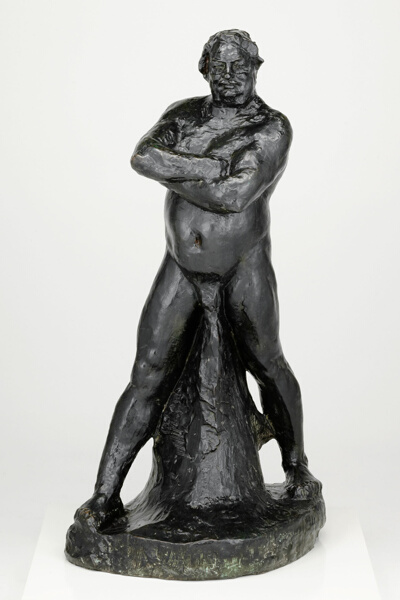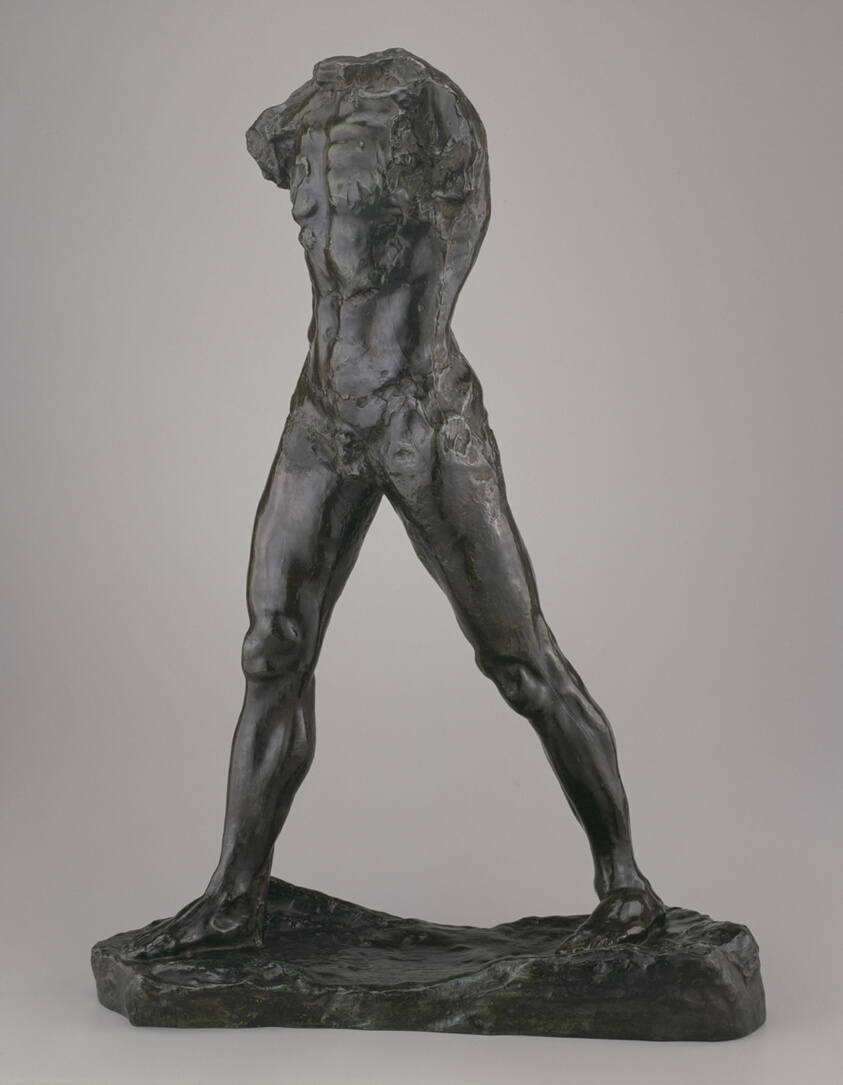
The Walking Man
Auguste Rodin · Modeled 1877–1900, cast before 1917 · Instituto de Arte de Chicago
¿Qué te ha parecido?
Guarda la imagen y la información del museo en este dispositivo para leerlas sin conexión.
Guía
Ajustar la guíaPrincipiante · Media
Nadie ha escuchado todavía esta guía. Prepararla lleva unos veinte segundos y, después, cualquiera podrá escucharla al momento.
Texto del museo
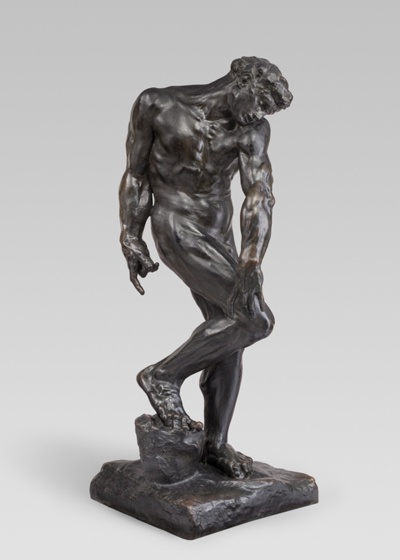
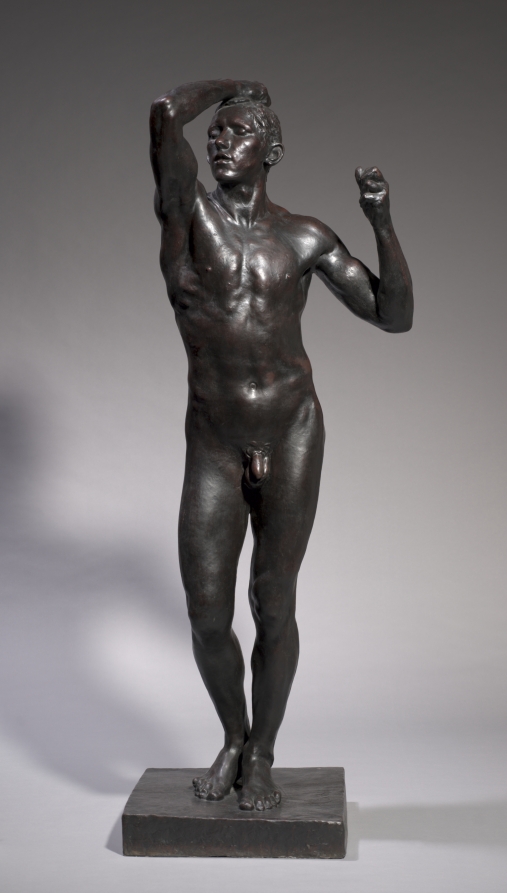
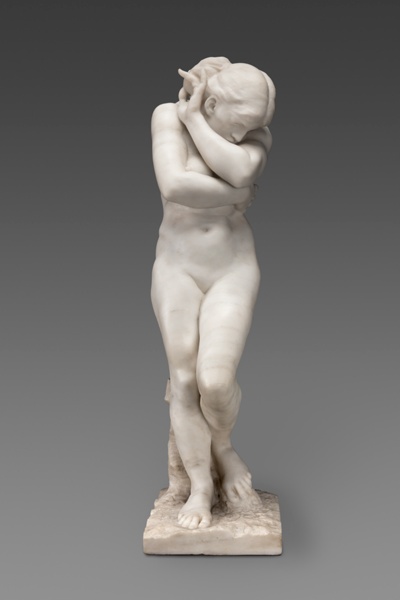
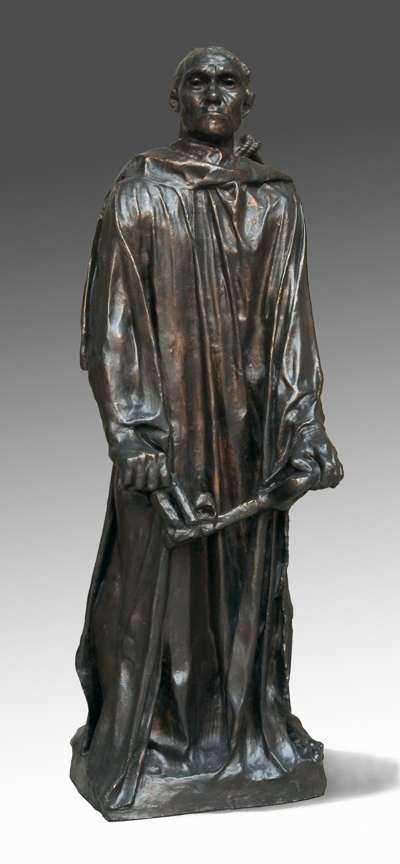
The Walking Man originated from one of Auguste Rodin’s early successes, his life-size Saint John the Baptist Preaching of 1878. Rodin made separate plaster studies of the sculpture’s components, and much later he returned to the legs of the Baptist, grafting onto them a torso from another composition. In 1900 he exhibited a half-life-size version of this work in plaster, and it made a deep impression on younger artists, notably Henri Matisse. The bronze cast of The Walking Man deliberately preserves the raw stages of artistic creation while elevating the fragmentary and unfinished to a new aesthetic plane.
Descripción original del museo, en inglés. Licencia: CC BY 4.0
Pregunta sobre esta obra
Pregunta con tus propias palabras. La respuesta sale de lo que el museo ha escrito sobre la obra, y lo dice cuando ahí no está.
Detalles
- Autor
- Auguste Rodin (French, 1840–1917)
- Fecha
- Modeled 1877–1900, cast before 1917
- Técnica
- Bronze
- Dimensiones
- H.: 84.1 cm (33 1/8 in.)
- Lugar de origen
- France
- Colección
- Instituto de Arte de Chicago, Chicago · En sala · Gallery 243
- Procedencia
- Bequest of A. James Speyer
Imagen: Art Institute of Chicago, CC0