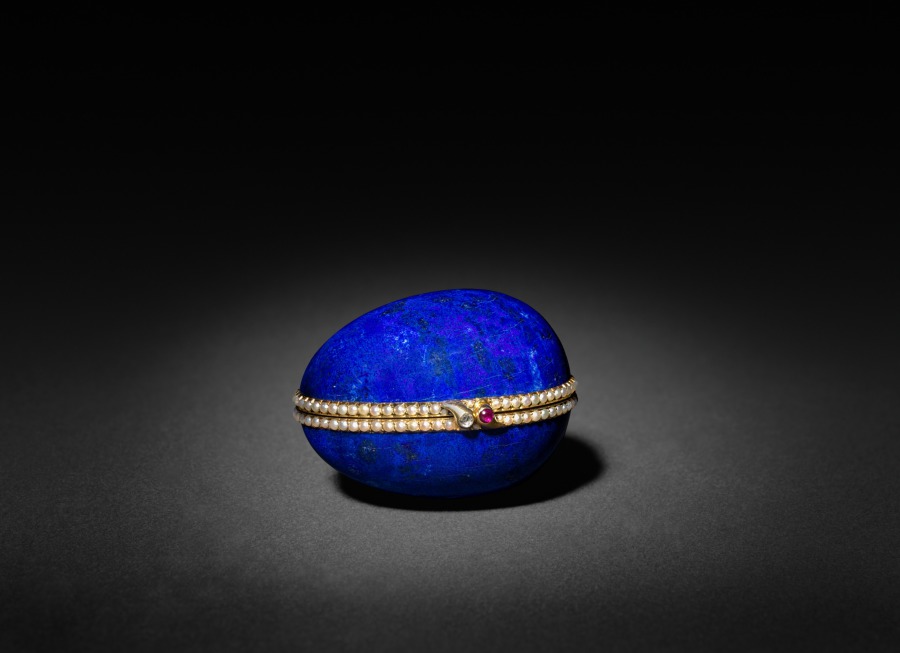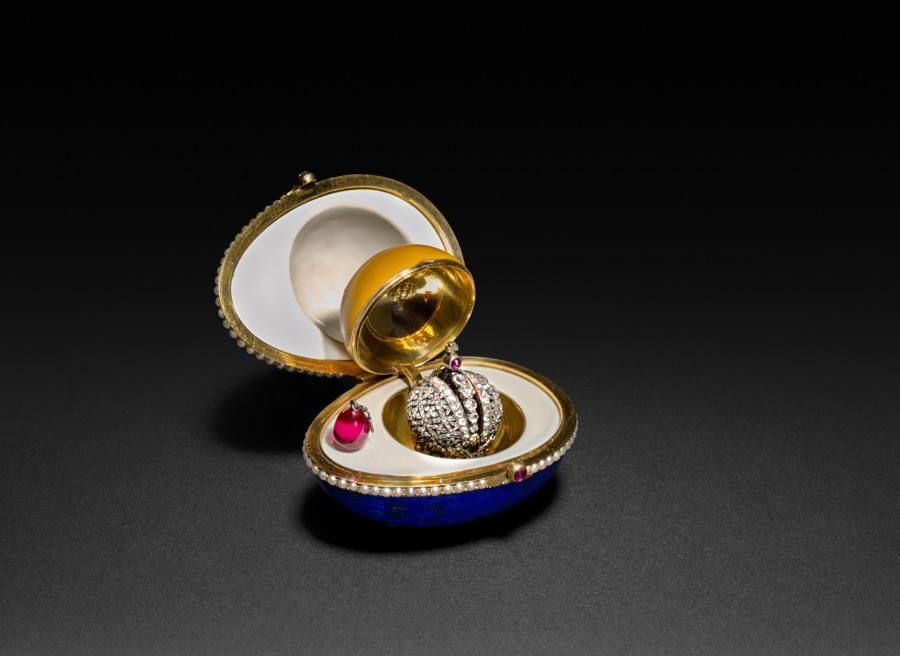
Lapis Lazuli Easter Egg
Peter Carl Fabergé · c. 1885–90 · Museo de Arte de Cleveland
¿Qué te ha parecido?
Guarda la imagen y la información del museo en este dispositivo para leerlas sin conexión.
Guía
Ajustar la guíaPrincipiante · Media
Nadie ha escuchado todavía esta guía. Prepararla lleva unos veinte segundos y, después, cualquiera podrá escucharla al momento.
Texto del museo
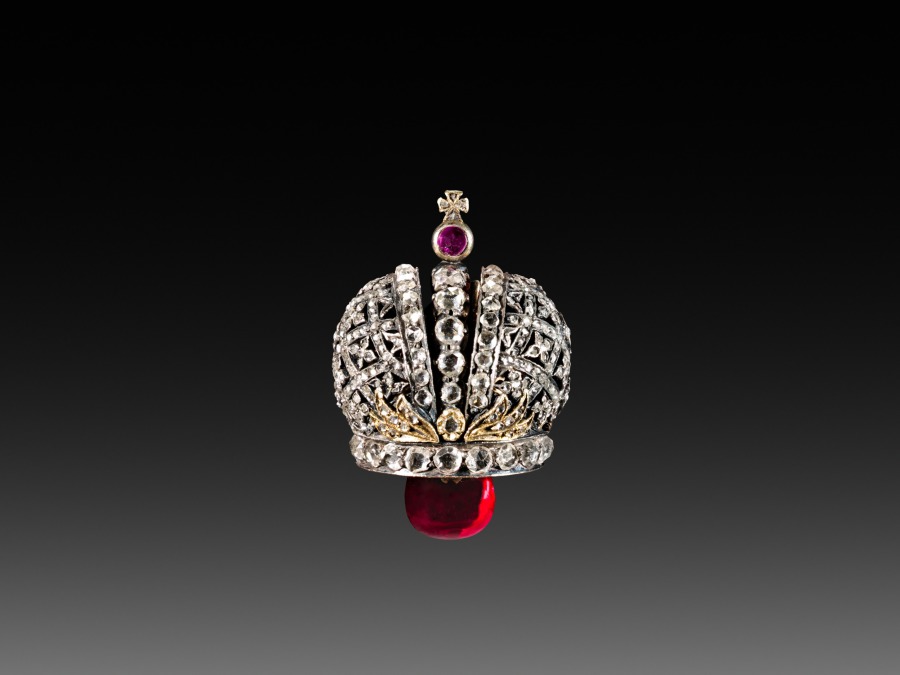
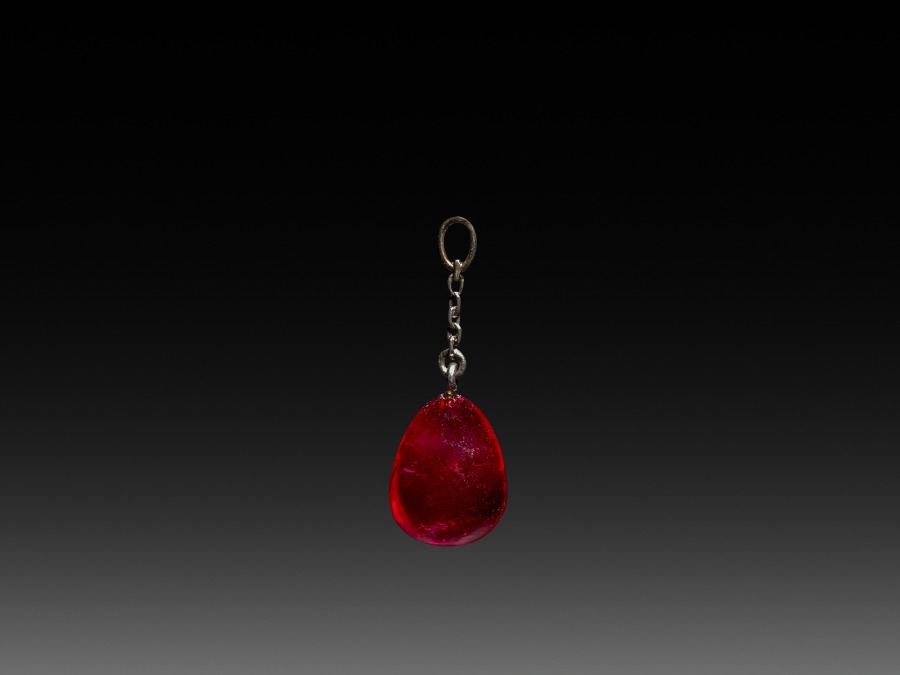
Peter Carl Fabergé became the crown jeweler to the imperial court of Russia in 1885 after he produced the very first Easter egg for Tsar Alexander III to give to his wife, Empress Marie Feodorovna. Fabergé created his celebrated Easter eggs, symbols of rebirth and renewal, as gifts for the Russian imperial family every year until he had to leave the country in 1919 after the Russian Revolution. Made of gold and lapis lazuli from the Ural Mountains, this egg opens to reveal a compartment enameled to resemble an egg yolk, which contains yet another delightful surprise of an imperial crown holding a tiny ruby or pink sapphire on a chain. This egg may have been made for one of the tsar's relatives very early in the run of imperial Easter egg production by Fabergé.
Pregunta sobre esta obra
Pregunta con tus propias palabras. La respuesta sale de lo que el museo ha escrito sobre la obra, y lo dice cuando ahí no está.
Detalles
- Autor
- Attributed to Peter Carl Fabergé (Russian, 1846–1920), attributed to House of Fabergé (Russian, 1842–1918)
- Fecha
- c. 1885–90
- Técnica
- gold, enamel, lapis lazuli, pearls, diamonds, rubies
- Dimensiones
- Overall: 5.9 x 4.5 cm (2 5/16 x 1 3/4 in.)
- Lugar de origen
- Russia
- Colección
- Museo de Arte de Cleveland, Cleveland · En sala · 211 Fabergé
- Procedencia
- The India Early Minshall Collection
Imagen: Cleveland Museum of Art, CC0