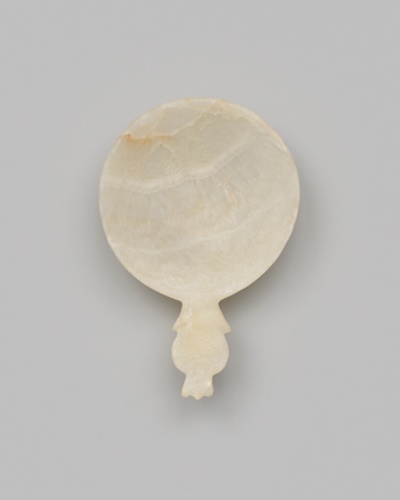
Nehebkau Amulet
Ancient Egyptian · Late Period, Dynasty 26–30 (664–332 BCE) · Instituto de Arte de Chicago
Guía
Ajustar la guíaPrincipiante · Media
Buscando esta guía.
Texto del museo
Small-scale Egyptian figurines, known as amulets, were thought to promote health and good luck. Amulets were such an important part of Egyptian religious beliefs that they were worn by both the living and the dead. They could be mounted on rings or strung as bracelets or necklaces and were often placed among a mummy's wrappings to secure the deceased’s rebirth and well-being in the afterlife. Many varieties of amulets survived, including figures of deities, parts of the human (or divine) body, animals, plants, and objects of daily life. Nehebkau, often depicted as a male with a snakehead, was one of the deities who judged the deceased before a council of the gods.
Descripción original del museo, en inglés. Licencia: CC BY 4.0
¿Qué te ha parecido?
Guarda la imagen y la información del museo en este dispositivo para leerlas sin conexión.
Pregunta sobre esta obra
Pregunta con tus propias palabras. La respuesta sale de lo que el museo ha escrito sobre la obra, y lo dice cuando ahí no está.
Detalles
- Autor
- Egyptian
- Fecha
- Late Period, Dynasty 26–30 (664–332 BCE)
- Técnica
- Gold
- Dimensiones
- 2 × 1 × 0.8 cm (3/4 × 3/8 × 5/16 in.)
- Lugar de origen
- Egypt
- Colección
- Instituto de Arte de Chicago, Chicago · En sala · Gallery 50
- Procedencia
- Gift of Henry H. Getty and Charles L. Hutchinson
Imagen: Art Institute of Chicago, CC0
Más de Ancient Egyptian
GuíaCoffin and Mummy of PaankhaenamunAtaúd y momia de PaankhaenamunAncient Egyptian · Third Intermediate Period, Dynasty 22, reign of Osorkon I (about 924–889 BCE)
GuíaStela of Amenemhat and HemetEstela de Amenemhat y HemetAncient Egyptian · Middle Kingdom, early Dynasty 12, about 1956–1877 BCE
Fragment of a Stela of NeferhotepAncient Egyptian · New Kingdom, mid-Dynasty 19, about 1240-1195 BCE