Un momento, por favor
Un momento, por favor
Ancient Egyptian · New Kingdom, Dynasty 18 (about 1550–1295 BCE) · Instituto de Arte de Chicago
Una mirada más cercana que conecta los detalles principales con el contexto de la obra.
Buscando esta guía.
With intricately carved “feathers” beneath its bright blue glaze, this scaraboid (a type of amulet), depicts a duck resting its head upon its back. It may represent a sleeping duck, inviting associations of awakening after one’s rebirth into the afterlife. The small charm may also reflect ducks’ popularity as a food source in ancient Egypt. A scaraboid was a common tomb offering to sustain the dead, and this one may represent a duck that has been prepared for feasting. Objects like this one derive their name from the beetle-shaped scarab amulets they resemble. Both types of carvings feature inscriptions on their undersides: phrases, names, or images of animals or deities, intended to help bring about good luck and renewal. These patterns could also be used as personal or institutional stamp seals. The inscription on the bottom of this scaraboid shows cobras flanking a sistrum—a percussive rattle shaken during rituals to calm deities—with the head of the goddess Hathor. Both she and the sistrum were associated with fertility and protection. The owner of this piece would enjoy the protections offered by both the inscription and the duck.
Descripción original del museo, en inglés. Licencia: CC BY 4.0
Guarda la imagen y la información del museo en este dispositivo para leerlas sin conexión.
Pregunta con tus propias palabras. La respuesta sale de lo que el museo ha escrito sobre la obra, y lo dice cuando ahí no está.
Imagen: Art Institute of Chicago, CC0
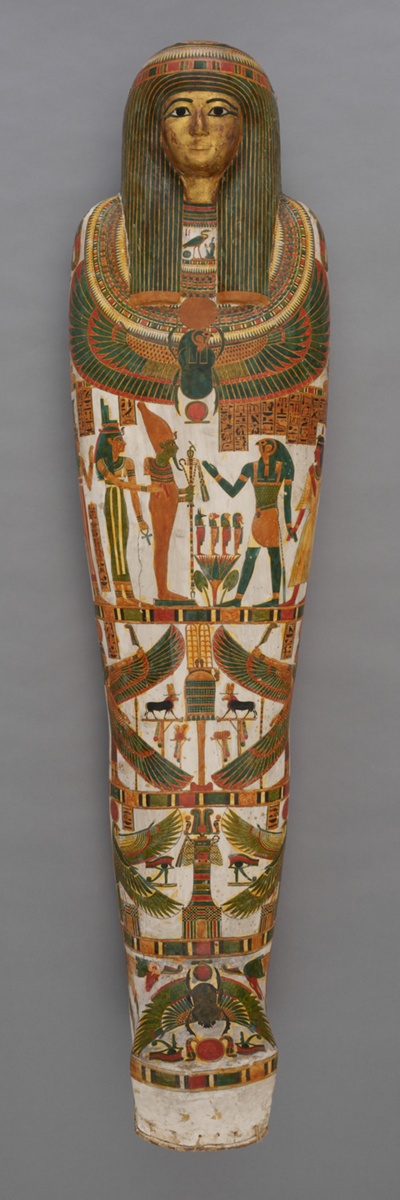 GuíaCoffin and Mummy of PaankhaenamunAtaúd y momia de PaankhaenamunAncient Egyptian · Third Intermediate Period, Dynasty 22, reign of Osorkon I (about 924–889 BCE)
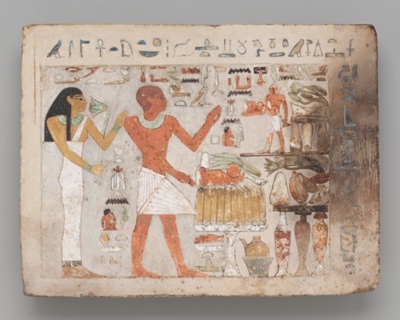 GuíaStela of Amenemhat and HemetEstela de Amenemhat y HemetAncient Egyptian · Middle Kingdom, early Dynasty 12, about 1956–1877 BCE
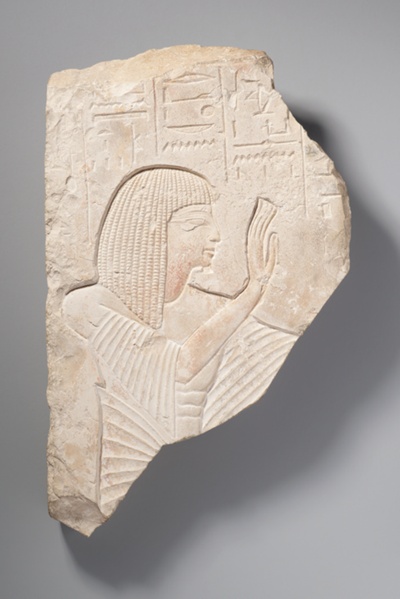 Fragment of a Stela of NeferhotepAncient Egyptian · New Kingdom, mid-Dynasty 19, about 1240-1195 BCE