Un momento, por favor
Un momento, por favor
Buscando esta guía.
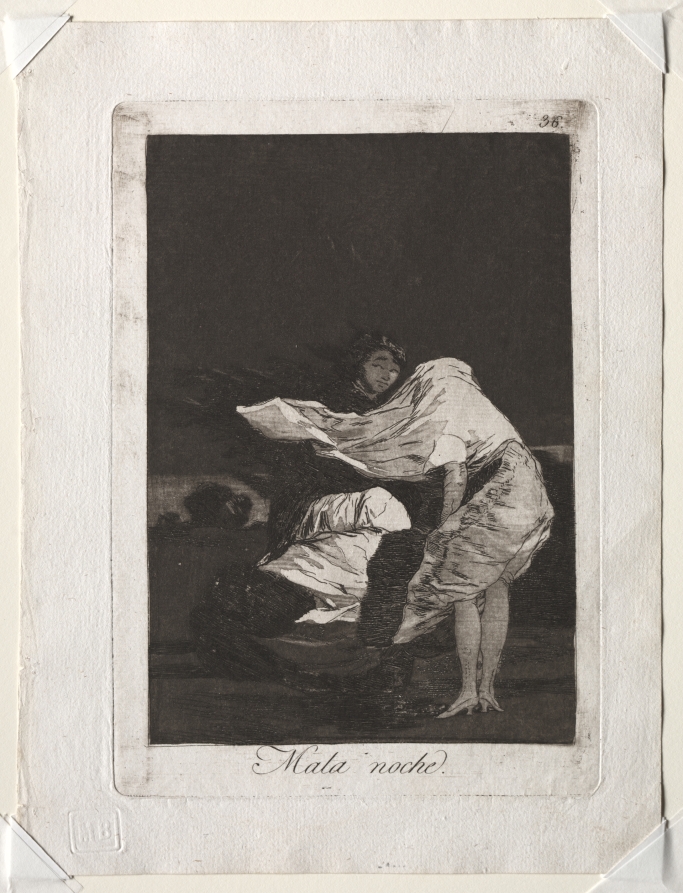
In the print series Los Caprichos, which translates as “caprices” or “artistic fantasies,” Francisco de Goya drew on his expansive imagination to comment on Spanish society. The artist’s critiques are not always clear, and many of the prints are intentionally ambiguous. Here, three witches support a young woman taking flight. Caught in the wind, her dress and veil transform her into a human butterfly, perhaps reflecting views at the time that characterized women as flighty. However, both the association of butterflies with life’s fragility and the presence of witches—often used by the artist to symbolize immorality and sex work—may instead invite a more sinister interpretation. When Los Caprichos was first published in 1799, the series was sold in a perfumery and liquor shop in Madrid.
Descripción original del museo, en inglés. Licencia: CC0
Guarda la imagen y la información del museo en este dispositivo para leerlas sin conexión.
Pregunta con tus propias palabras. La respuesta sale de lo que el museo ha escrito sobre la obra, y lo dice cuando ahí no está.
Imagen: Cleveland Museum of Art, CC0
 Young Woman (possibly a Sex Worker) with a Man (recto); Young Woman Wringing Her Hands over a Man's Naked Body (verso)Francisco de Goya · 1796–97
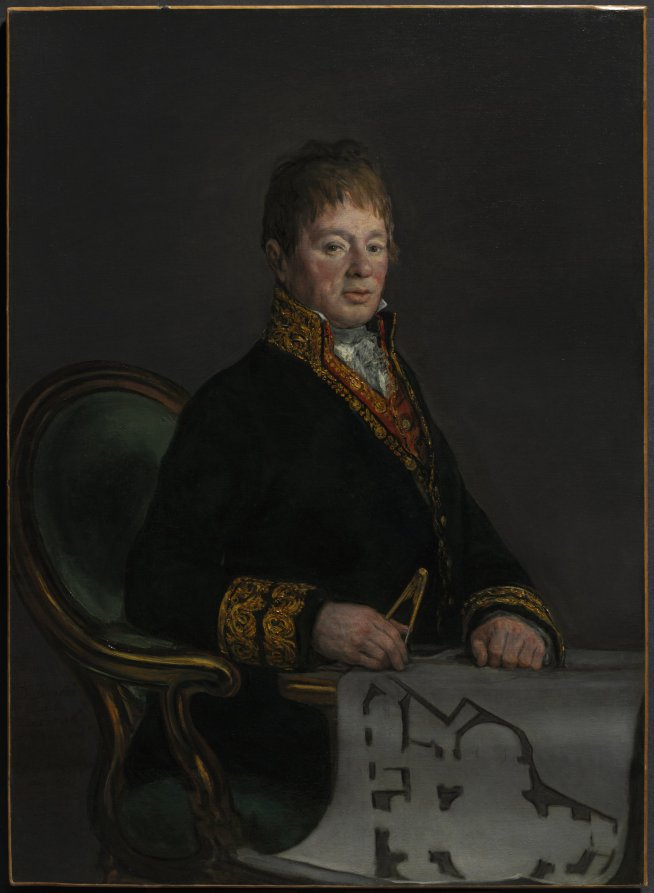 Portrait of Don Juan Antonio CuervoFrancisco de Goya · 1819
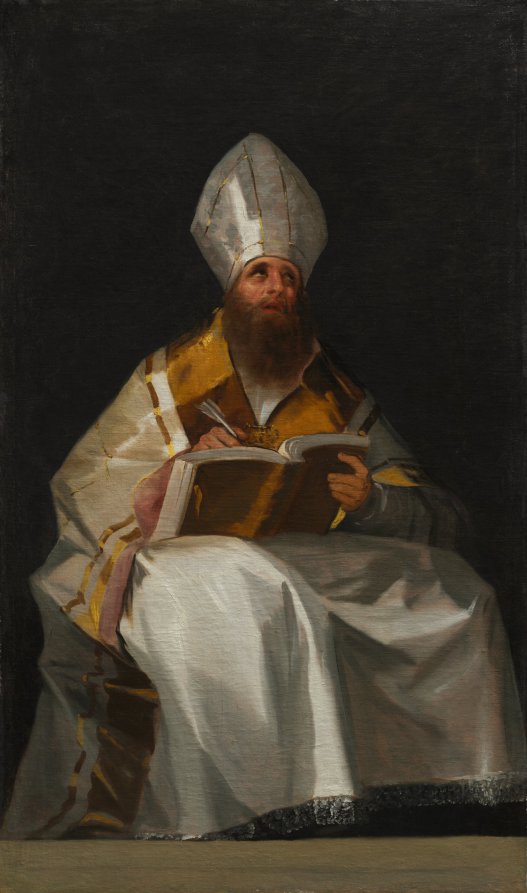 Saint AmbroseFrancisco de Goya · c. 1796–99
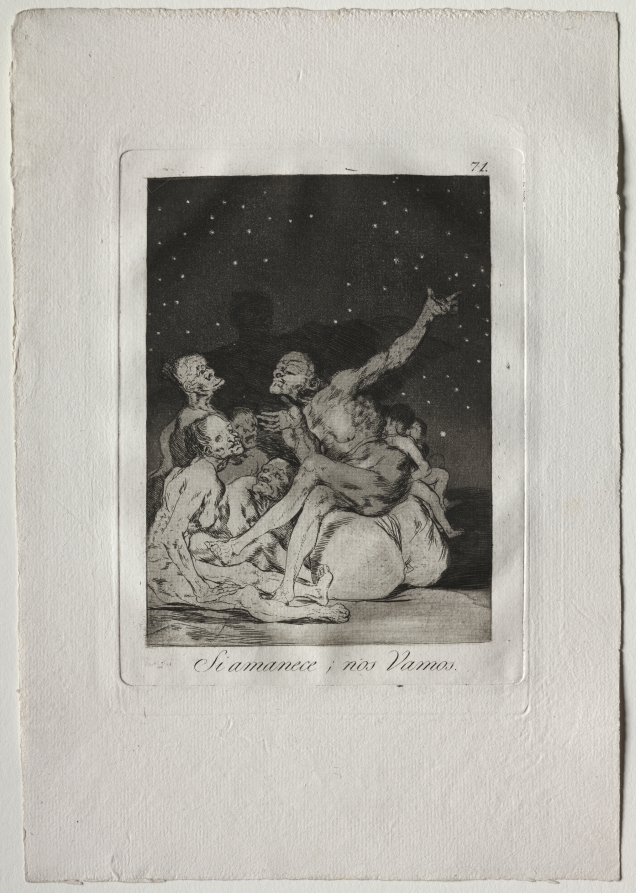 When Day Breaks We Will Be Off, Plate 71Francisco de Goya · 1799