Un momento, por favor
Un momento, por favor
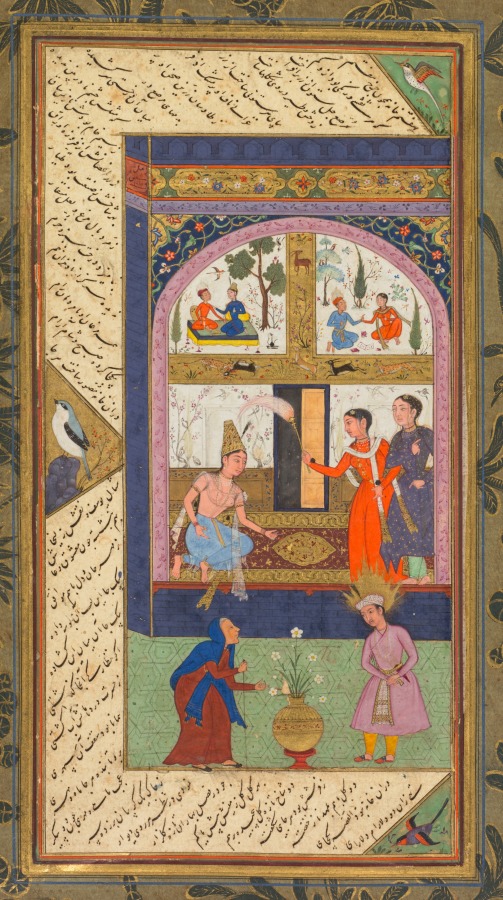
Mushfiq · 1603–7 · Museo de Arte de Cleveland
Una mirada más cercana que conecta los detalles principales con el contexto de la obra.
Buscando esta guía.
The golden pot of white narcissus flowers at the bottom center of the painting signals that Zulaykha, leaning on her staff to the left, will imminently have her youth and beauty restored. In this Persian retelling of the Old Testament account from the Bible, Zulaykha lusted after Joseph, even though she was already married to Potiphar. Joseph, with the golden halo, resisted her advances until she became a widow and retained his youth, because of his extreme virtue. Above, Zulaykha as a young woman waits for Joseph in her house where murals of them as a happy couple are painted on the walls. Zulaykha is shown four times: twice in the murals, seated in the center, and below when she is much older.
Descripción original del museo, en inglés. Licencia: CC0
Guarda la imagen y la información del museo en este dispositivo para leerlas sin conexión.
Pregunta con tus propias palabras. La respuesta sale de lo que el museo ha escrito sobre la obra, y lo dice cuando ahí no está.
Imagen: Cleveland Museum of Art, CC0
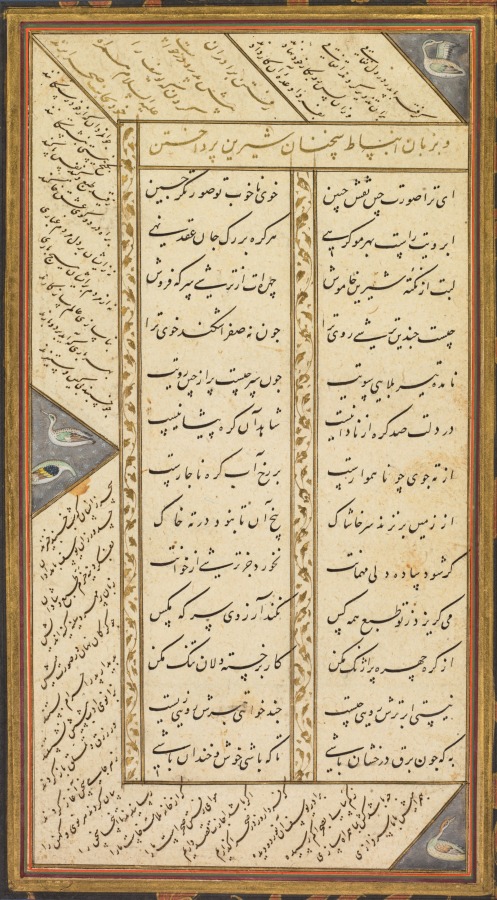
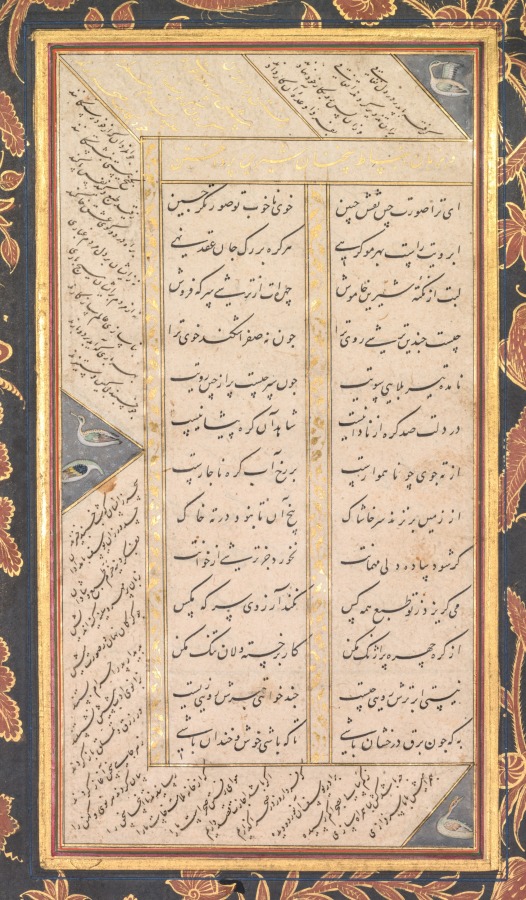 Folio B: Folio from the "Five Treasures" (Panj Ganj) of Jami (recto)Mushfiq · 1520–1607
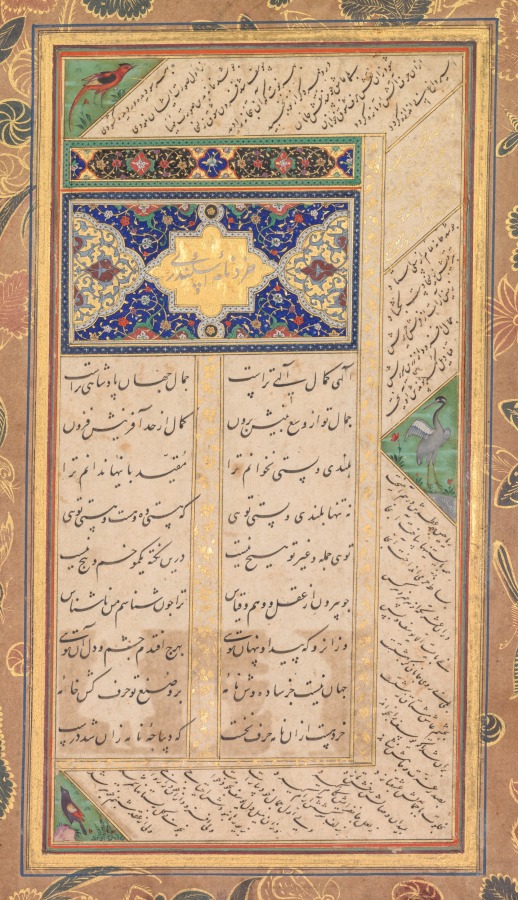 Illuminated page (verso), from a Panj Ganj (Five Treasures) of Abd al- Rahman Jami (Persian, 1414–1492) with two Persian masnavis: Yusuf va Zulaykha (Joseph and Zulaykha) and Khirad-nama-i Iskandari (Alexander’s Book of Wisdom)Mushfiq · 1603–7
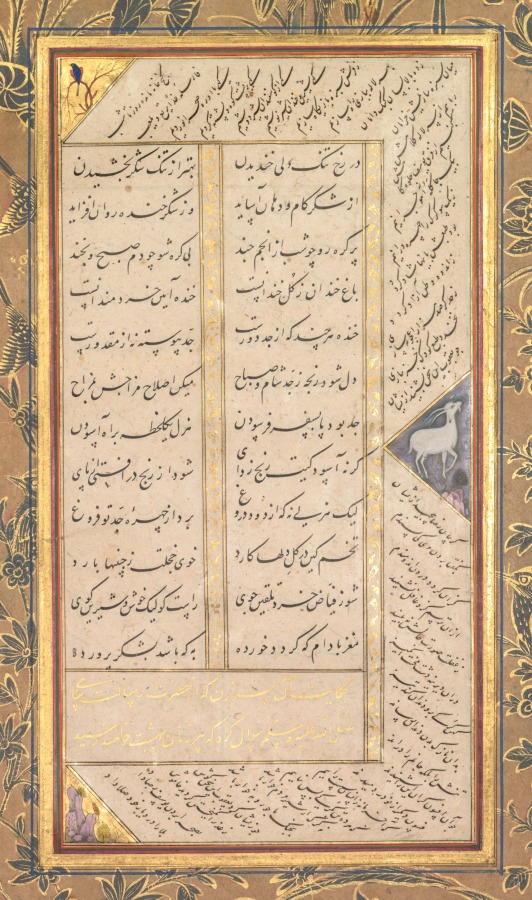 Page from a Panj Ganj (Five Treasures) of Abd al-Rahman Jami (Persian, 1414–1492), with two Persian masnavis: Yusuf va Zulaykha (Joseph and Zulaykha) and Subhat al-abrar (Rosary of the Righteous) (verso)Mushfiq · 1520–1607