잠시만 기다려 주세요
잠시만 기다려 주세요
Claude Monet · 1877 · 시카고 미술관
작품의 주요 특징과 배경을 연결해 살펴봐요.
가이드를 찾고 있습니다.
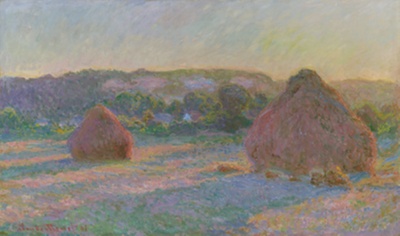
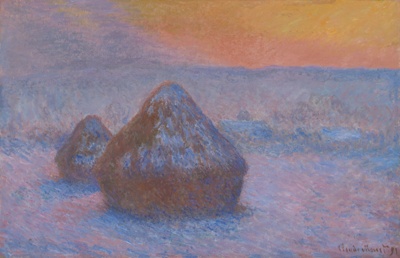
One of the most avant-garde aspects of the Impressionists was their choice of subject matter, which frequently included scenes derived from modern, industrial Paris, from iron bridges to exhibition halls to train sheds. The train station at Saint-Lazare would have been a familiar, meaningful sight to Claude Monet in the 1870s. The terminal linked Paris to Normandy, where the artist developed his technique of painting outdoors in the 1860s. It was also the point of departure for the towns and villages west and north of Paris that the Impressionists frequently visited. Monet completed eight of his twelve known paintings of the Gare Saint-Lazare in time for the third Impressionist exhibition, in 1877, probably displaying them in the same gallery. Monet chose to focus his attention here on the glass-and-iron train shed, where he found an appealing combination of artifi cial and natural effects—the rising steam of locomotives trapped within the structure and the daylight penetrating large, glazed sections of the roof, for instance. Monet’s depictions of the station inaugurated what was to become for him an established pattern of painting a specific motif repeatedly in order to capture subtle and temporal atmospheric changes, as in his famous series of stacks of wheat. But the Saint-Lazare paintings also represented his last attempt to capture urban life: from this point on in his career, Monet largely devoted himself to landscapes.
미술관이 쓴 설명 원문입니다(영어). 라이선스: CC BY 4.0
작품 이미지와 미술관 정보를 이 기기에 저장해 인터넷 연결 없이 읽어 보세요.
궁금한 것을 내 말로 물어보세요. 미술관이 이 작품에 대해 쓴 글에서 답을 찾고, 거기에 없으면 없다고 말합니다.
이미지: Art Institute of Chicago, CC0