잠시만 기다려 주세요
잠시만 기다려 주세요
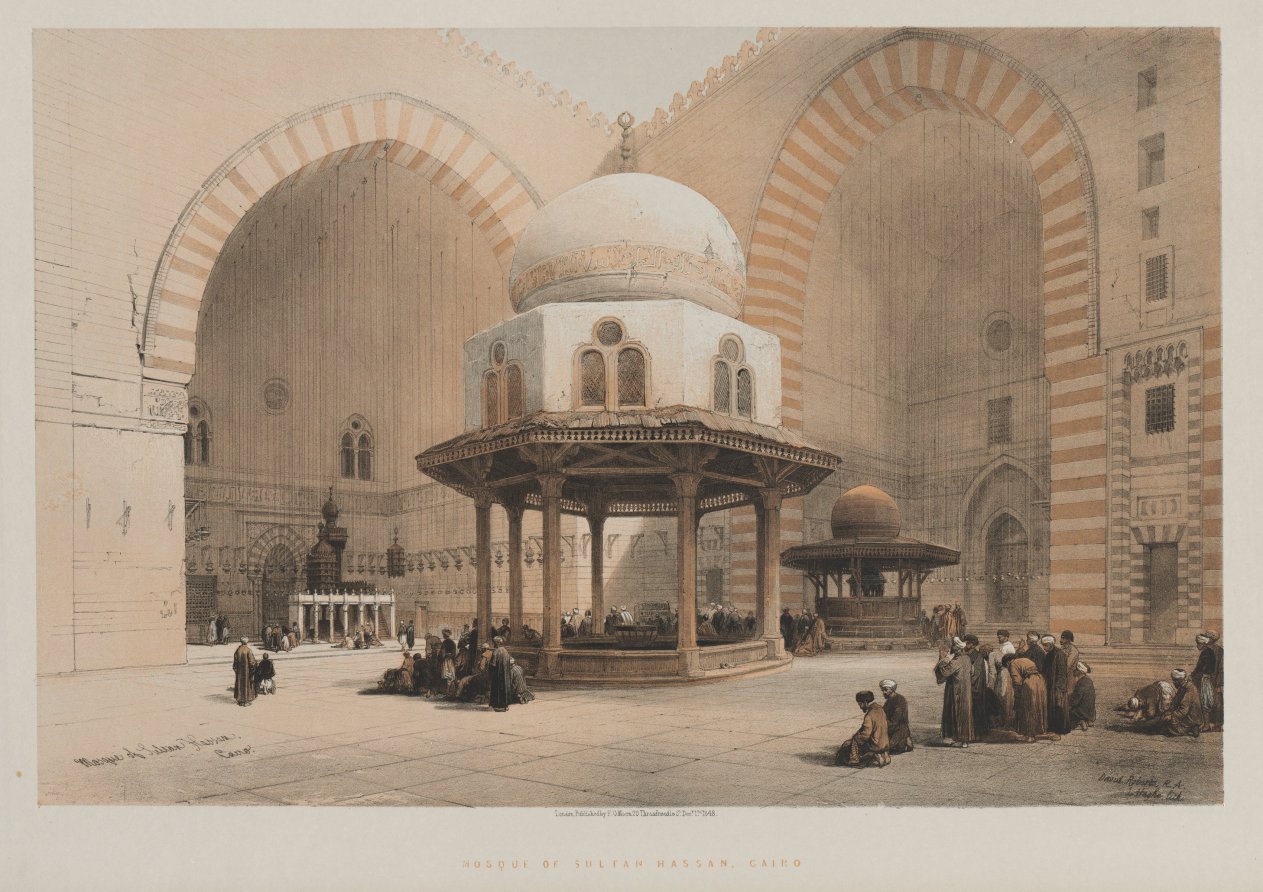
Louis Haghe · 1842–49 · 클리블랜드 미술관
작품의 주요 특징과 배경을 연결해 살펴봐요.
가이드를 찾고 있습니다.
The mosque and madrasa, school, of Sultan Hassan was built between 1356 and 1363 during the Mamluk period (1250–1517) in Egypt. The prestige of the project attracted craftspeople from across the Islamic world, which likely contributed to its innovative design. It is possible that stone from the Great Pyramid of Giza was used in its construction. This print features the central courtyard (sahn) with ablutions fountain (for washing one’s hands, feet, and face before prayer) and two of four monumental iwans, three-walled, vaulted rectangular halls. The interior walls and floor are covered in lavish stone and marble mosaics. The minbar, a staircase-like pulpit from which a sermon is delivered by the prayer leader, imam, after Friday services, is visible in the hall on the left side of the print.
미술관이 쓴 설명 원문입니다(영어). 라이선스: CC0
작품 이미지와 미술관 정보를 이 기기에 저장해 인터넷 연결 없이 읽어 보세요.
궁금한 것을 내 말로 물어보세요. 미술관이 이 작품에 대해 쓴 글에서 답을 찾고, 거기에 없으면 없다고 말합니다.
이미지: Cleveland Museum of Art, CC0
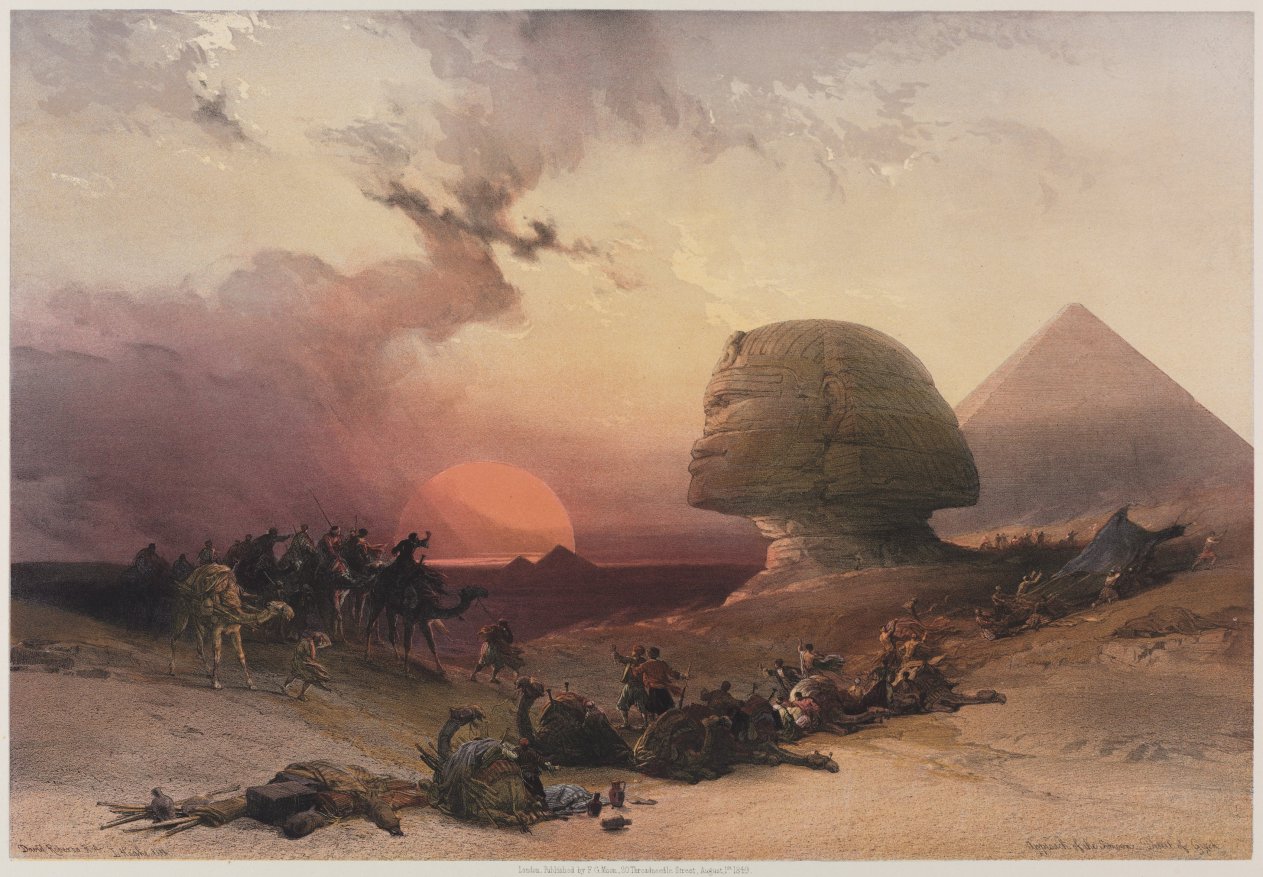 Egypt and Nubia, Volume III: Approach of the Simoon-Desert at GizehLouis Haghe · 1849
 Egypt and Nubia, Volume II: Entrance to the Tombs of the Kings of Thebes, Bab-El-MaloukLouis Haghe · 1848
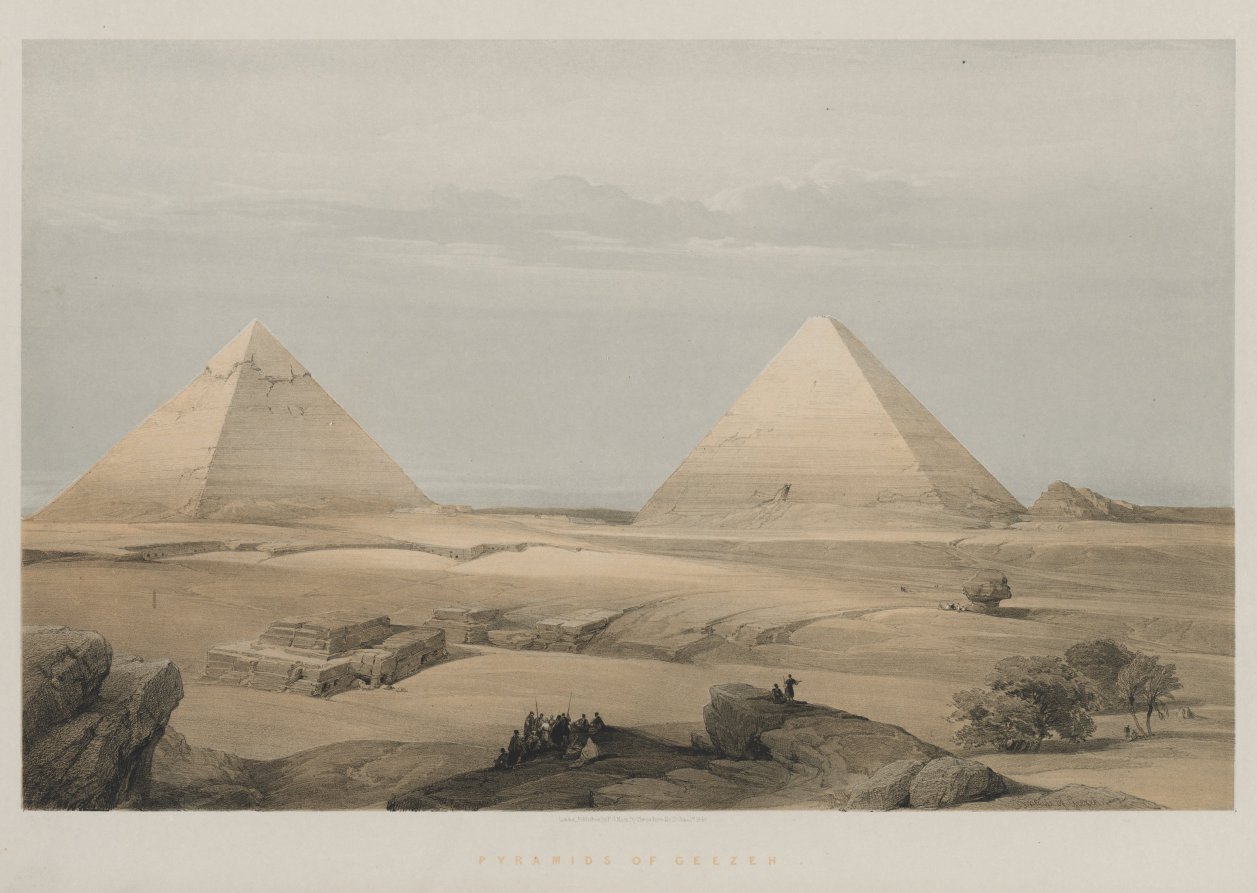 Egypt and Nubia, Volume II: Pyramids of GeezehLouis Haghe · 1848
 Egypt and Nubia, Volume II: Statues of Memnon at Thebes, during the Inundation