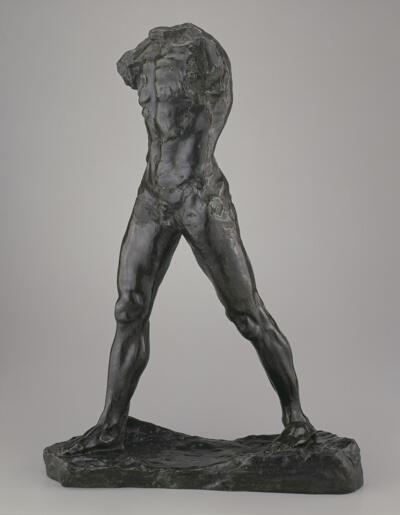
Eve after the Fall
Auguste Rodin · Modeled 1883, carved c. 1886 · 시카고 미술관
가이드
가이드 조절처음 · 보통
이 가이드는 아직 아무도 듣지 않았습니다. 만드는 데 20초쯤 걸리고, 그다음부터는 누구나 바로 들을 수 있습니다.
미술관의 설명
Auguste Rodin’s sculpture Eve owes its genesis to The Gates of Hell, the artist’s major commission from the French government in 1880. The associations posed by the sculptural portals of that project led Rodin back to the art of Lorenzo Ghiberti and Michelangelo, particularly their depiction of biblical stories from the book of Genesis. A number of elements from the Gates—such as The Thinker, Adam, and Eve—gradually evolved into independent works. In particular, Eve recalls the most sculptural of Renaissance paintings: Michelangelo’s panels from the Sistine Chapel Ceiling and Masaccio’s Expulsion from the Garden of Eden. Its naturalism shocked critics when it was first exhibited, since Eve seemed to them more like a flesh-and-blood woman than an idealized creation.
미술관이 쓴 설명 원문입니다(영어). 라이선스: CC BY 4.0
이 작품, 어땠나요?
작품 이미지와 미술관 정보를 이 기기에 저장해 인터넷 연결 없이 읽어 보세요.
이 작품에 대해 묻기
궁금한 것을 내 말로 물어보세요. 미술관이 이 작품에 대해 쓴 글에서 답을 찾고, 거기에 없으면 없다고 말합니다.
작품 정보
- 작가
- Auguste Rodin (French, 1840–1917)
- 제작 시기
- Modeled 1883, carved c. 1886
- 재료
- Marble
- 크기
- 76.2 × 27.4 × 21 cm (30 × 11 × 8 1/4 in.)
- 제작 지역
- France
- 소장처
- 시카고 미술관, Chicago · 전시 중 · Gallery 243
- 소장 경위
- Mr. and Mrs. Martin A. Ryerson Collection
이미지: Art Institute of Chicago, CC0