잠시만 기다려 주세요
잠시만 기다려 주세요
작품의 주요 특징과 배경을 연결해 살펴봐요.
가이드를 찾고 있습니다.
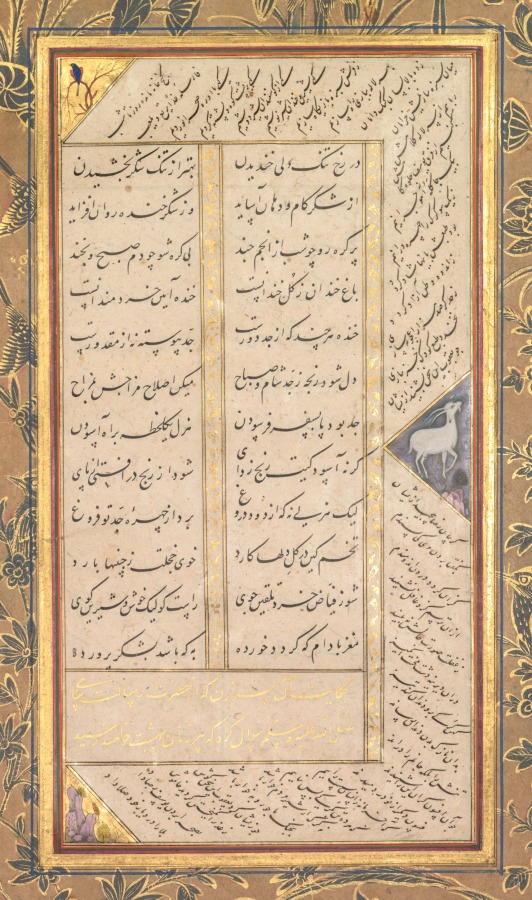
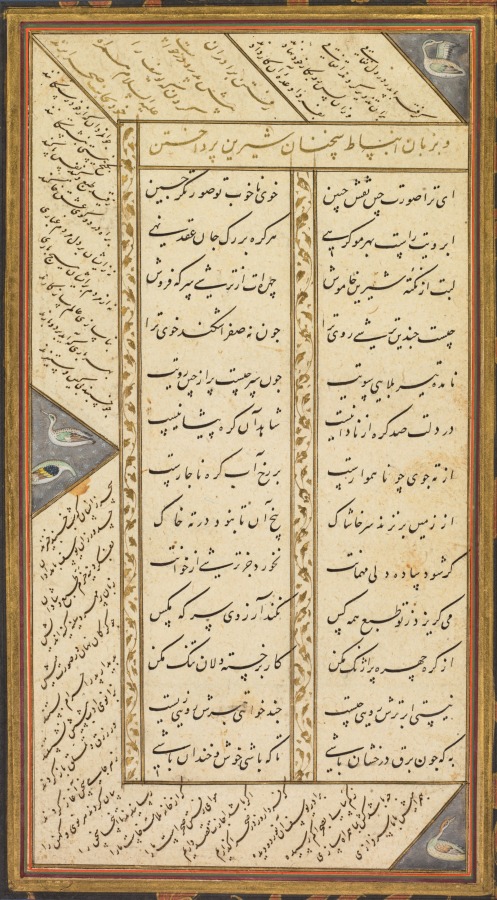
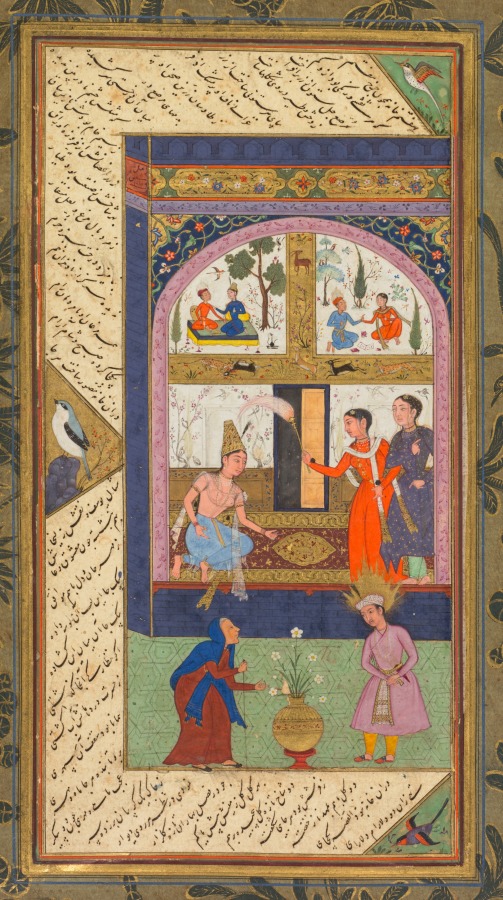
The recto of this album leaf illustrates two episodes from the story of Joseph and Zulaykha. In the first, Zulaykha awaits Joseph in the house she has built for them. She has painted the walls with romantic scenes and dressed herself alluringly with the intention of seducing him. The artist has discreetly inserted his name and the painting’s date in a brick of the house at the upper left. The virtuous Joseph, with flaming halo and eternally youthful features, rejects the married woman’s advances, but many years later, when Zulaykha is an elderly widow, they are reunited. In the second episode we see the aged Zulaykha meeting Joseph. His prayers will restore her to youthful beauty, and the two will finally be joined as lovers. The section of text on the verso from Jami’s poem of Joseph and Zulaykha, written diagonally in the margins, describes the beauties of Zulaykha’s house, in which she intends to seduce Joseph. It includes the following verses: Jeweled lamps on the walls were hung; And odorous herbs were beneath them flung. She gathered together all things most fair, And unrolled the carpet of pleasure there. But amid the charms of the sumptuous hall She longed only for Joseph, far dearer than all. A heavenly palace is dark and dim To a lover whose darling is far from him. The longing of Zulaykha for Joseph metaphorically describes an imperfect devotee’s mystical love for God. With patience, forbearance, and virtuous actions, unification with the divine will eventually occur, even for the most flawed among us. On this page also begins the Khirad-nama-i Iskandari (Alexander’s Book of Wisdom), another of the five narrative poems that make up the Panj Ganj. The Panj Ganj is a collection of narrative poetry written by ‘Abd al-Rahman Jami.
미술관이 쓴 설명 원문입니다(영어). 라이선스: CC0
작품 이미지와 미술관 정보를 이 기기에 저장해 인터넷 연결 없이 읽어 보세요.
궁금한 것을 내 말로 물어보세요. 미술관이 이 작품에 대해 쓴 글에서 답을 찾고, 거기에 없으면 없다고 말합니다.
이미지: Cleveland Museum of Art, CC0
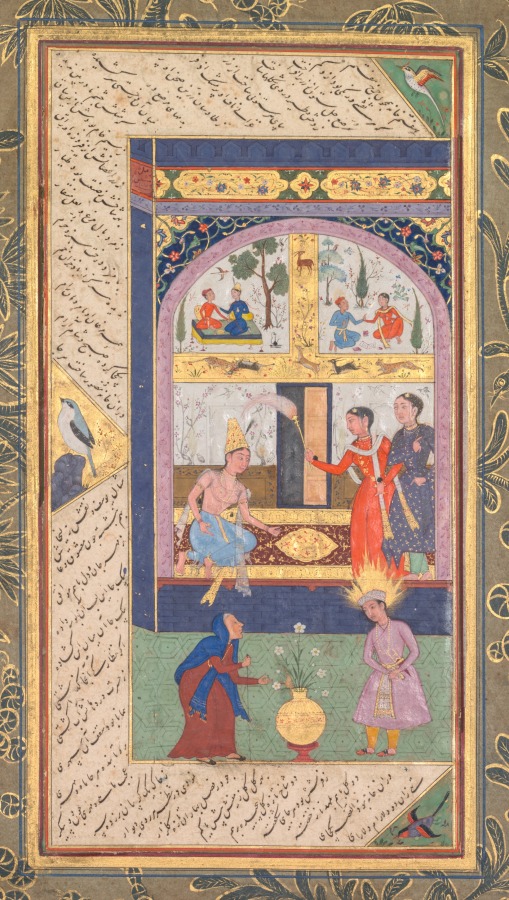 Zulaykha in her palace and as an elderly woman with Joseph (recto), from a Panj Ganj (Five Treasures) of Abd al- Rahman Jami (Persian, 1414–1492)Mushfiq · 1603–7
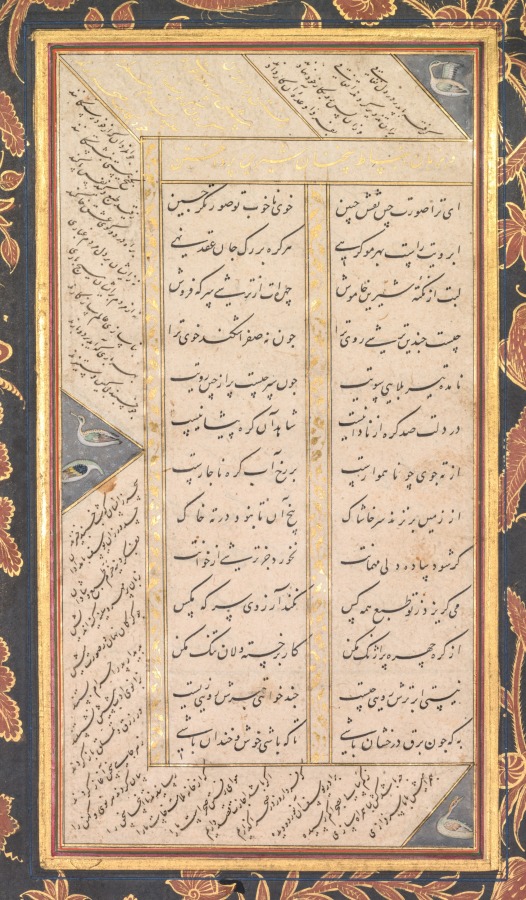 Folio B: Folio from the "Five Treasures" (Panj Ganj) of Jami (recto)Mushfiq · 1520–1607
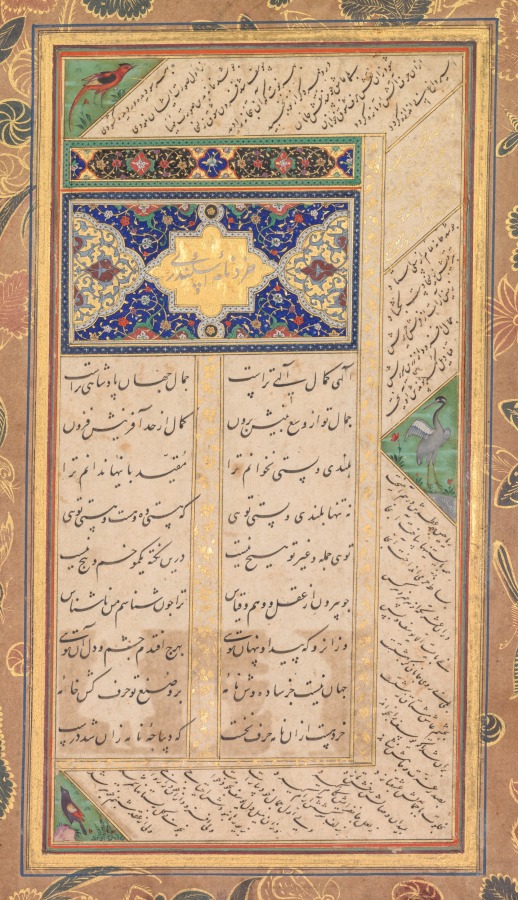 Illuminated page (verso), from a Panj Ganj (Five Treasures) of Abd al- Rahman Jami (Persian, 1414–1492) with two Persian masnavis: Yusuf va Zulaykha (Joseph and Zulaykha) and Khirad-nama-i Iskandari (Alexander’s Book of Wisdom)Mushfiq · 1603–7