잠시만 기다려 주세요
잠시만 기다려 주세요
작품의 주요 특징과 배경을 연결해 살펴봐요.
가이드를 찾고 있습니다.
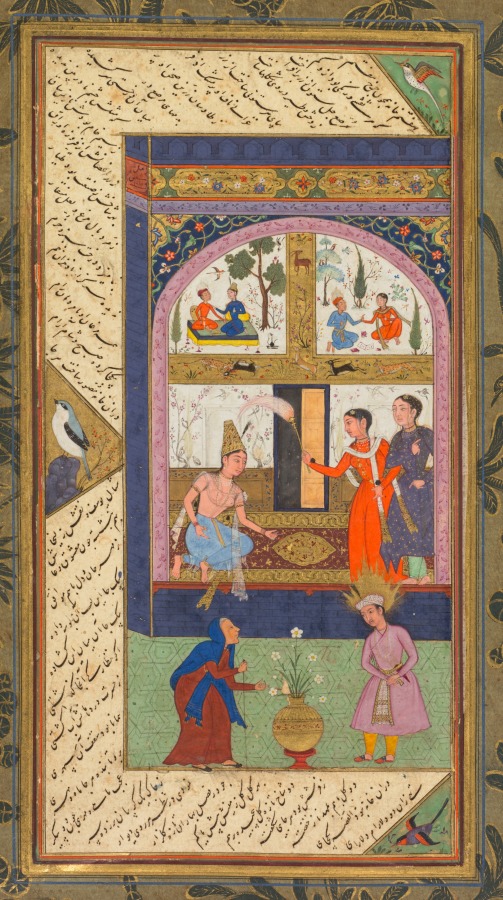
The golden pot of white narcissus flowers at the bottom center of the painting signals that Zulaykha, leaning on her staff to the left, will imminently have her youth and beauty restored. In this Persian retelling of the Old Testament account from the Bible, Zulaykha lusted after Joseph, even though she was already married to Potiphar. Joseph, with the golden halo, resisted her advances until she became a widow and retained his youth, because of his extreme virtue. Above, Zulaykha as a young woman waits for Joseph in her house where murals of them as a happy couple are painted on the walls. Zulaykha is shown four times: twice in the murals, seated in the center, and below when she is much older.
미술관이 쓴 설명 원문입니다(영어). 라이선스: CC0
작품 이미지와 미술관 정보를 이 기기에 저장해 인터넷 연결 없이 읽어 보세요.
궁금한 것을 내 말로 물어보세요. 미술관이 이 작품에 대해 쓴 글에서 답을 찾고, 거기에 없으면 없다고 말합니다.
이미지: Cleveland Museum of Art, CC0
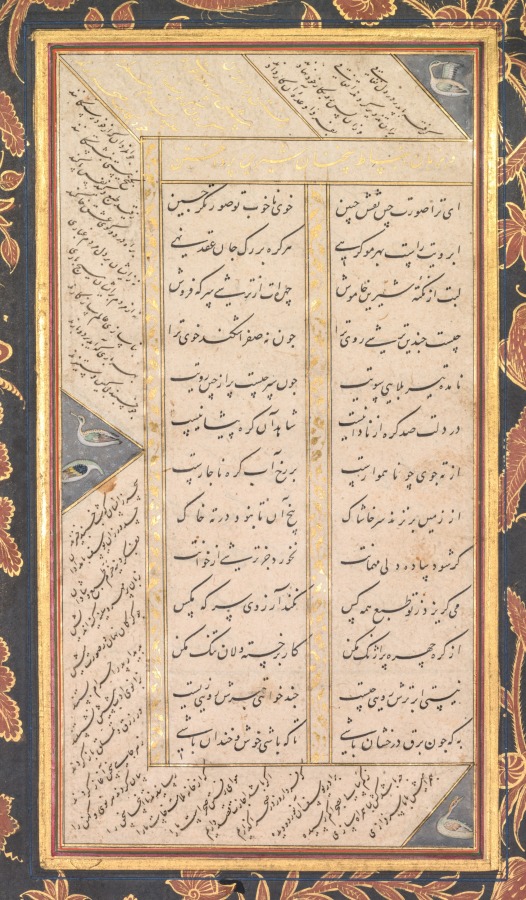 Folio B: Folio from the "Five Treasures" (Panj Ganj) of Jami (recto)Mushfiq · 1520–1607
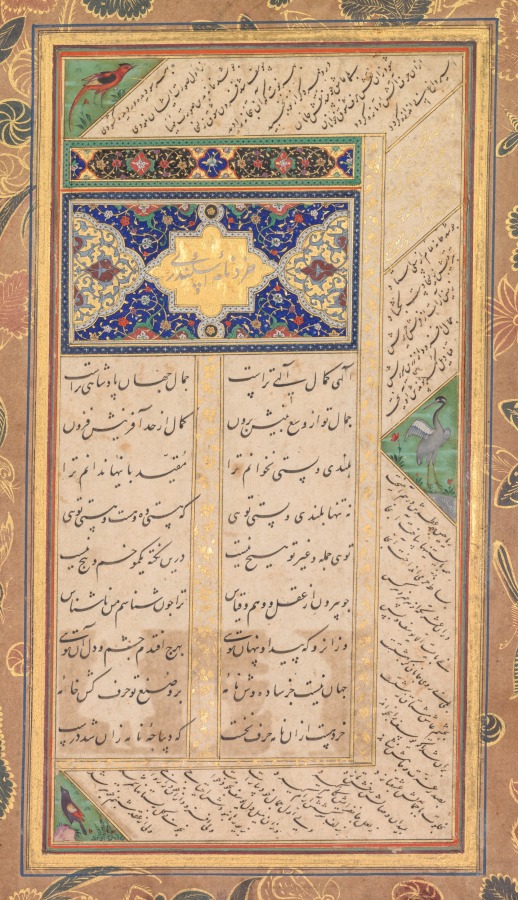 Illuminated page (verso), from a Panj Ganj (Five Treasures) of Abd al- Rahman Jami (Persian, 1414–1492) with two Persian masnavis: Yusuf va Zulaykha (Joseph and Zulaykha) and Khirad-nama-i Iskandari (Alexander’s Book of Wisdom)Mushfiq · 1603–7
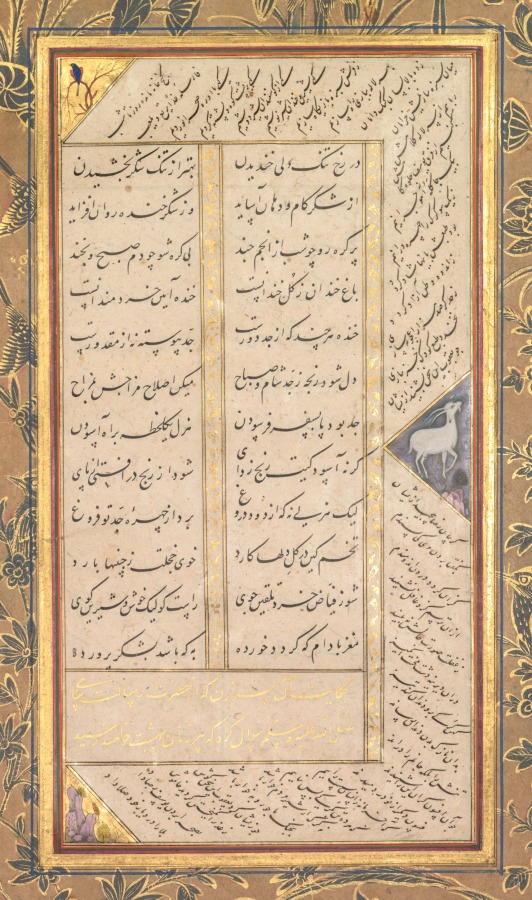 Page from a Panj Ganj (Five Treasures) of Abd al-Rahman Jami (Persian, 1414–1492), with two Persian masnavis: Yusuf va Zulaykha (Joseph and Zulaykha) and Subhat al-abrar (Rosary of the Righteous) (verso)Mushfiq · 1520–1607