잠시만 기다려 주세요
잠시만 기다려 주세요
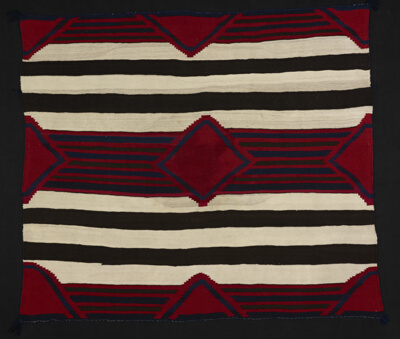
Navajo (Diné) · c. 1870 · 시카고 미술관
가이드를 찾고 있습니다.
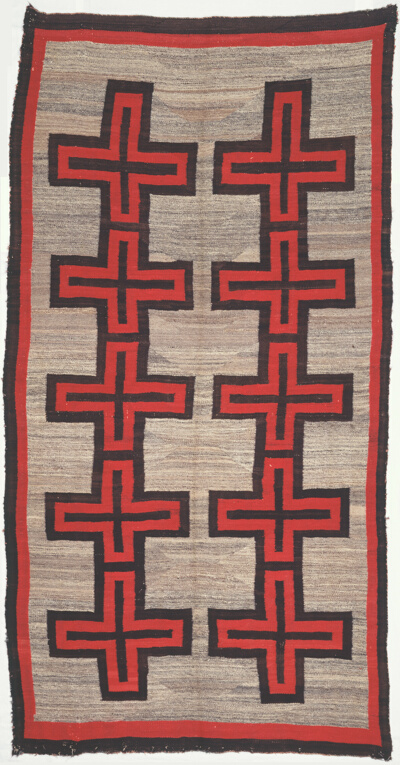
The Spanish-derived word sarape is used to identify blankets made throughout the greater Southwest and Mexico that are longe then they are wide and traditionally are worn around the shoulders like a shawl. This exceptionally fine example displays many attributes associated with classic Navajo textiles, including its traditional tapestry weave, the augmented tassels placed at the corners, and the twining that appears along the edges. The design is based upon Moki-style textiles, which were typically woven with alternating blue-and-brown lines often accented with additional bands of white. Although the name given to this style derives from the Spanish term for the Hopi (Moki or Moqui), these patterns found favor among Pueblo and Navajo weavers and are one of the oldest designs that appear in Navajo textiles. Demonstrating the creativity and cultural identity of the artist, this sarape blends Moki design traits with a distinctly Navajo signature—that of bold crimson banding superimposed over the subtle striping.
미술관이 쓴 설명 원문입니다(영어). 라이선스: CC BY 4.0
작품 이미지와 미술관 정보를 이 기기에 저장해 인터넷 연결 없이 읽어 보세요.
궁금한 것을 내 말로 물어보세요. 미술관이 이 작품에 대해 쓴 글에서 답을 찾고, 거기에 없으면 없다고 말합니다.
이미지: Art Institute of Chicago, CC0