잠시만 기다려 주세요
잠시만 기다려 주세요
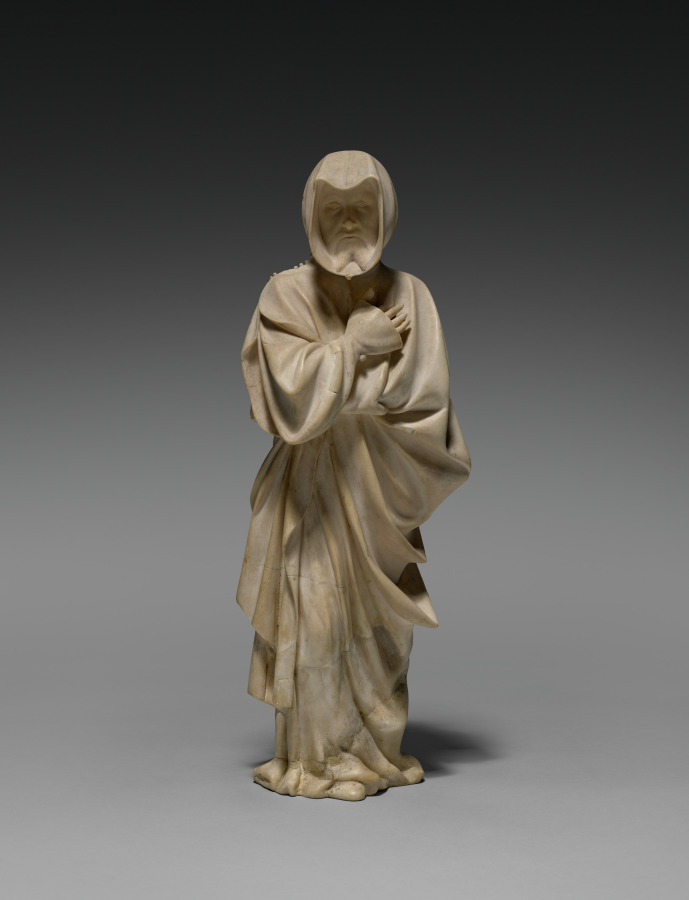
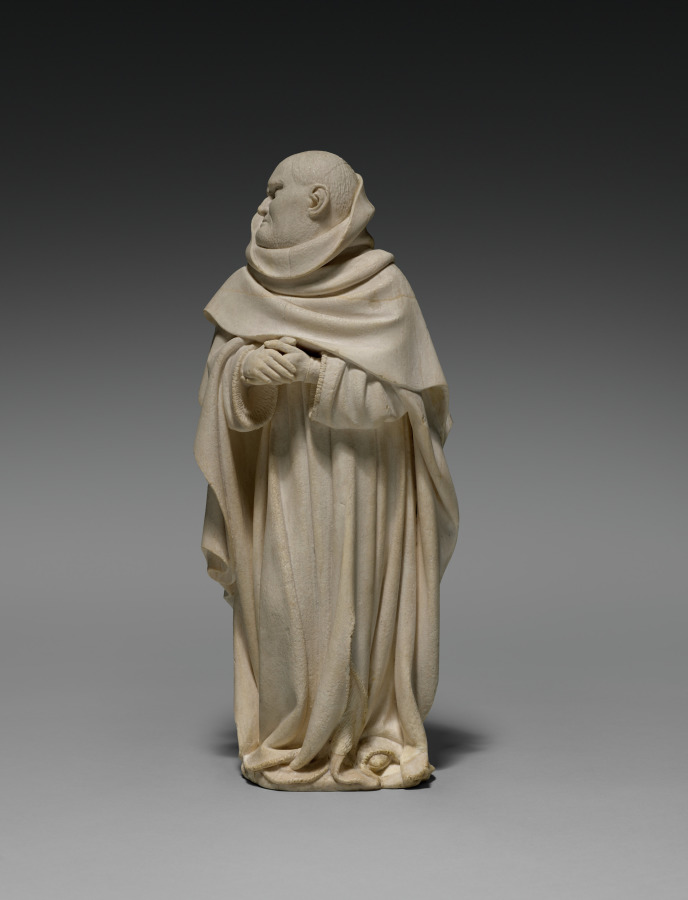
Claus de Werve · 1404–1410 · 클리블랜드 미술관
작품의 주요 특징과 배경을 연결해 살펴봐요.
가이드를 찾고 있습니다.
This figure comes from the tomb of Duke Philip the Bold from the church of Champmol near Dijon (Burgundy, France). Philip, who founded the monastery and designated it as his burial place, hired the best artists, many of whom came from the Netherlands. While the commission was given in 1381, the work was not completed until 1410, six years after the duke’s death. This mourner is unusual for the time because it is not carved as a static low relief on the pedestal of the tomb but interacts with the viewers and their fellow procession members. The lifelike quality of the figure is due in large part to the alabaster. Its softness allowed artists to carve details into the material, and the transparent, milky white stone could also be polished to a high gloss. During his life, Duke Philip founded the monastery of Chartreuse de Champmol to serve as a final resting place for himself and his family.
미술관이 쓴 설명 원문입니다(영어). 라이선스: CC0
작품 이미지와 미술관 정보를 이 기기에 저장해 인터넷 연결 없이 읽어 보세요.
궁금한 것을 내 말로 물어보세요. 미술관이 이 작품에 대해 쓴 글에서 답을 찾고, 거기에 없으면 없다고 말합니다.
이미지: Cleveland Museum of Art, CC0