Just a moment
Just a moment
Louis Haghe · 1842–49 · Cleveland Museum of Art
A closer look, connecting key details with the work’s background.
Looking for this guide.
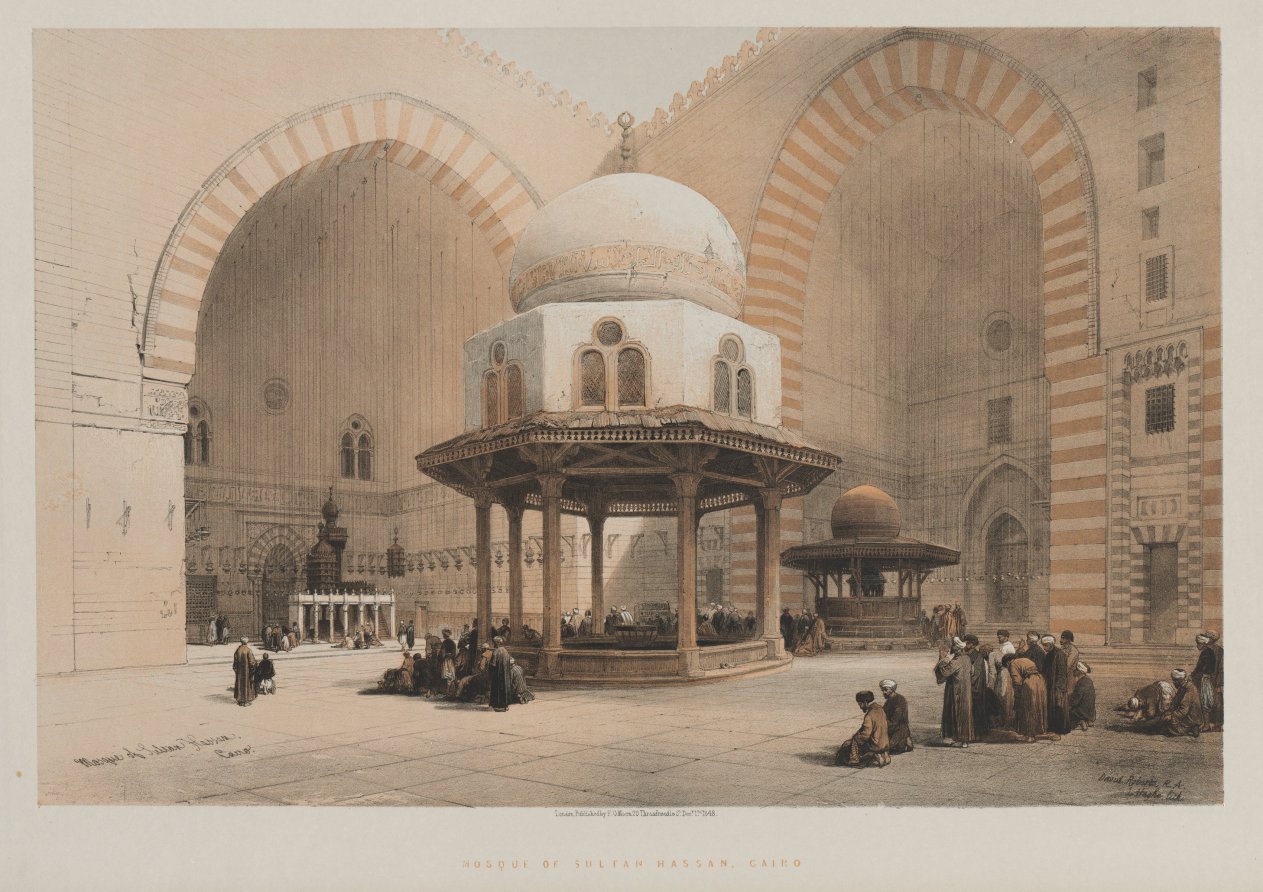
The mosque and madrasa, school, of Sultan Hassan was built between 1356 and 1363 during the Mamluk period (1250–1517) in Egypt. The prestige of the project attracted craftspeople from across the Islamic world, which likely contributed to its innovative design. It is possible that stone from the Great Pyramid of Giza was used in its construction. This print features the central courtyard (sahn) with ablutions fountain (for washing one’s hands, feet, and face before prayer) and two of four monumental iwans, three-walled, vaulted rectangular halls. The interior walls and floor are covered in lavish stone and marble mosaics. The minbar, a staircase-like pulpit from which a sermon is delivered by the prayer leader, imam, after Friday services, is visible in the hall on the left side of the print.
The museum’s own description, in English. Licence: CC0
Save this work’s image and museum information on this device to read without a connection.
Ask in your own words. The answer comes from what the museum has written about the work, and says so when that does not hold it.
Image: Cleveland Museum of Art, CC0
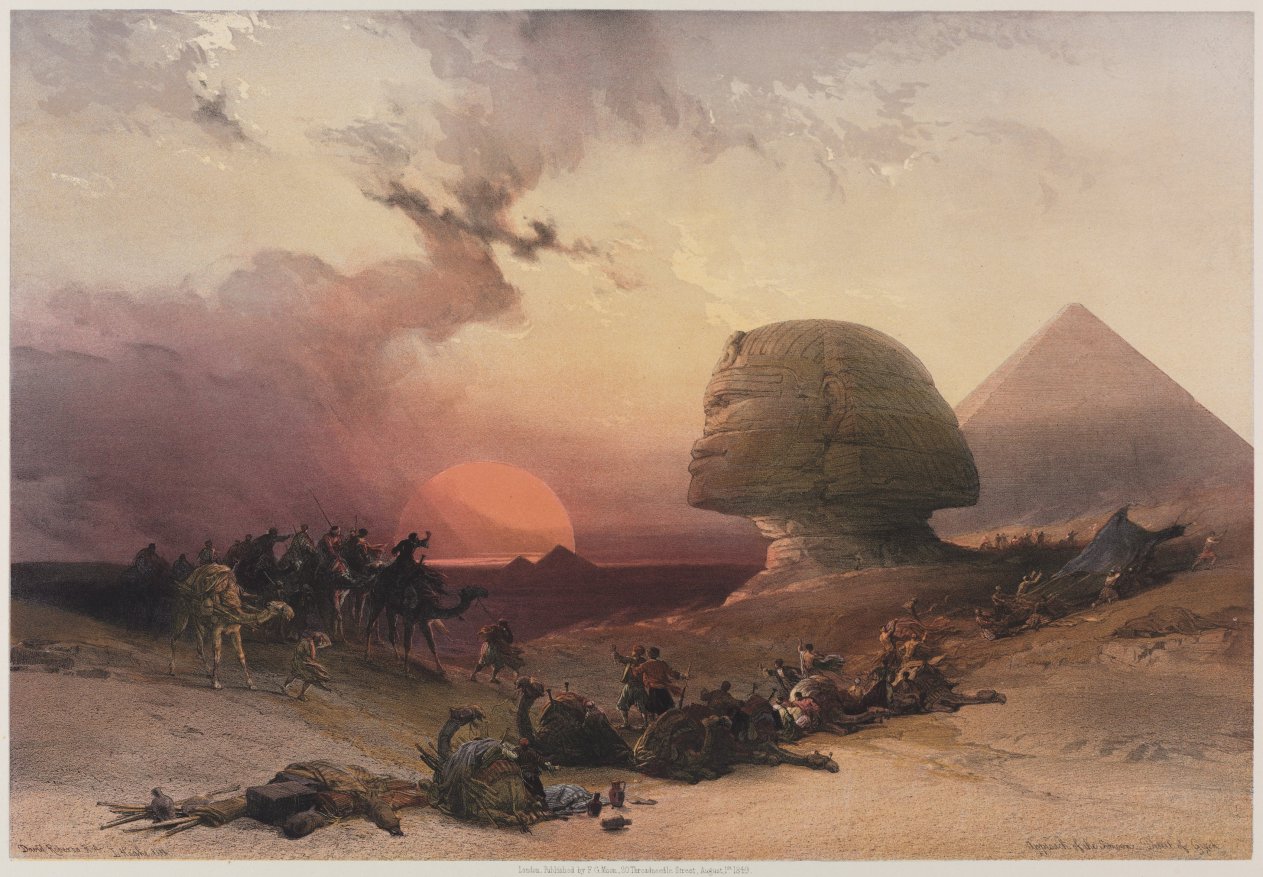 Egypt and Nubia, Volume III: Approach of the Simoon-Desert at GizehLouis Haghe · 1849
 Egypt and Nubia, Volume II: Entrance to the Tombs of the Kings of Thebes, Bab-El-MaloukLouis Haghe · 1848
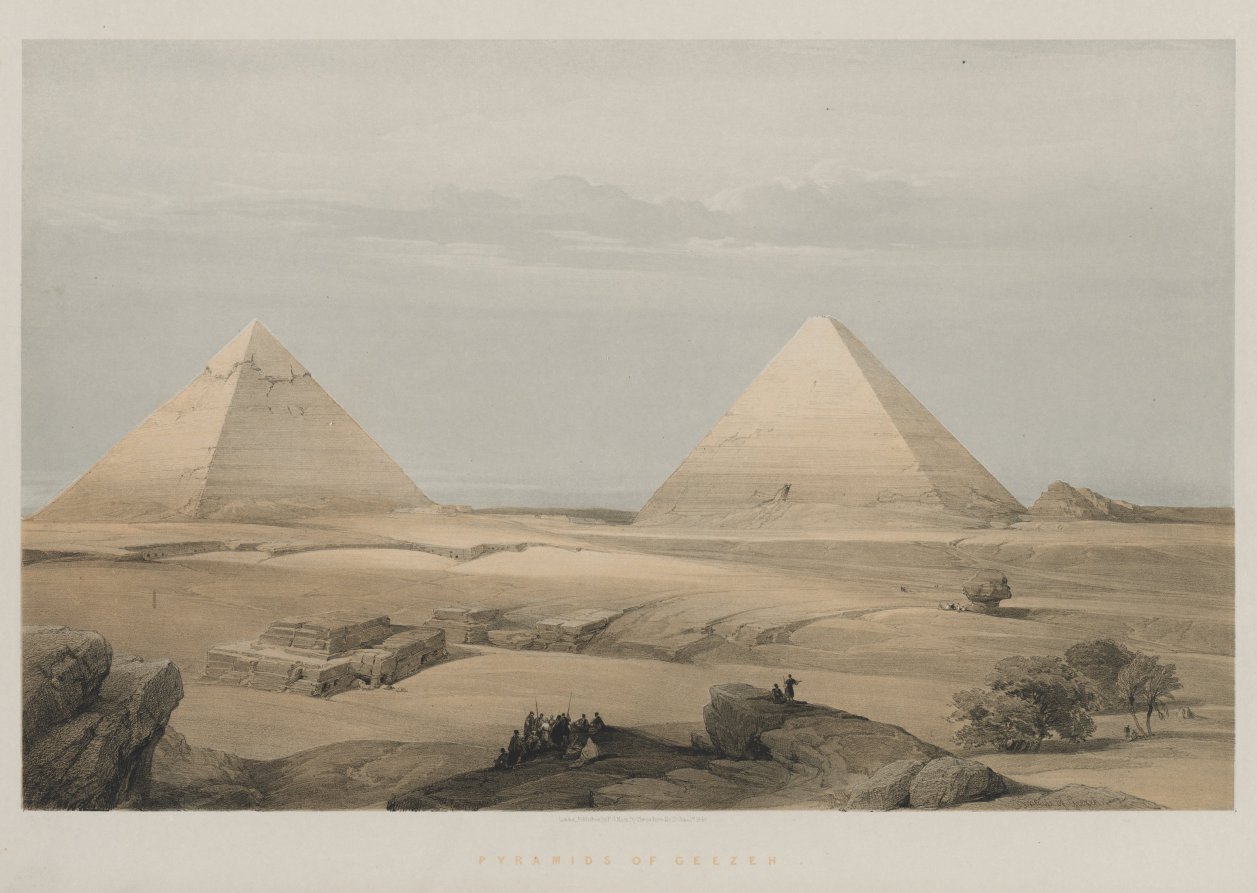 Egypt and Nubia, Volume II: Pyramids of GeezehLouis Haghe · 1848
 Egypt and Nubia, Volume II: Statues of Memnon at Thebes, during the Inundation