Headcloth
Chancay · 1000-1476 · Art Institute of Chicago
Guide
Adjust the guideNew to it · Medium
Looking for this guide.
From the museum
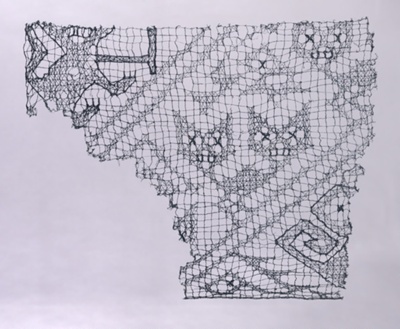
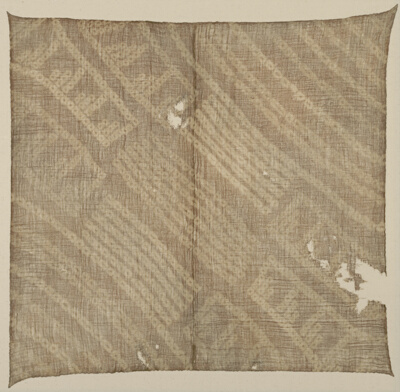
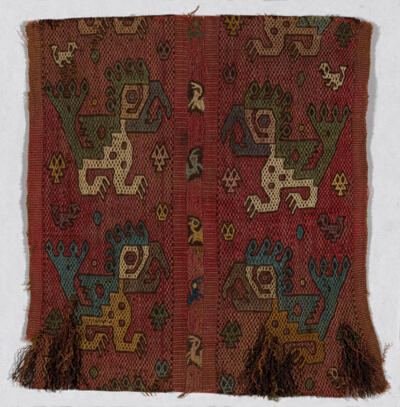
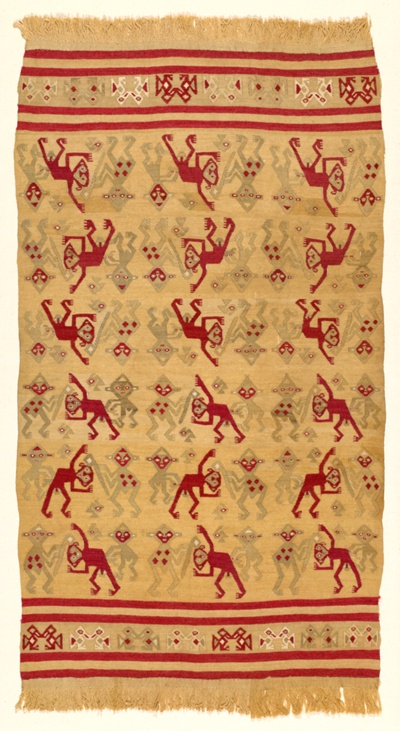
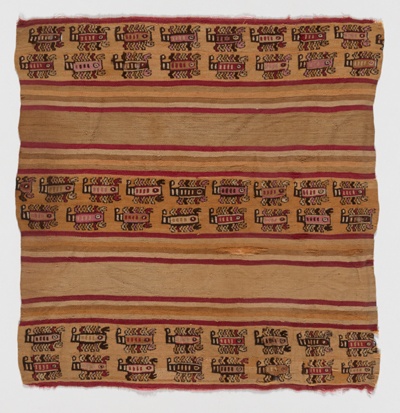
In the ancient Andes, weavers of different societies continually developed distinct techniques to manipulate their looms. Chancay weavers perfected gauze weaving—in which they crossed pairs of vertical warp threads to hold the horizontal wefts in place—in order to make sheer fabrics like this one. They used the natural colors of coastal Andean cotton—now called Pima cotton—spun into very fine threads. Chancay peoples seem to have worn such textiles on their heads, perhaps to shield them from blowing sands in the desert. The garment’s fish designs reflect this maritime locale.
The museum’s own description, in English. Licence: CC BY 4.0
What did you think?
Save this work’s image and museum information on this device to read without a connection.
Ask about this work
Ask in your own words. The answer comes from what the museum has written about the work, and says so when that does not hold it.
Details
- Maker
- Chancay, Central coast, Peru
- Date
- 1000-1476
- Medium
- Cotton, plain gauze weave; embroidered in knotted couching
- Dimensions
- 99.1 × 99.1 cm (39 × 39 in.)
- Place of origin
- Peru
- Held by
- Art Institute of Chicago, Chicago · Not on view
- Credit line
- Gift of Mrs. Edward H. Merrin
Image: Art Institute of Chicago, CC0