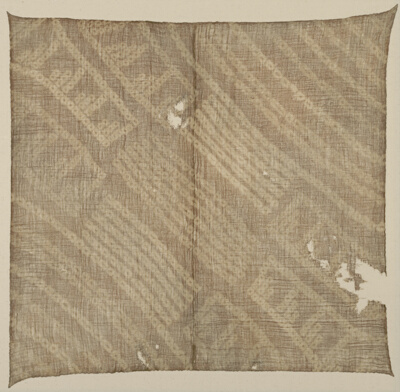
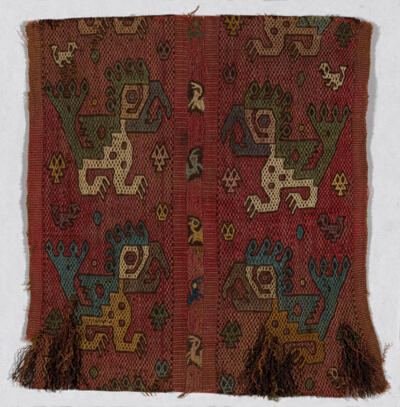
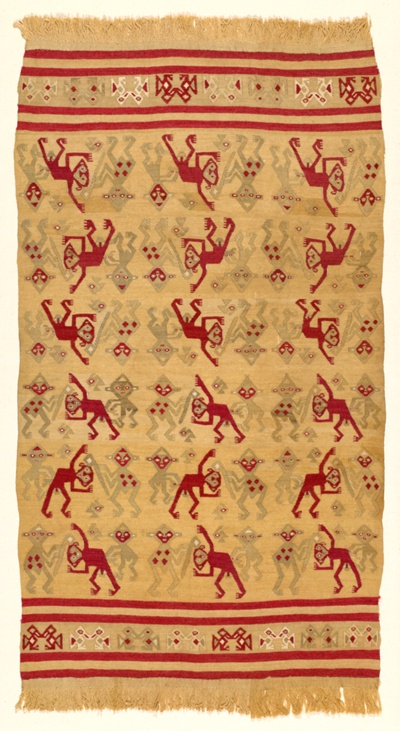
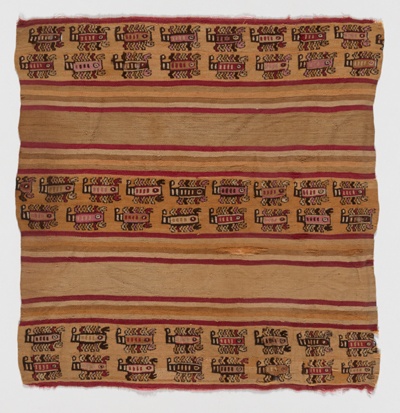
Headcloth Fragment
Chancay · 11th-15th century · Art Institute of Chicago
Guide
Adjust the guideNew to it · Medium
Looking for this guide.
From the museum
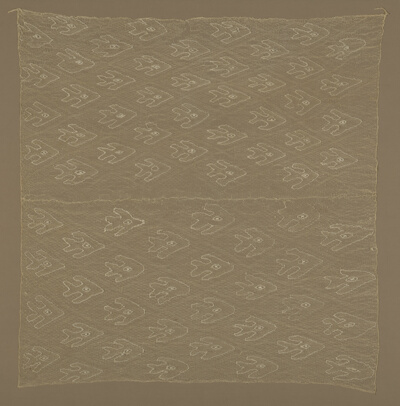
This extraordinary fragment from a headcloth, with its fineness of thread and complex construction, exemplifies Chancay gauze weaving. In Chancay culture, gauze weave relates to the tradition of coastal fishing, as the art form likely grew out of techniques associated with the making of fishing nets. This fragment displays two feline heads linked to the same body. Peru is home to a variety of wild cats, including the jaguar, puma, and pampas cat. These predatory felines were feared as well as worshipped, and they are associated with a wide range of Peruvian beliefs pertaining to ceremonial practices, the supernatural realm, astronomy, and the power of rulers.
The museum’s own description, in English. Licence: CC BY 4.0
What did you think?
Save this work’s image and museum information on this device to read without a connection.
Ask about this work
Ask in your own words. The answer comes from what the museum has written about the work, and says so when that does not hold it.
Details
- Maker
- Chancay, Central coast, Peru
- Date
- 11th-15th century
- Medium
- Over-twist cotton, gauze weave; embroidered with cotton in simple looping stitch
- Dimensions
- 32.4 × 39.4 cm (12 3/4 × 15 1/2 in.)
- Place of origin
- Peru
- Held by
- Art Institute of Chicago, Chicago · Not on view
- Credit line
- Gift of Mrs. Chauncey B. Borland
Image: Art Institute of Chicago, CC0