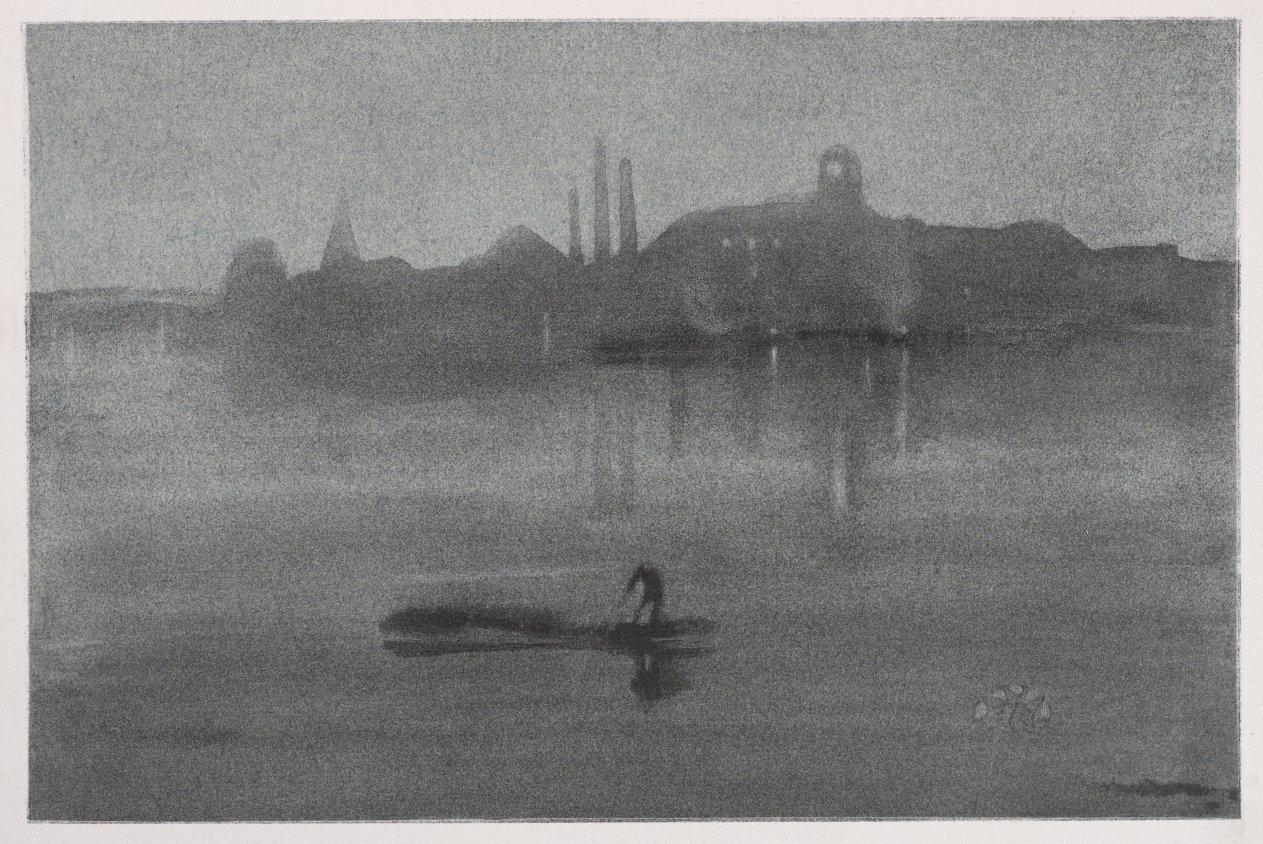
Nocturne
What did you think?
Guide
Adjust the guideNew to it · Medium
Nobody has listened to this guide yet. Making it takes about twenty seconds, and after that anyone can hear it straight away.
From the museum
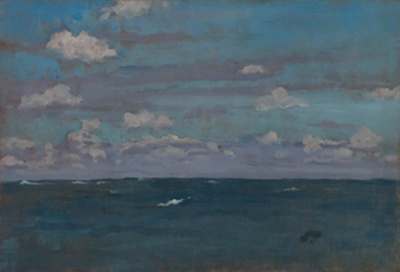
Whistler was the first to borrow musical terms for the titles of his works of art. In 1872, he defined painting as "the exact correlative of music, as vague, as purely emotional, as released from all functions of representation." Whistler’s use of musical terminology was meant to convey the supremacy of color, line, and form over subject matter in his art. The title Nocturne was suggested by the artist’s patron, Frederick Leyland, an enthusiastic amateur pianist who was especially fond of Chopin, whose nocturnes were regarded as the epitome of Romantic mood music—particularly appropriate for Whistler’s moonlit marine views.
The museum’s own description, in English. Licence: CC0
Ask about this work
Ask in your own words. The answer comes from what the museum has written about the work, and says so when that does not hold it.
Details
- Maker
- James McNeill Whistler (American, 1834–1903)
- Date
- 1878
- Medium
- lithograph on chine collé
- Dimensions
- Sheet: 17.1 x 26 cm (6 3/4 x 10 1/4 in.)
- Place of origin
- America
- Held by
- Cleveland Museum of Art, Cleveland · Not on view
- Credit line
- Bequest of Charles T. Brooks
Image: Cleveland Museum of Art, CC0
More by James McNeill Whistler
Shown in
- Themes and Variations: Musical Drawings and PrintsJan 25, 2015 – May 17, 2015
- Nature Sublime: Landscapes from the 19th CenturyAug 15, 2004 – Nov 14, 2004
- The View from Afar: Whistler and the Japanese PrintAug 9, 1988 – Oct 16, 1988
- Nocturnal ImpressionsFeb 20, 1985 – May 12, 1985
- Exhibition of the Month: The Artist, The River and the SeaJun 2, 1947 – Jul 28, 1947