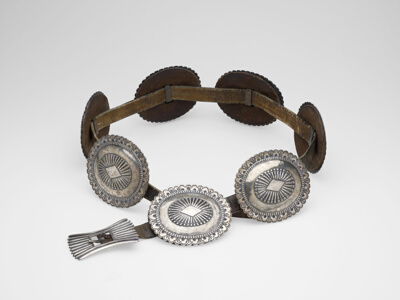
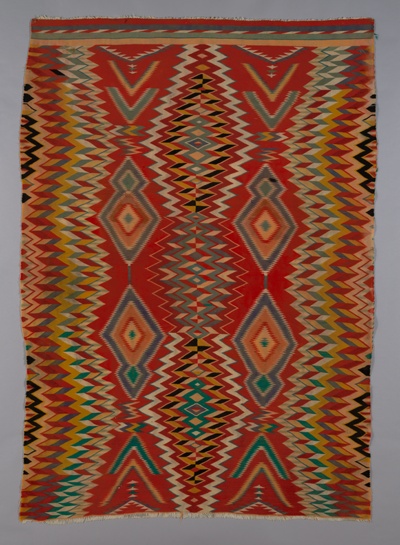
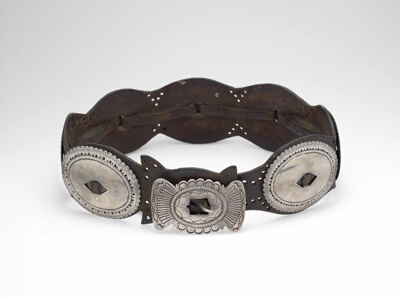
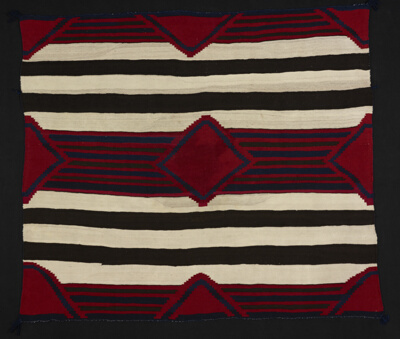
Horse Headstall
Navajo (Diné) · 1870s · Art Institute of Chicago
Guide
Adjust the guideNew to it · Medium
Looking for this guide.
From the museum
During the 1860s and early 1870s, Navajo (or Diné) communities learned silversmithing from Hispanic artists in New Mexico, as well as from Native artists from Plains communities, whose own metalworking traditions stemmed from Colonial sources in the eastern United States. Mexican pesos, U.S. American dollars, and ingot silver were melted down and recast in molds carved from soft volcanic tufa. Navajo silversmiths employed steel tools and punches to develop decorative patterns. Early concho belts, bow guards, bracelets, necklaces, horse headstalls, and other items of silver jewelry display massive forms and simple ornamentation. By the 1890s turquoise was increasingly used; although most turquoise was obtained from Southwestern sources, some was imported from China and Iran. Navajo silversmiths rapidly established a distinctive elegant style that has become one of the classic hallmarks of Native American art in the greater Southwest. Today, Navajo jewelry, like that of their neighboring Pueblo neighbors, exhibit much greater complexity of design and the use of diverse semiprecious stones, shell, and a variety of metals.
The museum’s own description, in English. Licence: CC BY 4.0
What did you think?
Save this work’s image and museum information on this device to read without a connection.
Ask about this work
Ask in your own words. The answer comes from what the museum has written about the work, and says so when that does not hold it.
Details
- Maker
- Artist unknown (Navajo, Diné), Northern New Mexico or Arizona
- Date
- 1870s
- Medium
- Silver and leather
- Dimensions
- Approx: H.: 61 cm (24 in.)
- Place of origin
- New Mexico
- Held by
- Art Institute of Chicago, Chicago · Not on view
- Credit line
- Purchased with funds provided by Mrs. Muriel Kallis Newman in honor of Kathy Cottong, equestrian and Director of the Arts Club
Image: Art Institute of Chicago, CC0