The Thinker
Auguste Rodin · c. 1880 · Cleveland Museum of Art
What did you think?
Guide
Adjust the guideNew to it · Medium
Nobody has listened to this guide yet. Making it takes about twenty seconds, and after that anyone can hear it straight away.
From the museum
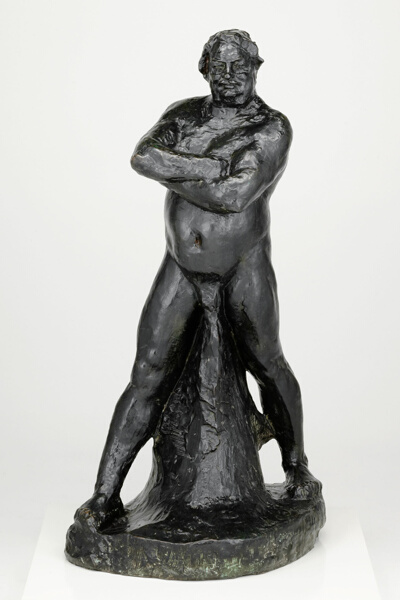
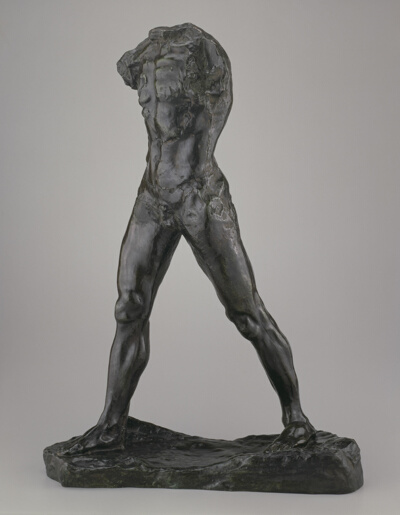
Rodin originally conceived The Thinker as a depiction of the Italian poet Dante Alighieri (1265–1321) sitting in the upper center of a monumental sculptural doorway titled The Gates of Hell (below). Inspired by Dante’s description of a journey through the underworld in his epic poem The Divine Comedy (about 1320), The Thinker contemplates mankind’s fate while gazing at a host of damned figures writhing in anguish below. Stripped of clothing, the figure’s rippling muscles convey an inner, animating life force symbolic of mental activity or creative effort. The figure leans forward, as if ready to spring from his perch, yet seems simultaneously caught in the inaction of deep thought. Rodin produced independent versions of The Thinker, first in this original size and later in a monumental version.
The museum’s own description, in English. Licence: CC0
Ask about this work
Ask in your own words. The answer comes from what the museum has written about the work, and says so when that does not hold it.
Details
- Maker
- Auguste Rodin (French, 1840–1917)
- Date
- c. 1880
- Medium
- bronze
- Dimensions
- Overall: 70.8 x 34.9 x 59.7 cm (27 7/8 x 13 3/4 x 23 1/2 in.)
- Place of origin
- France
- Held by
- Cleveland Museum of Art, Cleveland · On view · AAE Art Allée East
- Credit line
- Gift of Alexandre P. Rosenberg
Image: Cleveland Museum of Art, CC0